

Water is supposed to be the safest thing you can put in your body. So when your stomach hurts every time you drink it, something feels deeply wrong. If you keep asking yourself why does my stomach hurt when I drink water, the answer is almost never “water is bad for you.” It is usually one of several very specific, fixable reasons that have nothing to do with the water itself.
Some causes are simple, like drinking too fast or using ice water on a sensitive stomach. Others point to underlying digestive conditions that are worth knowing about. And a few causes are genuinely urgent and need medical attention.
This article works through all of them in the order most people actually experience them: starting with the most common and easily fixed, and ending with the medical conditions that require a proper diagnosis.
First: Is the Pain Coming From the Water or Something Else?
Before going through specific causes, it helps to do a quick mental check. Ask yourself three questions:
Does the pain happen every single time you drink water, or only sometimes? Does it happen with other drinks too, or only plain water? And does it start immediately after drinking, or does it come on 20 to 30 minutes later?
Your answers already narrow down the likely cause significantly. Immediate pain points toward how you are drinking or water temperature. Pain that comes on gradually after drinking points toward digestive conditions. Pain with all drinks, not just water, points toward something happening in the digestive tract itself.
Keep your answers in mind as you read through the causes below.
Cause 1: You Are Drinking Too Fast
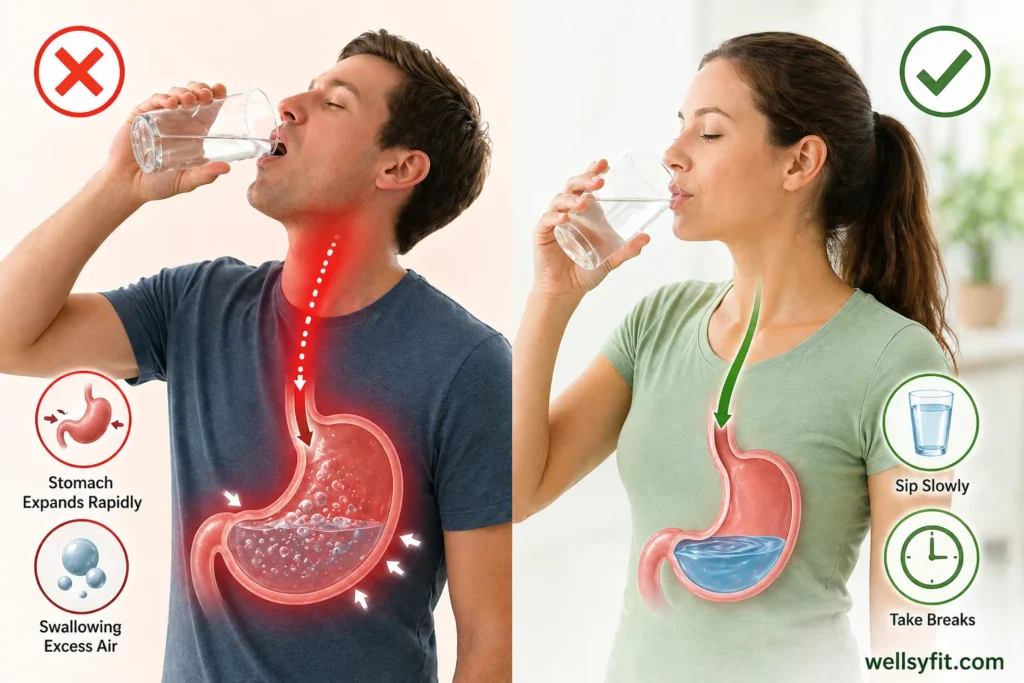
This is the most common cause and the easiest to fix. When you gulp water quickly, two things happen simultaneously that both cause pain.
First, your stomach expands rapidly. Rapid consumption causes gastric distension. Drinking more than 8 to 16 ounces at once stretches stomach walls beyond their comfortable capacity, triggering pain receptors. Second, you swallow air with every gulp. Aerophagia from gulping water introduces excess air into the stomach, creating painful gas bubbles that can persist for 30 to 60 minutes until naturally expelled.
The fix is straightforward: sip slowly, take smaller mouthfuls, and pause between swallows. If you tend to drink most of your daily water in two or three large sessions, spread it across the whole day instead.
Cause 2: The Water Is Too Cold
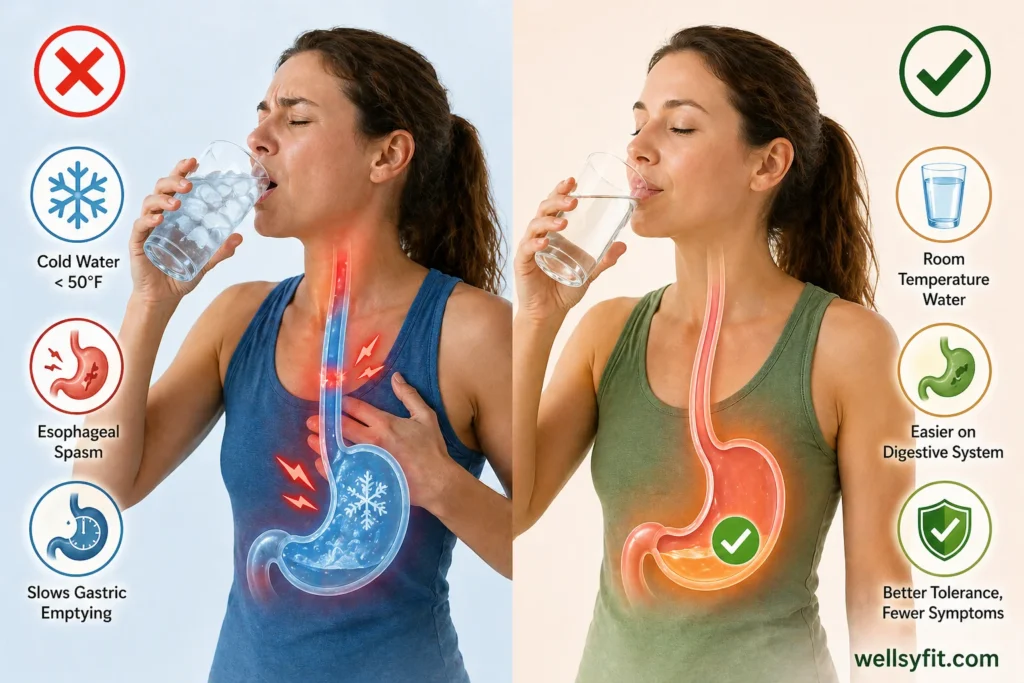
Ice water feels refreshing, but your digestive system does not always agree. Cold water below 50 degrees Fahrenheit can induce esophageal spasms and slow gastric emptying. In practical terms, this means cold water can cause cramping, a tight feeling in the chest or upper abdomen, and a slowing of the normal movement of your digestive tract.
This is more pronounced in people with sensitive digestive systems, those who have just finished exercising, and anyone who is already cold. Room temperature water is usually easier on the gut for people who experience this pattern regularly.
Try switching to room temperature or slightly warm water for one week and see whether your symptoms improve. If they do, temperature was likely your primary issue.
Cause 3: You Are Drinking on a Completely Empty Stomach
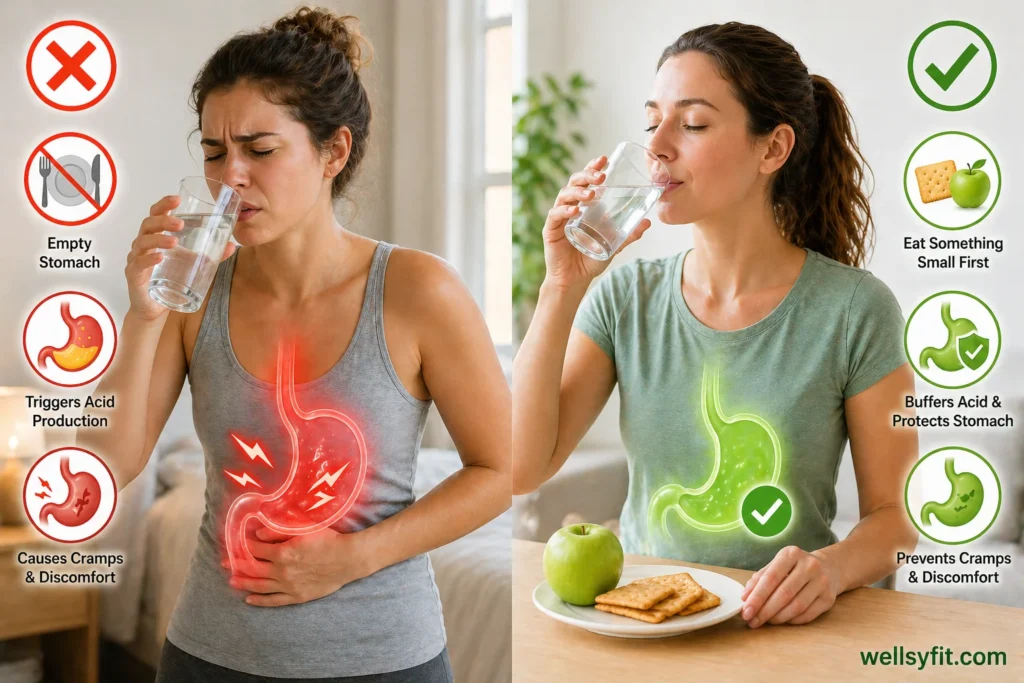
Drinking a large amount of water on an empty stomach, particularly first thing in the morning, is a surprisingly common trigger for stomach pain. When there is no food in your stomach, water passes through more quickly and can cause the stomach walls to contract sharply, producing cramps.
For some people, morning water intake on an empty stomach also activates gastric acid production, which irritates the stomach lining without any food present to buffer it. The result feels like a mild burning or cramping sensation in the upper abdomen.
The simplest fix is to eat something small before drinking a large volume of water in the morning. Even a few crackers or a small piece of fruit creates enough of a buffer to prevent the cramping for most people.
Cause 4: Severe Dehydration Creating Electrolyte Imbalance
This cause surprises many people and is one that competitors consistently miss or explain poorly.
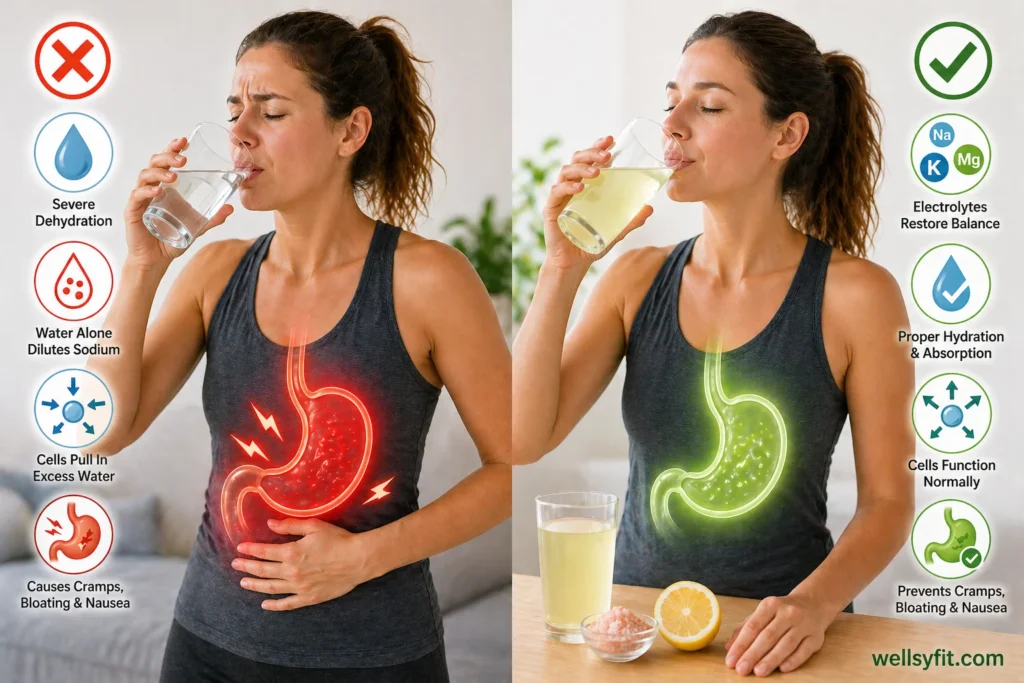
If your body has become severely dehydrated, drinking water can sometimes be uncomfortable if the electrolyte balance is out of whack. Water alone is not enough in this state. Sodium, potassium, and magnesium are also essential for the body to function properly. If you drink water without these essential electrolytes, it can cause stomach cramps or bloating.
When you are severely dehydrated, the sodium concentration in your blood is elevated. Rapidly drinking plain water dilutes that sodium concentration quickly. Your cells respond by pulling in the excess water through osmosis. This rapid fluid shift can cause abdominal discomfort, nausea, and cramping.
If you have been sweating heavily, been ill with vomiting or diarrhea, or have not drunk anything for many hours, rehydrating with an electrolyte solution rather than plain water is the smarter approach. Even adding a small pinch of sea salt to your water helps.
Cause 5: Contaminated Water
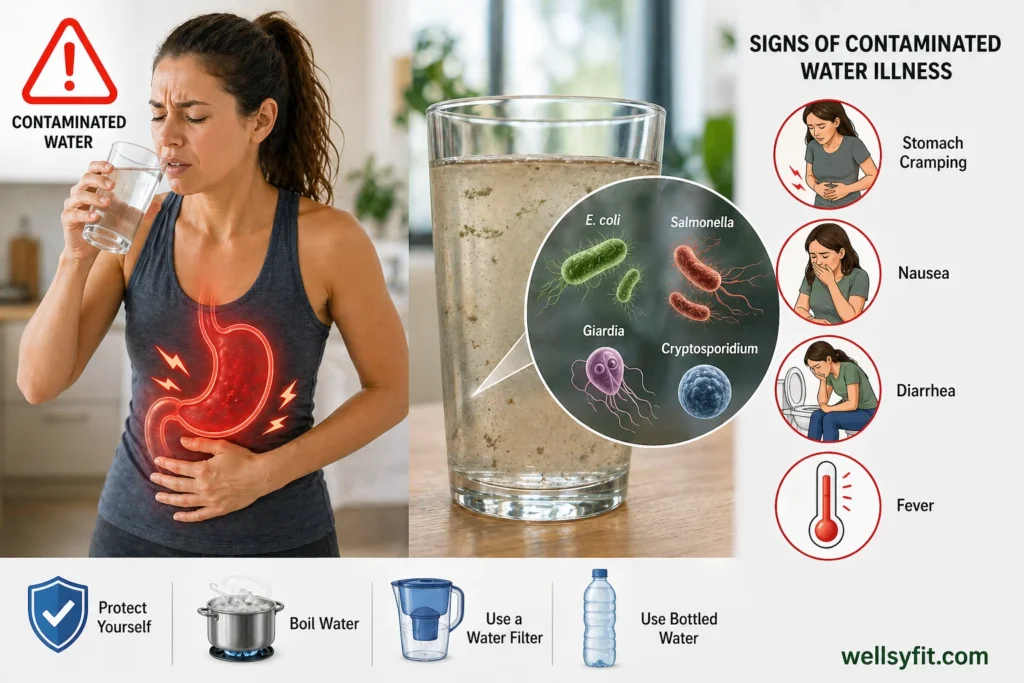
This is a cause that most people do not immediately consider when the pain happens at home, but it deserves attention. Contaminated water is a genuine source of stomach pain. While public water systems are regulated by agencies like the U.S. Environmental Protection Agency to ensure safety, contamination can still occur through breaks in pipes, leaks, and other sources.
Bacterial contaminants like E. coli, Salmonella, and Campylobacter can survive in tap water during infrastructure failures. Viral contaminants and parasites like Giardia and Cryptosporidium are also known waterborne pathogens. Because these contaminants are invisible to the naked eye, even clear-looking water can contain harmful organisms.
If your stomach pain from water started suddenly after a known infrastructure event, a flood, a boil-water advisory, or after traveling somewhere with different water infrastructure, contamination should be near the top of your list of suspects.
Signs of contaminated water illness typically include stomach cramping, nausea, diarrhea, and sometimes fever, usually beginning within hours to a couple of days after exposure.
Cause 6: Acid Reflux or GERD
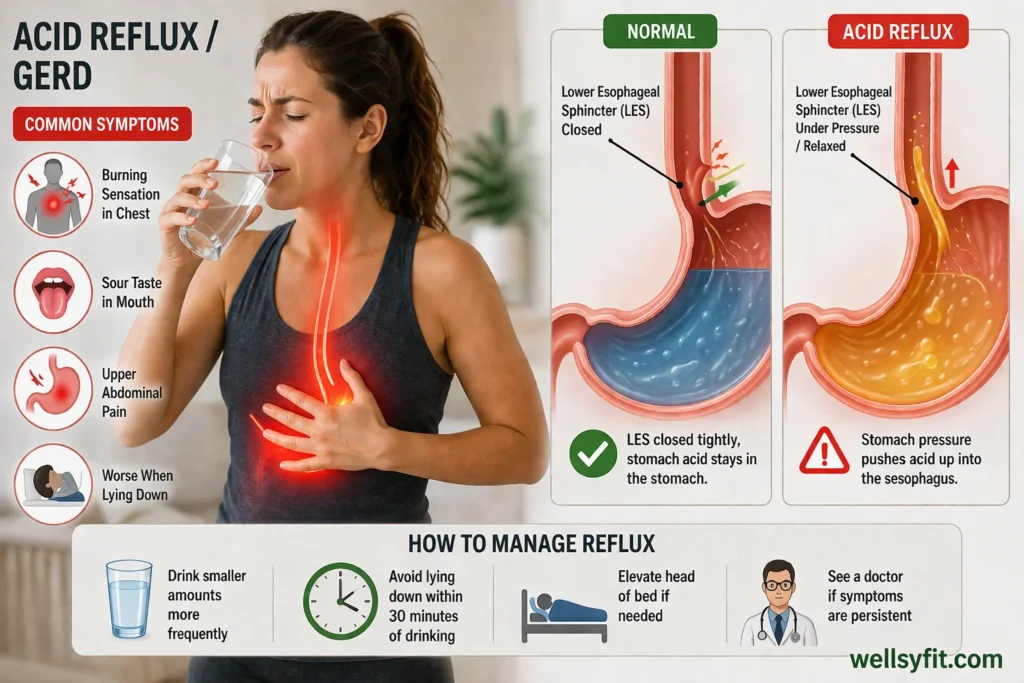
If you experience a burning sensation in the chest, a sour taste in the mouth, or upper abdominal pain that worsens when you lie down after drinking, acid reflux or gastroesophageal reflux disease is likely involved.
Drinking large amounts of water may stretch the stomach and put pressure on the lower esophageal sphincter, worsening stomach acid symptoms. The lower esophageal sphincter is the valve between your esophagus and stomach. When it is under pressure from a stretched stomach, acid can escape upward into the esophagus, causing the burning pain commonly called heartburn.
For people with GERD, the fix is not to drink less water but to drink smaller amounts more frequently, avoid lying down within 30 minutes of drinking, and address the underlying reflux condition with a doctor if it is persistent.
Cause 7: Gastritis or Peptic Ulcers
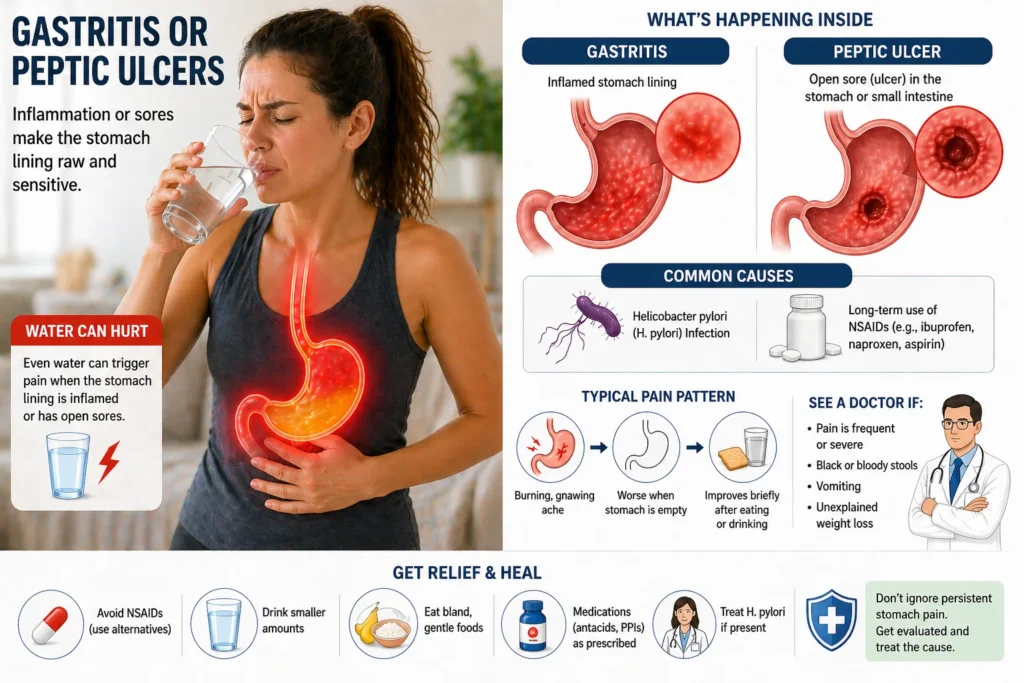
Gastritis is inflammation of the stomach lining. Peptic ulcers are open sores in the stomach lining or the upper part of the small intestine. Both conditions create a stomach lining that is already raw and sensitive, and even water passing over that inflamed tissue can trigger pain.
Stomach and peptic ulcers are open sores that develop in the lining of the stomach or first part of the small intestine, typically caused by medications or bacterial infections, and can make the lining of the stomach very sensitive.
The most common causes of peptic ulcers are Helicobacter pylori (H. pylori) bacterial infection and long-term use of nonsteroidal anti-inflammatory drugs (NSAIDs) like ibuprofen. If your stomach pain from water is accompanied by a burning, gnawing ache that is worse when your stomach is empty and improves briefly after eating or drinking something, an ulcer or gastritis should be evaluated by a doctor.
Cause 8: Irritable Bowel Syndrome
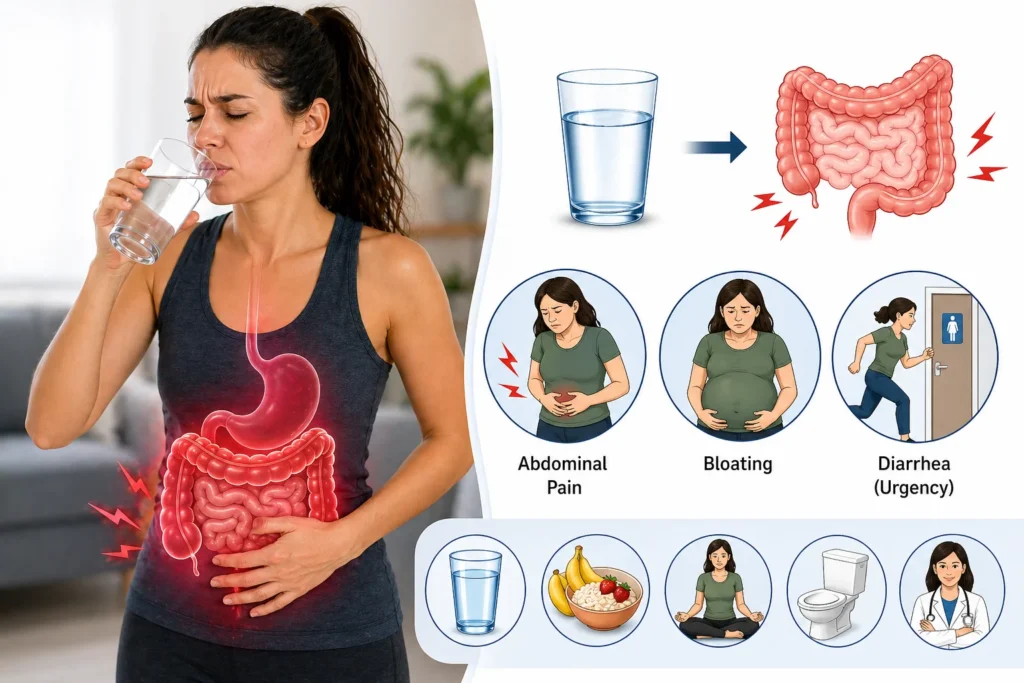
IBS is a chronic functional digestive disorder that affects the large intestine. People with IBS have a hypersensitive gut that overreacts to normal digestive stimuli, and water is not exempt from triggering that response.
Irritable bowel syndrome can cause a range of symptoms including abdominal pain, bloating, diarrhea, and constipation. Eating and drinking water may trigger IBS symptoms for some individuals.
In IBS, the pain after drinking water is usually felt in the lower abdomen rather than the upper stomach. It may be accompanied by an urgent need to use the bathroom, bloating, or alternating constipation and diarrhea. If this pattern is consistent and recurring, an IBS evaluation with a gastroenterologist is appropriate.
Cause 9: Gastroparesis
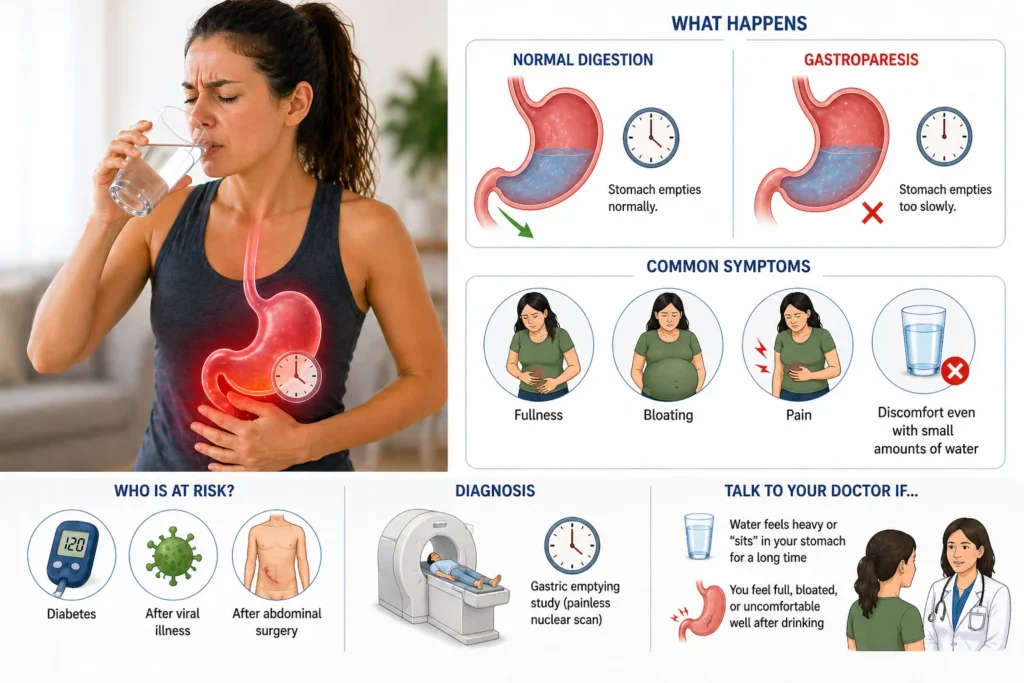
Gastroparesis is a condition where the stomach muscles do not work properly, causing food and liquid to move too slowly from the stomach into the small intestine. This delayed emptying means liquid accumulates in the stomach, creating a feeling of fullness, bloating, and pain even from small amounts of water.
This condition is more common in people with diabetes, but it can also develop after a viral illness or abdominal surgery. If you consistently feel that water “sits” in your stomach for a long time and causes a heavy, full, uncomfortable feeling well after drinking, gastroparesis is a condition worth discussing with your doctor.
Gastroparesis is diagnosed through a gastric emptying study, a painless nuclear medicine scan that measures how quickly your stomach empties after eating.
Cause 10: Water Quality Issues Beyond Contamination
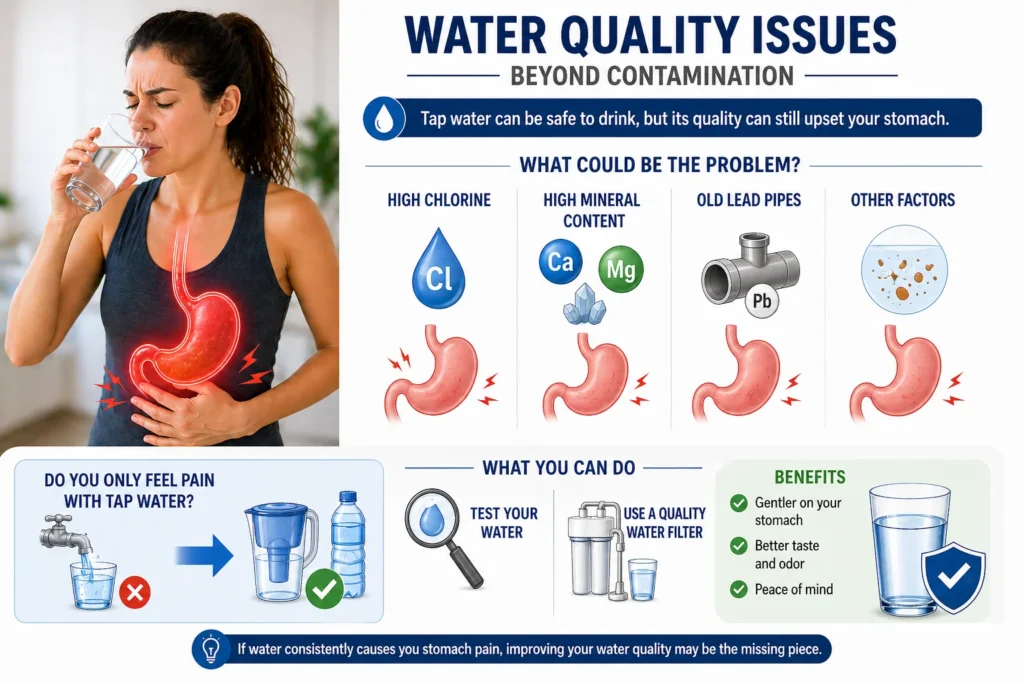
Tap water quality varies significantly depending on your location and your home’s plumbing. Even water that passes safety tests can contain mineral levels or treatment chemicals that affect sensitive digestive systems.
High chlorine levels in municipal water can irritate the stomach lining in some people. High mineral content in hard water, particularly high calcium or magnesium, can act as a mild laxative and cause cramping in sensitive individuals. Old lead pipes in some homes can leach trace amounts of lead into tap water, which in higher concentrations causes gastrointestinal symptoms.
If you notice that you only experience stomach pain with tap water but not with filtered or bottled water, water quality from your supply is worth investigating. A water quality test kit for your tap water and a quality home filter can both address this issue directly.
The Symptom-to-Cause Quick Reference
Use this to identify your most likely cause based on your specific experience:
| Your Symptom Pattern | Most Likely Cause |
|---|---|
| Pain only when drinking fast | Aerophagia or gastric distension |
| Pain only with ice water | Cold-induced esophageal spasm |
| Burning chest pain after drinking | Acid reflux or GERD |
| Gnawing pain on empty stomach, better after eating | Peptic ulcer or gastritis |
| Lower abdominal pain, urgent bathroom need | IBS |
| Heavy, full feeling that lingers | Gastroparesis |
| Sudden onset with nausea and diarrhea | Contaminated water |
| Cramps after heavy exercise or long dehydration | Electrolyte imbalance |
When to See a Doctor
Occasional stomach pain from drinking water quickly or using cold water is not a medical emergency. But you should see a doctor if you experience any of the following:
Pain that is severe, sharp, or does not resolve within an hour. Pain accompanied by blood in the stool, vomit, or persistent nausea. Unexplained weight loss alongside persistent stomach pain when drinking. Symptoms that have been present for more than two weeks without an obvious behavioral explanation. Pain that is progressively worsening over days or weeks.
These patterns suggest an underlying medical condition that needs evaluation rather than a simple behavioral adjustment.
Practical Fixes to Try Right Now
Before seeing a doctor, these adjustments address the most common causes and are worth trying for one to two weeks:
Sip water slowly rather than drinking large amounts at once. Aim for no more than 8 ounces every 15 to 20 minutes during periods of active hydration. Switch from ice water to room temperature water, especially in the morning and after exercise. Eat something small before drinking large amounts of water on an empty stomach. If you have been sweating or are sick, add electrolytes to your water rather than drinking plain water to rehydrate. Try filtered water instead of tap water for one week to rule out water quality as a contributing factor.
The Bottom Line
Why does your stomach hurt when you drink water? Most of the time, the answer is one of three things: you are drinking too fast, the water is too cold, or you are drinking a large volume on an empty stomach. These are behavioral factors you can test and fix today without any medical intervention.
If adjusting how you drink does not resolve the pain within one to two weeks, the cause is more likely a digestive condition like acid reflux, IBS, gastroparesis, or an ulcer, all of which respond well to treatment when properly diagnosed.
Do not ignore persistent stomach pain from drinking water. It is your body telling you something specific. Pay attention to the pattern, use the symptom guide above to narrow down the most likely cause, and see a doctor if the pain is severe, recurring, or accompanied by other symptoms.
Your hydration habits matter for everything. Getting this right is worth the effort.
Frequently Asked Questions
Disclaimer: Content on WellsyFit is for informational purposes only and does not replace professional medical advice. Always consult a healthcare provider.