
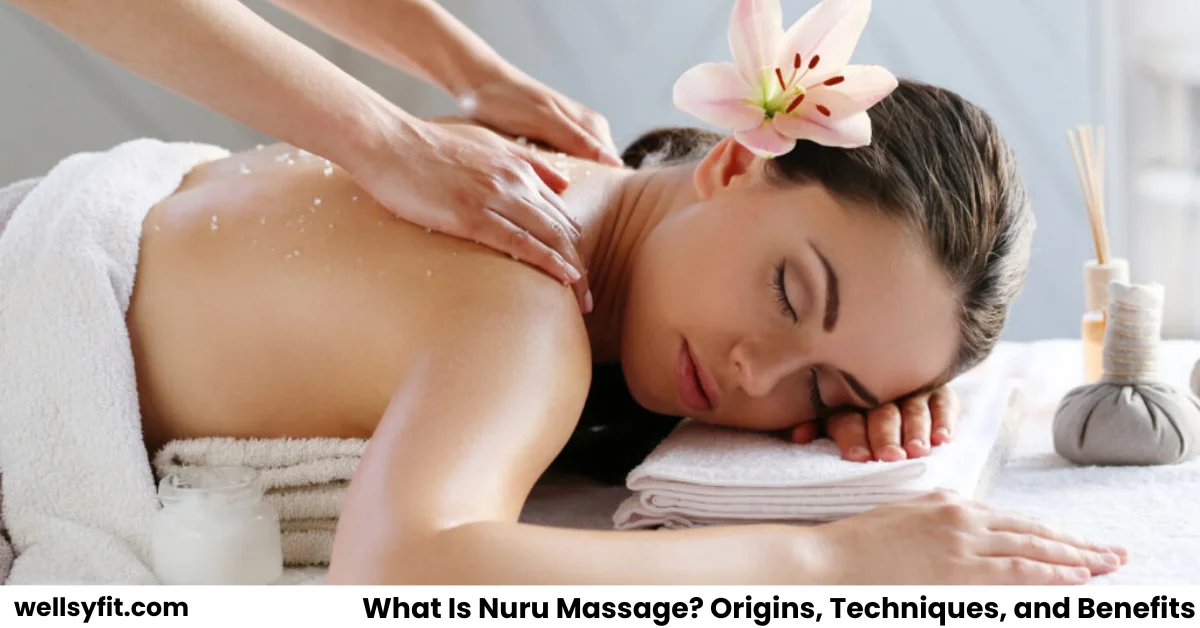
Few massage styles generate as much curiosity and confusion as the nuru massage. People hear the term, search for a straight answer, and usually find either heavily promotional spa content or clickbait articles that raise more questions than they answer. This guide cuts through both.
So what is nuru massage, exactly? At its most basic: it is a full-body, skin-to-skin massage technique that originated in Japan and uses a special gel derived from seaweed to allow smooth, gliding movements across the entire body. It is intimate by design, sensory in nature, and increasingly offered in wellness and spa settings around the world.
This article explains where it came from, how it works, what the gel actually contains, what the reported benefits are, where the legal and ethical lines sit, and what anyone considering it should realistically know before booking.
The Meaning of the Word Itself
Start with the name. Nuru is a Japanese word that translates directly to “slippery.” That single word describes the defining feature of the technique more accurately than most longer explanations.
The slipperiness is not incidental. It is the entire mechanism. The nuru gel reduces friction to near zero, which allows a practitioner to use broad, flowing, full-body movements that would be impossible with standard massage oils. The result is a sensory experience that feels fundamentally different from any other massage modality.
Where Nuru Massage Came From
Nuru massage originated in Kawasaki, Japan, during the 1970s. It emerged as a modern twist on traditional bathhouse rituals and draws from Japan’s long history of communal bathing in onsen, or bathhouses, which were places for both cleansing and social bonding.
The technique took the communal bathing concept further by emphasizing close physical contact and the use of the seaweed-based gel. In its traditional form it was practiced in Kawasaki and reportedly offered by geishas as a form of deep relaxation for clients.
From Japan, the practice spread gradually to other parts of Asia, particularly Thailand, where spa culture is deeply embedded in daily life. It later reached Western markets through specialized wellness centers and upscale spas. Today it is offered across Europe, North America, Australia, and Southeast Asia, though availability and legal status vary significantly by country and jurisdiction.
What Is Nuru Gel Made From?
The gel is the defining element of this massage, and most articles describe it in only the vaguest terms. Here is a more complete picture.
Traditional nuru gel is derived from nori seaweed, the same type of seaweed used in Japanese cuisine. The raw seaweed is processed into a colorless, odorless, highly viscous liquid that is extraordinarily slippery when applied to skin.
The gel has several properties that make it well-suited for this specific use. It is water-based, which means it does not stain surfaces or fabrics the way oil-based products do. It is generally considered safe for most skin types, is easy to rinse off with water, and does not leave a residue. It also has mild moisturizing properties from the seaweed extract, which is rich in minerals and natural polysaccharides.
Commercial nuru gels sold today are typically composed of purified water, nori seaweed extract, aloe vera, and sometimes glycerin or other humectants to enhance texture and skin feel. The seaweed extract is the functional ingredient that creates the characteristic slip.
The gel is applied warmly, usually preheated before the session, which adds a thermally relaxing dimension to the experience.
How a Nuru Massage Session Actually Works
Understanding the physical mechanics helps clarify what this modality is and is not.
A nuru massage session begins with both the practitioner and the client thoroughly showering. This is a hygiene standard in any professional setting offering this service. The massage surface is typically a waterproof mat, an inflatable mattress, or a surface specifically designed to retain the gel without absorbing it.
The nuru gel is applied generously to both bodies. The practitioner then uses their entire body, including torso, arms, and legs, to glide across the client’s body in broad, flowing strokes. Unlike traditional massage techniques that focus on kneading, pressing, or manipulating specific muscle groups, nuru massage works through full-surface contact and movement.
Unlike other massage therapies that focus on kneading or pressing specific muscles, nuru massage involves full-body contact, where the practitioner uses their entire body to glide over the client’s body, creating a highly sensory experience that is both physically soothing and emotionally comforting.
Sessions typically last between 60 and 90 minutes. Professional practitioners emphasize communication throughout the session to ensure the client is comfortable with the level of contact and pressure being applied.
Reported Benefits: What People Actually Experience
Nuru massage does not have the same volume of peer-reviewed clinical research behind it that, say, Swedish massage or deep tissue massage has accumulated over decades. Most benefit claims come from practitioner experience, client reports, and general massage therapy research that may apply to skin-to-skin modalities.
With that context stated clearly, here are the benefits most consistently reported.
Deep Physical Relaxation
The gel’s warmth combined with the broad, flowing contact across large surface areas of the body activates the parasympathetic nervous system, which governs the body’s rest and recovery state. Many clients report a level of full-body relaxation that differs qualitatively from standard massage, likely because the sensory input is distributed across the entire body surface rather than concentrated in specific muscle groups.
Stress Relief and Cortisol Reduction
Reported benefits include deep relaxation, stress relief, improved blood circulation, and increased sensory stimulation. Massage therapy in general has well-documented effects on reducing cortisol, the primary stress hormone, and increasing serotonin and dopamine. The full-body nature of nuru massage may amplify these effects compared to targeted massage techniques.
Improved Circulation
The broad, flowing strokes used across the entire body surface stimulate blood flow throughout the circulatory system. Improved circulation supports oxygen and nutrient delivery to tissues and may contribute to the sense of physical wellbeing people report after a session.
Heightened Sensory Awareness
The slippery, full-skin-contact nature of nuru massage creates an unusually rich sensory experience. The gel, combined with the warmth of skin-to-skin interaction, enhances sensory stimulation, making it a deeply immersive experience. For people who carry chronic physical tension or have reduced body awareness, this heightened sensory feedback can be genuinely therapeutic.
Emotional Connection and Intimacy
When practiced between partners rather than with a professional practitioner, nuru massage is reported to deepen physical and emotional intimacy. This technique not only promotes physical relaxation but also fosters a deeper bond between participants, as the massage involves close body contact.
Nuru Massage vs. Other Massage Styles
Understanding how nuru differs from comparable modalities helps clarify what it actually is.
Versus Swedish massage: Swedish massage uses hands and forearms to work specific muscle groups with oil. It is entirely practitioner-to-client hand contact. Nuru massage uses full-body contact across the entire body surface with gel. The sensory experience is completely different.
Versus tantric massage: Tantric massage is rooted in tantric spiritual philosophy and focuses on energy flow and spiritual awakening through the body. Nuru massage has no spiritual framework. It is a physical technique with Japanese bathhouse origins.
Versus body-to-body massage: Nuru massage is a specific type of body-to-body massage that originated in Japan. The key distinction is the nuru gel, which is exceptionally slippery and creates a unique gliding dynamic not found in standard body-to-body techniques.
Versus oil massage: Nuru massage focuses on full-body relaxation using nuru gel for smooth movement, while oil massage mainly targets muscles using oils to release physical tension. The goals and mechanisms are distinct.
The Legal and Ethical Context
This is the section most articles handle poorly, and it is one of the most important things to understand before booking or offering this service.
The legality of nuru massage varies significantly depending on the country, state or province, and specific establishment. In many jurisdictions, professional massage therapy is regulated, and practitioners must hold licenses. The intimate physical nature of nuru massage creates a grey area in how it is classified under local regulations.
In some regions, establishments offering nuru massage operate legally as licensed massage businesses. In others, the service exists in an unregulated space. In some jurisdictions, it is illegal to offer certain forms of intimate massage commercially.
There are misconceptions about the legality and professionalism of practitioners. Professional nuru massages focus on relaxation and therapeutic benefits. The distinction between a professional therapeutic nuru session and services that cross legal or ethical lines depends entirely on the specific establishment, the practitioner’s conduct, and the legal framework of the jurisdiction.
Before booking any nuru massage, research the legal status in your location and verify that the establishment is licensed and operates under clear professional standards. Reputable providers will have transparent policies about what the session does and does not include.
The Consent and Communication Standard
Any professional nuru massage should begin with a clear conversation about boundaries, expectations, and comfort levels. Practitioners of nuru massage often emphasise the importance of mutual respect and communication, ensuring a comfortable and consensual experience for everyone involved.
A reputable practitioner will check in regularly during the session and will stop immediately if the client is uncomfortable. If an establishment does not discuss consent or boundaries before a session, that is a significant red flag.
Common Myths Worth Addressing Directly
Myth: Nuru massage always involves sexual activity. Professional nuru massages focus on providing a calming and therapeutic experience, ensuring that clients feel comfortable and respected throughout the session. The sensual aspect of nuru massage does not equate to eroticism; rather, it focuses on fostering a deep sense of relaxation and well-being. What any individual session involves depends entirely on the setting, the practitioner, and the legal framework in place.
Myth: It is only for men. Nuru massage is designed to benefit people of all genders. It offers numerous therapeutic benefits such as stress relief, muscle relaxation, and enhanced circulation, which can be enjoyed by everyone, regardless of gender.
Myth: It is inherently unhygienic. In reputable spas, strict hygiene standards ensure safety, with therapists trained to maintain a clean environment. The gel is water-based and rinses off easily. The initial shower for both parties is standard practice. Hygiene concerns are real only when the setting does not follow professional standards.
Myth: The nuru gel is difficult to find or make. Commercial nuru gel is widely available online and in wellness supply stores. It can also be approximated at home using nori seaweed powder dissolved in warm water, though commercial preparations are more consistent in texture and safety.
What to Expect If You Are Considering It
If you are thinking about booking a professional nuru massage for the first time, here is a realistic picture of what a reputable session looks like.
You will be asked to shower on arrival. You will have a pre-session conversation about your comfort level, any physical limitations, and what the session involves. The room will be warm. The waterproof surface will be set up in advance. The gel will be applied at body temperature.
Expect to feel initially unfamiliar with the level of contact involved. Most people report that initial self-consciousness gives way to relaxation within the first 10 to 15 minutes. Common feelings include initial nervousness that usually gives way to relaxation and enhanced sensory awareness.
Afterward, a shower is always provided. The gel rinses off completely with warm water. Many people report feeling deeply relaxed for several hours following a session.
The Bottom Line
Nuru massage is a specific, Japan-originated bodywork technique defined by its seaweed gel and full-body, skin-to-skin contact approach. It has genuine roots in Japanese bathing culture, a distinctive physical mechanism, and reported benefits including deep relaxation, stress relief, and improved circulation.
It is also a modality that exists on a spectrum, from purely therapeutic professional sessions in licensed wellness settings, to intimate partner practice at home, to services that operate in legally and ethically ambiguous territory.
Understanding that spectrum is the most useful thing anyone can take from this guide. If you are curious about it for wellness purposes, find a reputable, licensed practitioner or establishment and have a clear conversation before you begin. If you are exploring it with a partner, communication and the right supplies are all you need.
Frequently Asked Questions
Disclaimer: Content on WellsyFit is for informational purposes only and does not replace professional medical advice. Always consult a healthcare provider.