
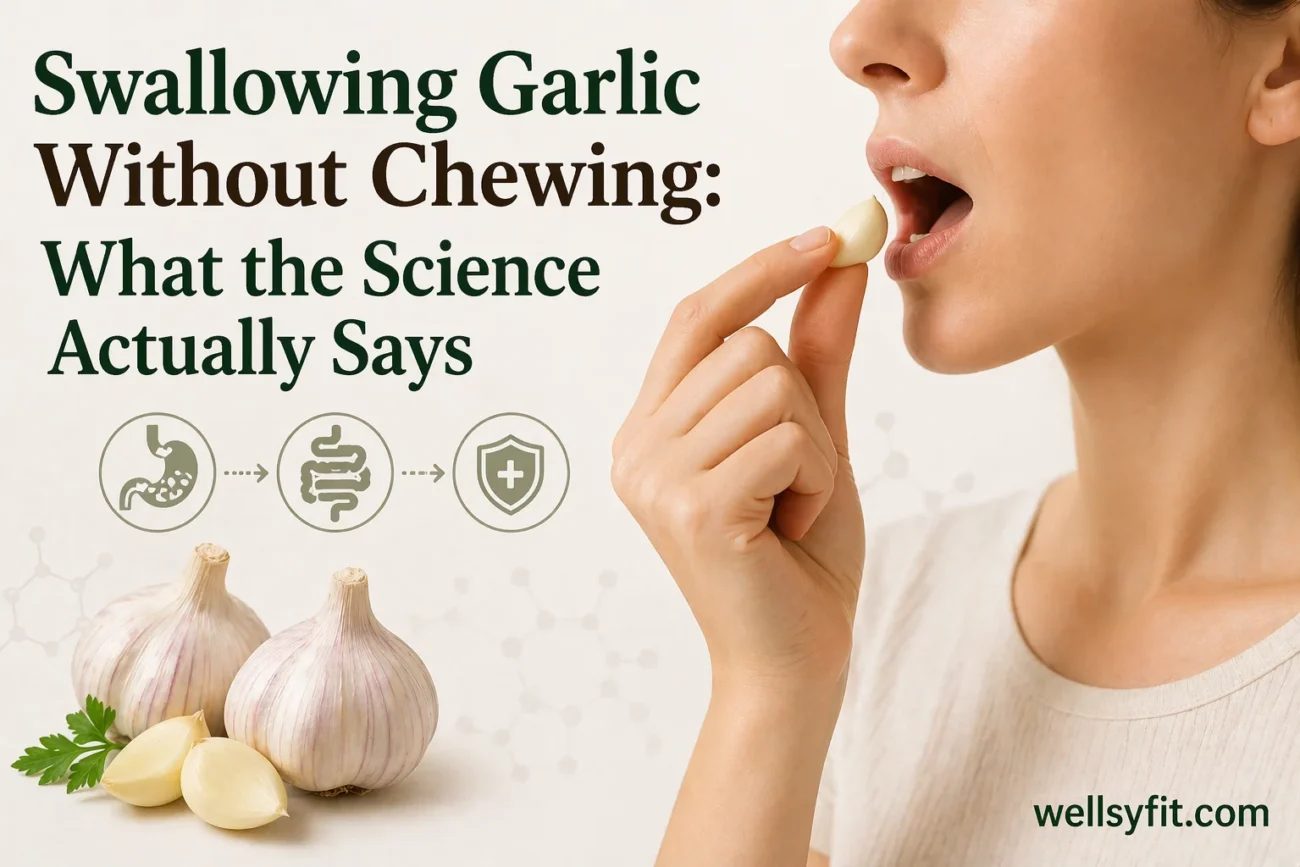
The benefits of swallowing garlic without chewing are far more limited than the internet makes them sound. And there is a clinical study that proves it directly.
Before you read another blog post claiming you can swallow a raw clove each morning and get all of garlic’s famous health effects, you need to understand one chemical reaction. Everything about garlic’s power comes down to it.
This article covers the full science, what a peer-reviewed human study found when it compared swallowing to chewing directly, what limited benefits swallowing may still offer, and the exact preparation methods that actually work. No hype. Just the honest answer.
The One Chemical Reaction That Controls Everything
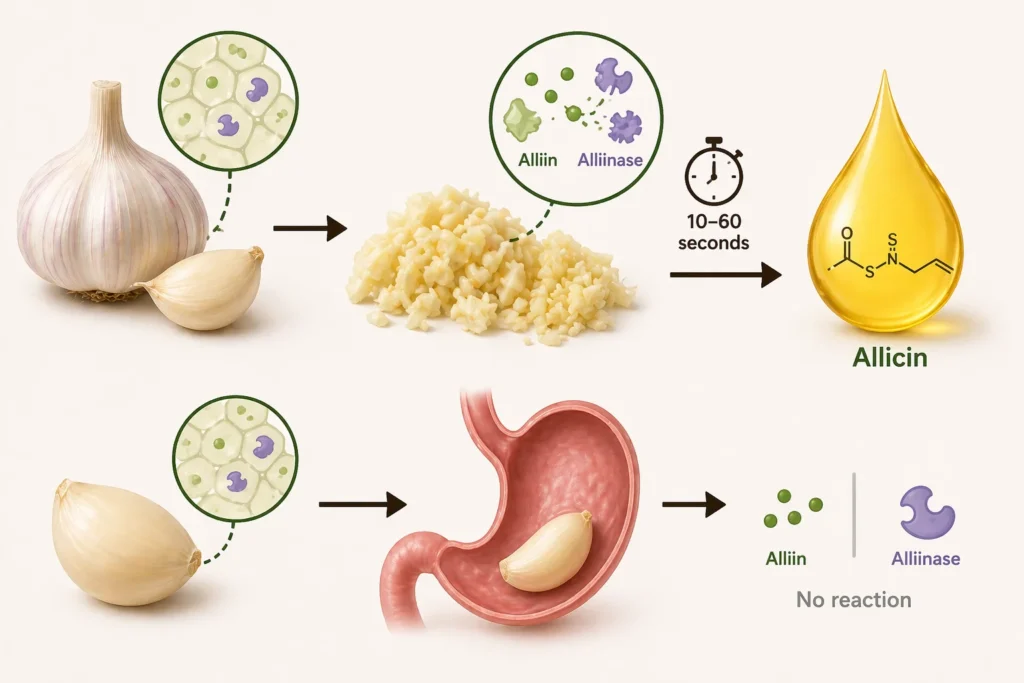
Garlic’s health reputation rests almost entirely on a single compound: allicin. But here is the part most people miss. Allicin does not exist inside an intact garlic clove. It has to be created.
When raw garlic cells are physically disrupted, by chopping, crushing, or chewing, two things that were previously separated come into contact. The compound alliin meets the enzyme alliinase. That meeting triggers a rapid chemical reaction that produces allicin within 10 to 60 seconds.
S-allyl-L-cysteine sulfoxide, known as alliin, accounts for approximately 80% of the cysteine sulfoxides in garlic. When raw garlic cloves are crushed, chopped, or chewed, an enzyme called alliinase is released, which catalyzes the formation of allicin. This reaction has been found to be complete within 10 to 60 seconds of crushing garlic.
When you swallow a whole clove without chewing, the cell walls stay intact. Alliin and alliinase stay separated. The reaction does not happen. No allicin is formed, at least not in any meaningful amount.
This is not a minor technicality. It is the entire foundation of why preparation method matters so much with garlic.
What the Clinical Study Found: Swallowing vs. Chewing
Most garlic content online ignores the direct human research on this exact question. A published clinical study compared what happens when people swallow garlic versus when they chew it.
Ingestion of garlic by chewing, or as crushed garlic, reduced cholesterol, triglyceride, malondialdehyde (a marker of oxidative stress), and both systolic and diastolic blood pressure. Undamaged garlic that was swallowed had no significant effect on serum lipids, triglycerides, cholesterol, LDL, HDL, or diastolic blood pressure. The researchers concluded that undamaged garlic swallowed whole had no lowering effect on lipid levels in the blood, and their hypothesis was that this was because of the inability of alliin to convert to allicin.
That is a direct comparison, conducted in humans, and the conclusion is unambiguous. Swallowing an intact clove bypassed the chemical reaction entirely and delivered no measurable cardiovascular benefit. Chewing or crushing the same garlic produced significant results across multiple health markers.
One point worth noting: the swallowing group still showed a modest reduction in systolic blood pressure and oxidative stress markers. This suggests that even without full allicin activation, some minor bioactive compounds may still be absorbed through other pathways. But the difference in effect between the two methods was dramatic.
So, Are There Any Real Benefits to Swallowing Garlic Without Chewing?
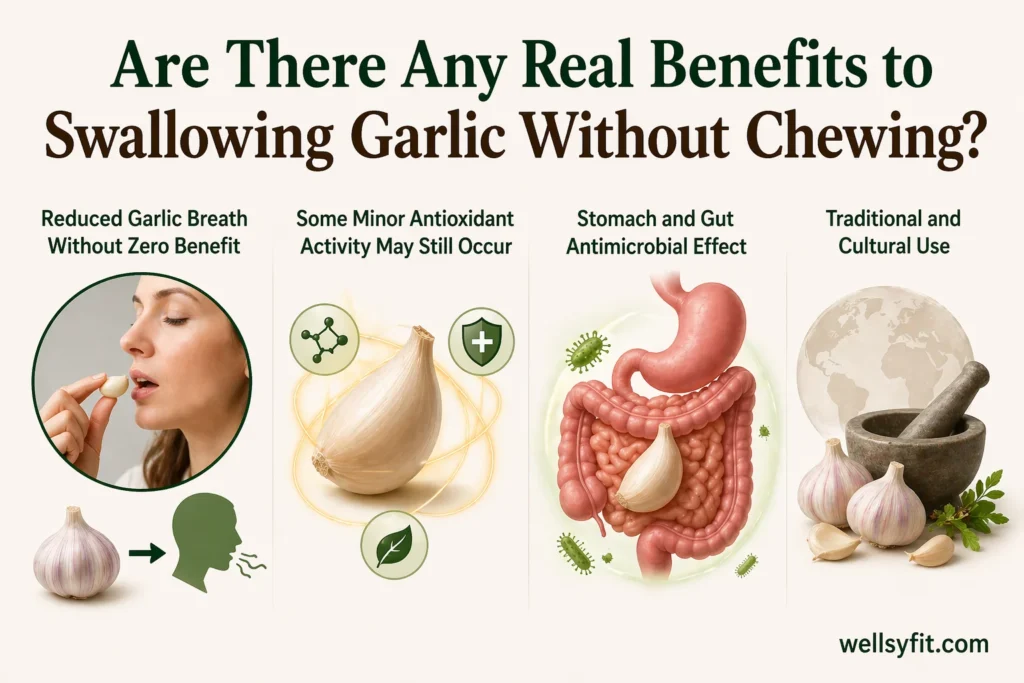
The honest answer is: a small number, with important caveats.
Reduced Garlic Breath Without Zero Benefit
Swallowing a garlic clove whole means you avoid the immediate release of sulfur compounds in your mouth, which is what causes the strong garlic odor on your breath after chewing. For people who want some garlic in their routine but cannot tolerate the social consequence of raw garlic breath at work or in the morning, this is a genuine practical trade-off.
You get less breath odor. You also get significantly less allicin. Whether that trade-off is worth it depends on your reason for taking garlic in the first place.
Some Minor Antioxidant Activity May Still Occur
Even without allicin formation, garlic contains other sulfur compounds including S-allylcysteine (SAC) and gamma-glutamyl cysteine that do not require cellular disruption to be bioavailable. These compounds have antioxidant properties and are present in the intact clove.
Both allicin and gamma-glutamyl-S-allylcysteine appear to be responsible for the hypotensive effects of garlic. No other compound has yet been shown to have significant activity at levels present in a normal human dose of crushed raw garlic.
This means swallowing garlic whole may still contribute a low level of antioxidant support through these secondary compounds, even though the primary allicin pathway is largely blocked.
Stomach and Gut Antimicrobial Effect
There is a specific scenario where swallowing garlic whole may have a targeted benefit: inside the digestive tract itself. Some research suggests that even partial compound release from an intact clove as it passes through the stomach and intestines may offer mild antimicrobial effects against certain gut pathogens.
This is not well-established in high-quality human studies, and the evidence is limited. But it is one niche application that is different from seeking cardiovascular or immune effects systemically.
Traditional and Cultural Use
In many traditional medicine systems across Eastern Europe, the Middle East, and parts of Asia, swallowing whole garlic cloves has been practiced for generations as a remedy for intestinal parasites, digestive infections, and general immunity. This practice predates the discovery of allicin chemistry by centuries.
While modern science shows the systemic benefits are limited compared to crushed garlic, the persistence of this practice across many independent cultures suggests there may be practical applications that are not yet fully studied.
What Genuinely Maximizes Garlic’s Benefits
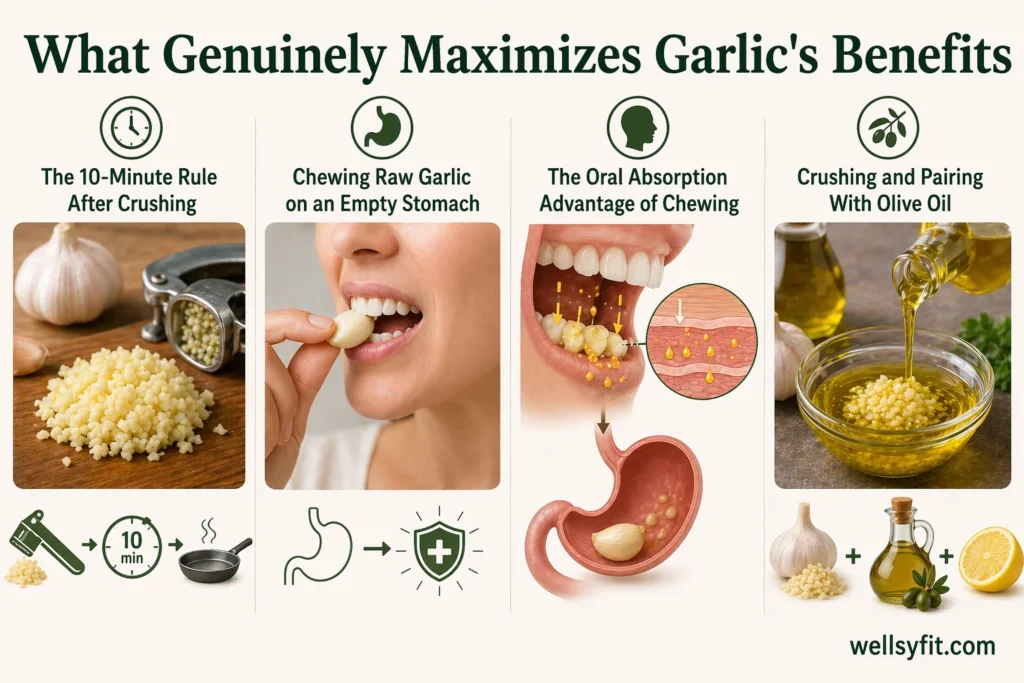
If you want the real health benefits that have been studied and confirmed in clinical research, here is what the science actually supports.
The 10-Minute Rule After Crushing
The 10-minute rule is critical: chop or crush garlic, then wait 10 minutes before heating. This allows full allicin formation before heat deactivates the enzyme alliinase. Microwave cooking of unpeeled, uncrushed garlic totally destroys alliinase enzyme activity.
This single step, waiting 10 minutes after crushing before applying heat, preserves the allicin that would otherwise be destroyed the moment the pan heats up. Most home cooks skip this step without knowing it costs them almost all of the medicinal benefit.
Chewing Raw Garlic on an Empty Stomach
Chewing raw garlic activates up to 1,000 times more antioxidants than processed forms, with proven links to reduced stomach cancer risk. Allicin formation peaks after 30 to 60 seconds of thorough chewing. Quick bites or swallowing chunks prevents full activation.
Many practitioners recommend consuming crushed or chewed raw garlic on an empty stomach, as absorption appears to be more efficient before other foods are present in the digestive tract. For those with a sensitive stomach, taking it with a small amount of food reduces irritation.
The Oral Absorption Advantage of Chewing
This is one of the most important points that competitor articles consistently miss. When you chew raw garlic and hold it in your mouth briefly, allicin begins absorbing through the oral mucosa, the soft tissue lining of your mouth, before it even reaches the stomach.
Chewing holds the crushed garlic in the mouth for an extended period, typically 60 to 120 seconds. This oral retention allows allicin to begin absorbing through the oral mucosa before swallowing, bypassing the destructive stomach acid environment that can degrade allicin before it reaches the small intestine.
When you swallow whole, you skip this oral absorption window entirely and send the intact clove directly into an acidic stomach environment that degrades alliinase before it can do its job.
Crushing and Pairing With Olive Oil
Cold-pressed olive oil stabilizes allicin derivatives. Mixing crushed garlic with olive oil and letting it sit for one hour at room temperature increases the stability of allicin compounds. Pairing crushed garlic with lemon juice or vinegar in dressings also preserves some compounds while mellowing the sharpness.
This is an accessible daily habit. A simple dressing made from minced garlic, olive oil, and lemon juice, prepared 10 minutes before eating, delivers meaningfully more allicin than swallowing three whole cloves ever would.
Proven Health Benefits of Garlic When Prepared Correctly
When garlic is prepared properly, the research behind its health benefits is genuinely compelling. Here is what the evidence supports.
Cardiovascular Health
Current research shows that garlic may help lower blood pressure and cholesterol levels, reducing the risk of cardiovascular diseases. Scientists now know that most of garlic’s health benefits are due to the formation of sulfur compounds when you chop, crush, or chew a garlic clove.
Specifically, chewed or crushed garlic has been shown to reduce LDL cholesterol, lower triglycerides, reduce blood pressure in hypertensive individuals, and inhibit platelet aggregation, which reduces clotting risk.
Immune Support
Garlic has been studied for its effects on the common cold and respiratory infections. A large placebo-controlled trial found that people who took allicin-containing garlic supplements had significantly fewer colds than the placebo group, and those who did get sick recovered faster.
Antioxidant and Anti-Inflammatory Properties
Garlic contains antioxidants that support the body’s protective mechanisms against oxidative damage. Long-term garlic consumption may reduce oxidative stress markers in the blood, which is associated with reduced risk of chronic diseases including certain cancers and neurodegenerative conditions.
Heavy Metal Detoxification
At high doses, the sulfur compounds in garlic have been shown to protect against organ damage from heavy metal toxicity. A 2012 study involving employees at a car battery plant who had excessive lead exposure found that garlic reduced lead levels in the blood by 19% and reduced many clinical signs of toxicity including headaches and high blood pressure. Three doses of garlic daily outperformed the drug D-penicillamine in reducing symptoms.
Who Should Be Careful With Raw Garlic
Raw garlic in any form is not right for everyone. Be cautious if you fall into these categories.
People with GERD or gastric ulcers should avoid raw garlic because its acidity can worsen symptoms. Cooked garlic, while lower in allicin, is better tolerated and still provides some benefit.
People taking blood thinners such as warfarin should consult their doctor before significantly increasing garlic intake, as garlic inhibits platelet aggregation and may increase bleeding risk.
People scheduled for surgery should avoid therapeutic amounts of garlic for seven to ten days before the procedure for the same reason.
People on certain HIV medications should be aware that garlic supplements have been shown to reduce the bioavailability of some protease inhibitors significantly.
The Verdict
Swallowing garlic without chewing is not useless, but it is far less effective than the wellness community often suggests. The clinical research is clear: whole, intact garlic does not activate allicin in any meaningful amount, which means the cardiovascular and immune benefits that have made garlic famous do not transfer when you skip the chewing step.
If you are swallowing whole cloves to avoid garlic breath, that is a legitimate trade-off you can make consciously. If you are doing it hoping for the same results as chewing or crushing, the science says you are likely missing most of the benefit.
Crush it. Wait ten minutes. Then eat it. That one habit change, backed by real chemistry and real clinical evidence, is worth more than a hundred whole cloves swallowed on faith.
Frequently Asked Questions
Disclaimer: Content on WellsyFit is for informational purposes only and does not replace professional medical advice. Always consult a healthcare provider.