
You switched to brown rice because it is supposed to be the healthy choice. Now your stomach disagrees. If you are wondering does brown rice cause gas, the honest answer is yes, it can. But whether it actually does for you specifically depends on factors most people never consider, including your gut bacteria, how you cook it, and what you eat alongside it.
Brown rice is genuinely nutritious. It is a whole grain packed with fiber, magnesium, B vitamins, and antioxidants. But those same properties that make it beneficial are also exactly why it causes digestive trouble for some people and not others.
This guide breaks down the science clearly, identifies who is most likely to have problems, covers the conditions that make it worse, and gives you seven practical fixes you can use starting today.
The Short Answer: Yes, But Here Is Why
Does brown rice cause gas? The answer is not a simple yes or no. It is a conditional yes.
Brown rice causes gas in some people because of its fiber content and the presence of compounds called anti-nutrients. When your digestive system cannot fully break down these components in the small intestine, they travel to the large intestine where gut bacteria ferment them. That fermentation process produces gas.
The key point is that the same fermentation process is also how fiber feeds your gut microbiome and supports long-term digestive health. Gas is sometimes a sign that your digestive system is working on something useful, not just a sign that something is wrong.
What Is Actually in Brown Rice That Causes Gas?
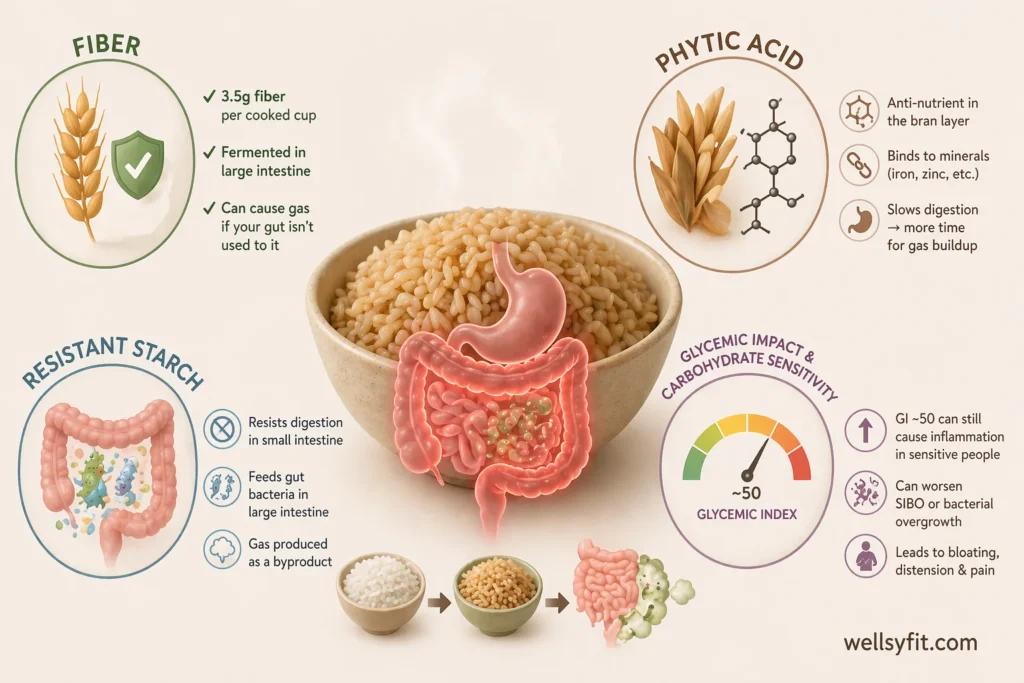
Not all gas is created equal, and not all ingredients cause it the same way. Brown rice contains four specific components that each trigger gas through a different mechanism. Understanding which one is affecting you is the fastest way to fix it.
Fiber: The Main Culprit
Brown rice has mainly insoluble fiber, which is the type that does not dissolve in water and passes through the digestive tract largely intact. While insoluble fiber is excellent for preventing constipation and feeding beneficial bacteria, it can produce gas during fermentation in the large intestine.
The fiber content of brown rice is about 3.5 grams per cooked cup, compared to roughly 0.6 grams in white rice. That is a meaningful difference. If you switched from white rice to brown rice recently, your gut bacteria population may simply not be prepared for the sudden increase in fermentable material.
For some individuals, the high fiber content in brown rice can actually improve digestion and promote regular bowel movements. For others, it leads to fermentation in the intestine and gas production. Whether you fall in the first group or the second depends heavily on what your gut microbiome currently looks like.
Phytic Acid: The Anti-Nutrient Factor
Brown rice contains anti-nutrients such as phytic acid, which can limit the absorption of minerals like iron and zinc and cause digestive discomfort.
Phytic acid is found in the bran layer of brown rice, the same layer that is removed when making white rice. It binds to minerals in the digestive tract and can slow overall digestion. Slower digestion means food spends longer in the gut, which creates more opportunity for fermentation and gas buildup.
This is one of the most overlooked causes of brown rice gas, and most articles barely mention it.
Resistant Starch
Brown rice contains more resistant starch than white rice, meaning a portion of its carbohydrates resist digestion in the small intestine entirely. Compared to white rice, brown rice has a 41% longer active digestion duration and produces glucose at a slower rate.
While slower digestion is generally beneficial for blood sugar control, that resistant starch that reaches the large intestine intact becomes food for gut bacteria, which produces gas as a byproduct. This is the same mechanism behind why beans and legumes cause gas.
Glycemic Impact and Carbohydrate Sensitivity
Brown rice has a glycemic index score of around 50, and for those who are highly sensitive to carbohydrates, this level can still induce inflammation, which can upset digestion. People with bacterial overgrowth conditions such as SIBO can find that even a moderate glycemic food like brown rice causes significant bloating, distension, and pain.
Who Is Most Likely to Experience Gas From Brown Rice?

Understanding whether you are at risk matters more than knowing the general statistics. Here are the groups most likely to experience digestive discomfort from brown rice.
People Who Recently Made the Switch
If you ate white rice for years and switched to brown rice, your gut bacteria have not adapted yet. The microbiome is genuinely flexible, but it takes time to build populations of the bacteria that efficiently process high-fiber whole grains. Giving your gut two to four weeks to adjust, while increasing brown rice portions slowly, resolves the gas problem for many people in this category.
People With IBS or SIBO
While brown rice is more nutritious than white rice, it might not be the best option for someone with bloating or IBS, as it retains its fiber which can irritate the bowels.
For people with irritable bowel syndrome or small intestinal bacterial overgrowth, the fiber and resistant starch in brown rice can be particularly problematic. Breath hydrogen testing can help confirm whether bacterial overgrowth is the underlying reason your gas is persistent and severe.
People With a Low-Fiber Baseline Diet
If your overall diet is very low in fiber and you add a significant portion of brown rice to a meal, your digestive system receives a sudden surge of fermentable material it is not used to handling. The result is predictably gassy.
People Eating Brown Rice With Other Gas-Producing Foods
This is one of the most common mistakes and one of the most overlooked causes. Pairing rice with other known gas-producing foods like beans, broccoli, or onions can be the real issue behind digestive discomfort, not the rice alone. A bowl of brown rice with black beans, broccoli, and garlic sauce is essentially a concentrated gas-production event for any sensitive digestive system.
Brown Rice vs. White Rice: Which Causes More Gas?
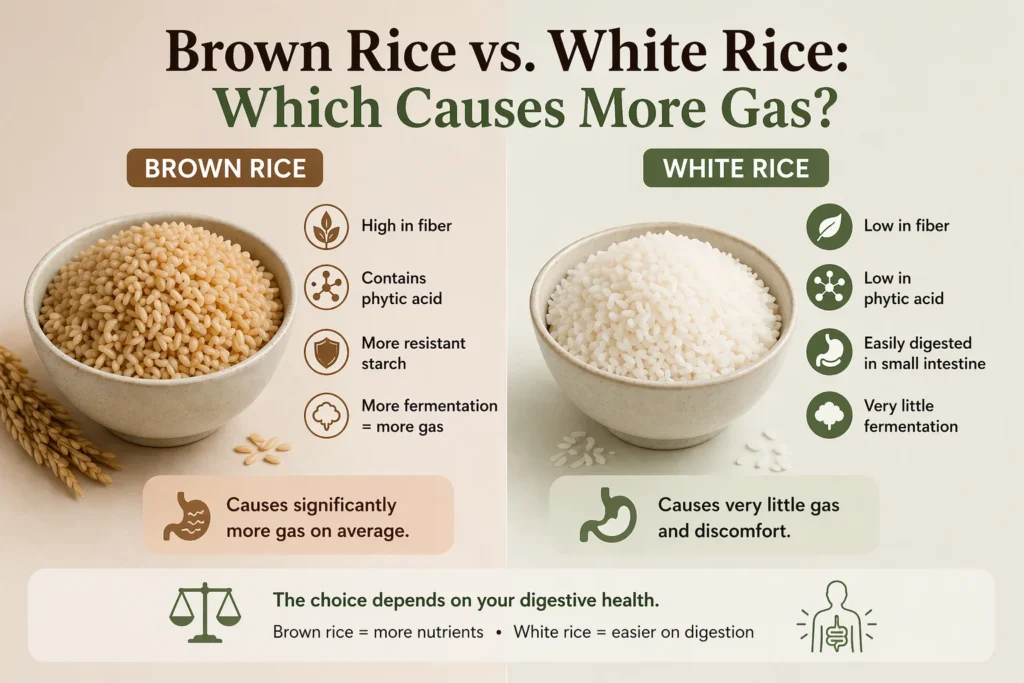
White rice is one of the most easily digestible carbohydrates available. It is low in fiber, low in phytic acid, and digested almost entirely in the small intestine, leaving very little material for fermentation. For people with sensitive digestive systems, IBS, or recovering from illness, white rice is often the recommended option precisely because it causes so little gas and discomfort.
Brown rice causes significantly more gas on average simply because of its fiber, phytic acid, and resistant starch content. However, that does not automatically make white rice the better choice for everyone. For people with healthy digestive systems and diverse gut microbiomes, the gas produced by brown rice is typically mild and temporary, while the nutritional benefits, including better blood sugar regulation, more fiber, more vitamins, and better satiety, can outweigh the discomfort.
The choice between brown and white rice for gas reduction depends entirely on your individual digestive health profile.
7 Practical Ways to Reduce Gas From Brown Rice

These are evidence-based, easy-to-implement strategies that work with your digestive biology rather than against it.
1. Soak It Before Cooking
Soaking brown rice for at least 8 hours before cooking has a meaningful impact on its digestibility. Soaking or sprouting brown rice before cooking can help reduce the levels of anti-nutrients and make it easier to digest. The soaking process begins breaking down phytic acid, reducing its ability to interfere with digestion. Discard the soaking water and rinse the rice thoroughly before cooking.
2. Rinse It Well
Rinsing brown rice under cold water before cooking removes surface starch and some impurities. This is a quick step that takes 30 seconds and noticeably reduces post-meal bloating for many people.
3. Increase Your Portion Size Gradually
If you are new to brown rice or high-fiber eating, start with a half portion. Give your gut microbiome four to six weeks to adapt before moving to full servings. Your gut bacteria will build up the capacity to handle more fiber over time.
4. Chew Thoroughly and Eat Slowly
Eating brown rice and other foods too quickly causes you to swallow air, which gets stuck in your digestive tract. The gas you experience may partly be swallowed air rather than fermentation gas. Slowing down and chewing each mouthful well allows your digestive enzymes to begin breaking down the starch before it even reaches your stomach, which significantly reduces the fermentation load on your large intestine.
5. Watch What You Pair It With
Be mindful of combining brown rice with other high-fiber or gas-producing foods in the same meal. If brown rice is already pushing your gas threshold, adding beans, cruciferous vegetables, or garlic in the same sitting multiplies the effect. Try pairing brown rice with easily digestible proteins like chicken, eggs, or fish instead.
6. Consider Digestive Enzyme Supplements
Over-the-counter enzyme supplements can help prevent gas, but you must take them before eating brown rice or other gas-producing foods. Products containing amylase, which breaks down starch, are particularly relevant for rice-related gas. Check with your doctor before starting any supplement, especially if you take medication.
7. Try a Six-Week Elimination and Reintroduction
If your gas from brown rice is persistent and uncomfortable, eliminating brown rice for six weeks and monitoring symptoms is a useful diagnostic approach. If symptoms subside, a gradual reintroduction, starting with just a dinner serving, can help confirm whether brown rice is the specific trigger. If symptoms return, you may need to explore whether an underlying condition like SIBO is involved.
When Gas Is Not Just Gas: Signs to See a Doctor
Occasional gas after eating high-fiber foods is completely normal. It is worth seeking medical advice, however, if you experience any of the following alongside your gas symptoms:
- Persistent bloating that does not improve after trying the strategies above
- Severe abdominal cramping or pain after eating rice or other grains
- Sudden changes in bowel habits alongside the gas
- Unexplained weight loss
These symptoms could point to IBS, SIBO, celiac disease (even though rice is gluten-free, cross-contamination and overlapping conditions are possible), or other digestive conditions that deserve professional evaluation.
The Bottom Line
Does brown rice cause gas? Yes, it can, and the reasons are rooted in its fiber content, phytic acid, and resistant starch, all of which are fermented by gut bacteria in the large intestine. But whether it causes gas for you specifically depends on your gut health, your current diet, how you prepare it, and what you eat alongside it.
The good news is that most brown rice gas is preventable with a few simple changes. Soak it, rinse it, eat it slowly, build up your portions gradually, and be thoughtful about what you pair it with.
If gas persists despite all of those steps, that is your body telling you something more specific is going on. Talk to your doctor, ask about a breath hydrogen test, and find out whether an underlying condition is contributing to the problem.
Your gut health is worth paying attention to. Start with the adjustments above and see how your body responds.
Frequently Asked Questions
Disclaimer: Content on WellsyFit is for informational purposes only and does not replace professional medical advice. Always consult a healthcare provider.