
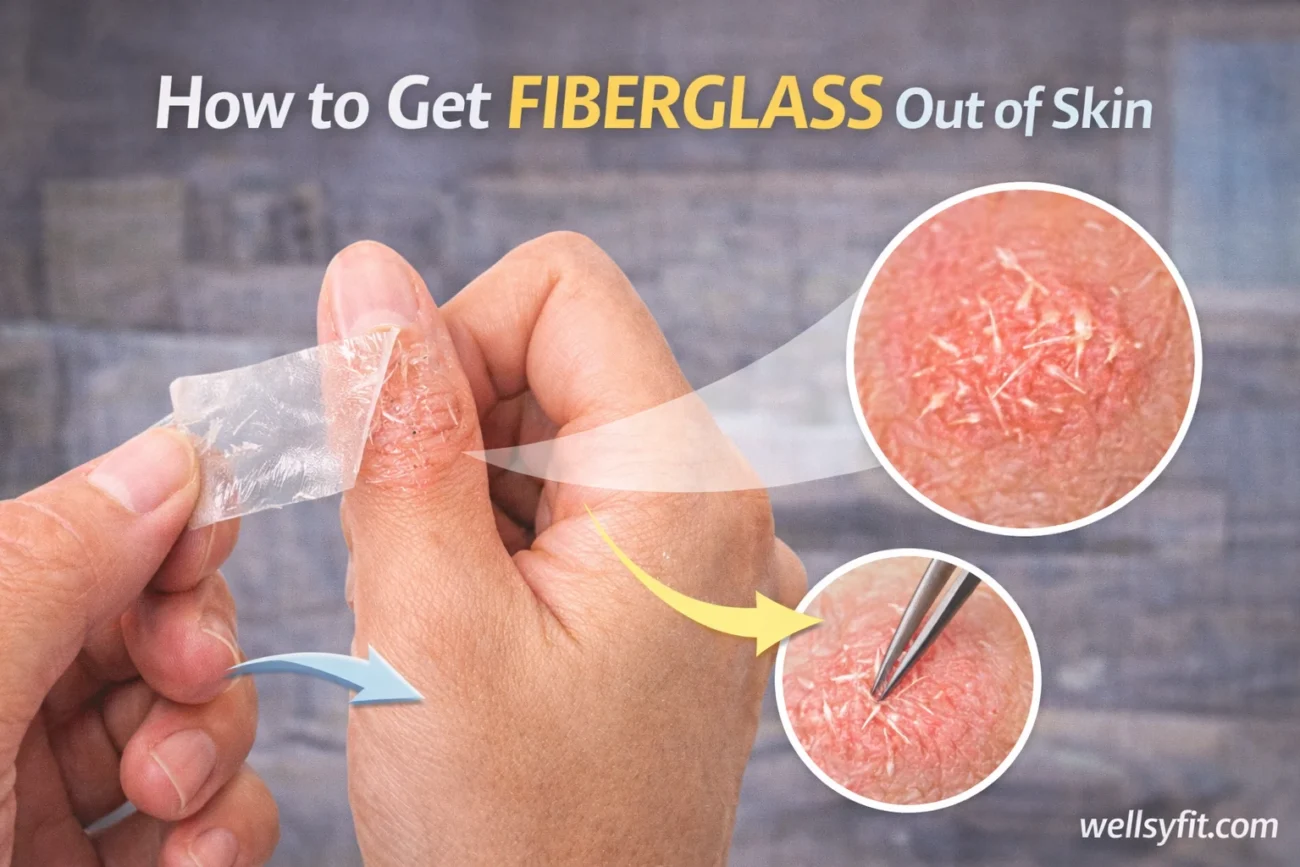
Fiberglass is widely used in insulation, construction materials, boats, and automotive parts. When the material breaks or is disturbed, it releases tiny glass fibers that can stick to your skin. These microscopic splinters can cause intense itching, redness, and irritation.
If you have recently worked with insulation, roofing materials, or fiberglass panels, you might notice your skin feeling prickly or developing a rash. The good news is that most fiberglass exposure is not dangerous and can be handled at home with the right steps.
This guide explains how to get fiberglass out of skin safely, reduce irritation, and prevent the fibers from spreading to other areas of your body.
Why Fiberglass Causes Skin Irritation
Fiberglass is made of extremely thin strands of glass. When these strands break into small fragments, they can easily lodge in the outer layer of your skin.
Unlike regular dust, fiberglass particles are sharp and rigid. When they touch the skin, they may:
- Pierce the surface of the skin
- Trigger itching and redness
- Cause small bumps or rash-like irritation
- Produce a burning or prickly sensation
These fibers usually remain in the top layer of skin, which means they can be removed with proper cleaning techniques.

Signs That Fiberglass Is Stuck in Your Skin
Exposure to fiberglass often causes symptoms within minutes. The severity depends on how much contact occurred and how sensitive your skin is.
Common symptoms include:
- Persistent itching
- Red or irritated patches
- Tiny raised bumps
- A prickling sensation
- Mild swelling in the affected area
Sometimes the fibers are visible as very thin translucent splinters, but in many cases they are too small to see.
How to Get Fiberglass Out of Skin: Step-by-Step Guide
Removing fiberglass quickly helps reduce irritation and prevents fibers from spreading to other parts of the body.
Follow these steps carefully.
Step 1: Avoid Touching or Scratching the Area
The first reaction to fiberglass exposure is usually scratching. However, this can make the situation worse.
Scratching can:
- Push fibers deeper into the skin
- Spread particles to other areas
- Increase inflammation
Instead, keep the affected area still until you can clean it properly.
Step 2: Rinse the Skin With Cool or Lukewarm Water
The first cleaning step is rinsing the exposed skin.
Use running water and allow it to flow over the affected area for several minutes. This helps wash away loose fibers before they settle deeper into the skin.
Tips for rinsing:
- Use cool or lukewarm water, not hot water
- Let the water run over the area for about 5 to 10 minutes
- Avoid rubbing the skin while rinsing
This simple step can remove a large number of surface fibers.
Step 3: Wash the Area With Mild Soap
After rinsing, gently wash the skin with mild soap.
Use your hands or a soft washcloth and lightly clean the area to help lift the remaining fibers.
Important tips:
- Use gentle motions rather than scrubbing
- Avoid exfoliating products
- Rinse thoroughly after washing
Soap helps loosen fibers that are stuck to natural oils on the skin.
Step 4: Use Adhesive Tape to Remove Remaining Fibers
If fibers are still present, adhesive tape can help pull them out.
This method works well for fibers that are embedded slightly in the skin but not deeply.
How to use the tape method:
- Cut a piece of adhesive tape.
- Press it gently onto the affected area.
- Peel the tape off slowly.
- Repeat using fresh tape if necessary.
Each piece of tape lifts small particles from the skin surface.
Avoid pressing too hard, as this may irritate already sensitive skin.
Step 5: Remove Visible Splinters Carefully
Sometimes fiberglass fragments can be seen sticking out of the skin.
If this happens, you can remove them using clean tweezers.
Safe removal tips:
- Sterilize tweezers with alcohol
- Pull the fiber in the direction it entered
- Use steady pressure rather than pulling quickly
If the splinter breaks or cannot be removed easily, stop and consider medical help.
Step 6: Take a Shower to Remove Remaining Fibers
After treating the affected area, it is important to remove fiberglass from the rest of your body.
A shower helps wash away particles that may still be on your skin or hair.
Shower tips:
- Use lukewarm water
- Wash gently with mild soap
- Rinse thoroughly
- Avoid harsh scrubbing
Changing into clean clothing afterward also prevents re-exposure.
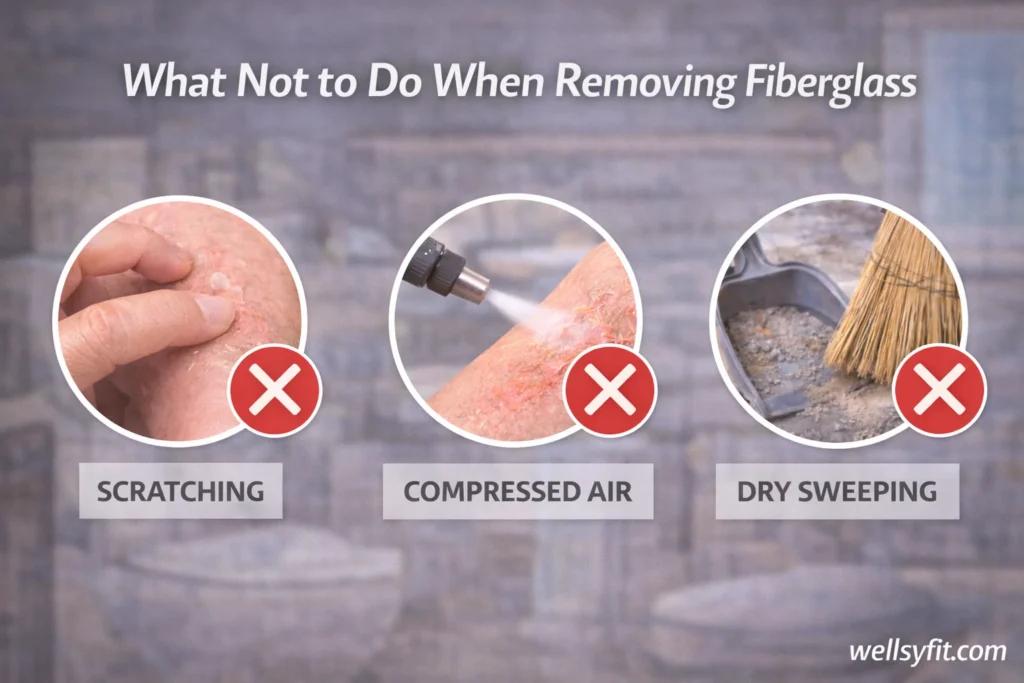
What Not to Do When Removing Fiberglass
Certain actions can make fiberglass irritation worse.
Avoid the following mistakes:
Scratching the Skin
Scratching pushes fibers deeper into the skin and increases inflammation.
Using Compressed Air
Blowing fiberglass off the skin can spread particles into the air and increase inhalation risk.
Dry Sweeping Dust
This stirs fiberglass particles into the air, making exposure more likely.
Scrubbing Aggressively
Harsh scrubbing irritates the skin and may break fibers into smaller fragments.
Gentle cleaning methods work much better.
Skin Care After Removing Fiberglass
Even after fibers are removed, the skin may remain irritated for a short time.
Simple aftercare can help reduce discomfort.
Helpful remedies include:
- Aloe vera gel to soothe irritation
- Hydrocortisone cream to reduce inflammation
- Moisturizer to support skin healing
- Cool compresses to relieve itching
Most mild irritation improves within one to three days.
If symptoms continue longer, medical advice may be need.
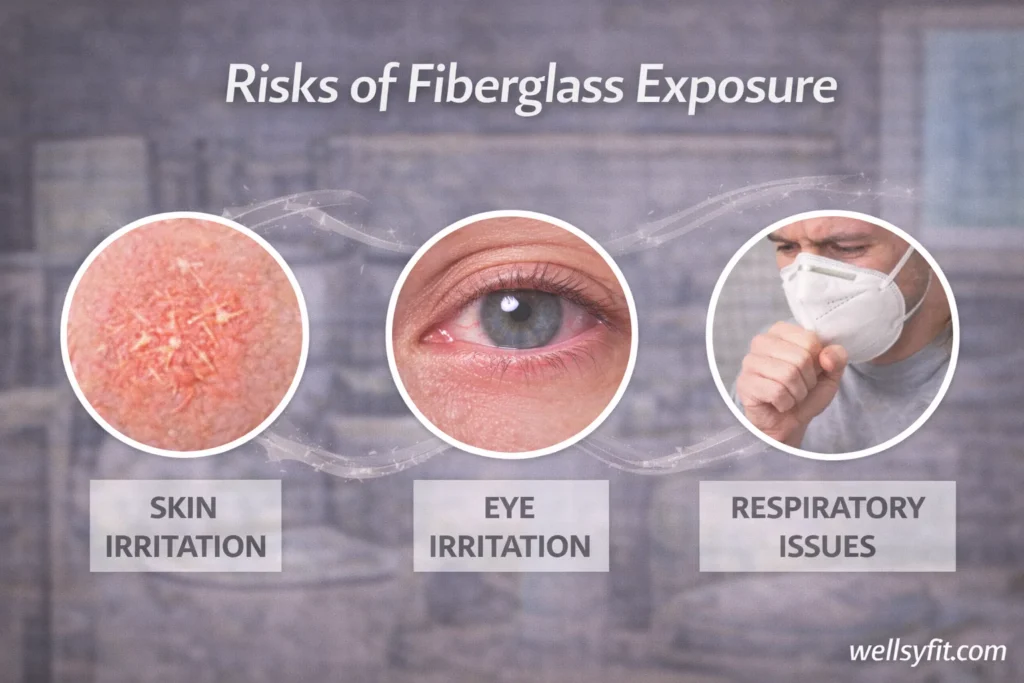
Risks of Fiberglass Exposure
Fiberglass can irritate several parts of the body, not just the skin.
Eye irritation
Particles entering the eyes may cause redness, tearing, or pain.
Nose and throat irritation
Inhaled fibers can cause coughing, throat irritation, or nosebleeds
Skin inflammation
Repeated exposure may trigger a condition called contact dermatitis, which leads to persistent rash and itching.
While fiberglass exposure can be uncomfortable, long-term health effects are uncommon when exposure is limited.
How to Prevent Fiberglass From Getting on Your Skin
Prevention is the best way to avoid fiberglass irritation.
If you work with fiberglass materials, take these precautions.
Wear protective clothing
Use long sleeves, pants, gloves, and closed shoes.
Protect your eyes and lungs
Safety goggles and masks can reduce exposure.
Improve ventilation
Open windows or use ventilation systems when working with fiberglass.
Wash exposed skin quickly
Clean your hands and face before eating, drinking, or touching your eyes.
Handle contaminated clothing carefully
Wash work clothes separately from other laundry.
These steps greatly reduce the chances of fiberglass fibers contacting your skin.
Cleaning Your Home After Fiberglass Exposure
If fiberglass dust spreads indoors, cleaning correctly is important.
Recommended cleaning methods include:
- Wet mopping floors instead of sweeping
- Using a vacuum with a HEPA filter
- Wiping surfaces with damp cloths
Avoid dry sweeping because it spreads fibers into the air.
How Long Does Fiberglass Stay in Skin?
Fiberglass fibers typically remain in the outer layer of skin, which naturally sheds over time.
If fibers are not completely removed, the irritation usually fades within several days as the skin renews itself.
However, leaving fibers in place can prolong itching and increase the chance of spreading them to other areas.
Prompt removal is the best solution.

Final Thoughts
Getting fiberglass on your skin can be uncomfortable, but it is usually manageable with simple home care.
The most effective approach is to rinse the skin, wash gently with soap, and use adhesive tape to lift remaining fibers. Afterward, soothing the skin and taking a shower helps remove lingering particles.
Avoid scratching or rubbing the affected area, as this can push fibers deeper into the skin.
In most cases, irritation improves within a few days. If symptoms worsen or fiberglass becomes embedded deeply, medical attention may be necessary.
Knowing how to get fiberglass out of skin safely not only relieves discomfort but also prevents further exposure and irritation.
FAQs
Disclaimer: Content on WellsyFit is for informational purposes only and does not replace professional medical advice. Always consult a healthcare provider.