

Losing your mucus plug can feel exciting, surprising, and sometimes a little confusing. Many moms immediately wonder what they should or should not do next.
Things to avoid after losing mucus plug mainly include avoiding infection risks, strenuous activity, and anything that may irritate the cervix.
In most cases, it simply means your body is preparing for labor, not that delivery will happen immediately. This guide explains exactly what to avoid, what is safe, and how to stay calm and prepared.
Quick Answer: What Should You Avoid After Losing Mucus Plug

After losing your mucus plug, avoid:
- Putting anything inside the vagina
- Intense physical activity
- Swimming or hot tubs
- Poor hygiene practices
- Ignoring unusual symptoms
These precautions help reduce infection risk and keep both you and your baby safe as your body prepares for birth.
Understanding What Losing the Mucus Plug Means
The mucus plug is a thick protective barrier that seals the cervix during pregnancy. Its main job is to block bacteria and keep the uterus safe.
When it comes out, it usually means the cervix is starting to soften, thin, or open slightly. This is a normal part of the body’s preparation for labor.
Most people lose it after 37 weeks, although the exact timing varies. Some notice a thick discharge all at once, while others lose it gradually over days.
Why Precautions Matter After Losing Mucus Plug
Even though losing the plug is normal, it removes one layer of protection between your uterus and the outside environment.
That does not mean you will automatically get an infection, but it does mean you should be a little more cautious with certain activities.
Simple adjustments can significantly reduce risks and help you feel more confident during the final stretch of pregnancy.
Things to Avoid After Losing Mucus Plug
Avoid inserting anything into the vagina
This is the most important precaution. Once the mucus plug is gone, the cervix may be slightly open, making it easier for bacteria to enter.
Avoid:
- Tampons
- Douching
- Sexual intercourse (unless your provider says it is safe)
- Fingers or other objects
Switch to pads if you need to manage discharge.
Avoid intense or high impact exercise
Your body is already preparing for labor, so it is best to avoid activities that put too much strain on your abdomen or pelvis.
Avoid:
- Heavy lifting
- High intensity workouts
- Jumping exercises
Gentle walking or prenatal stretches are usually safe, but always follow your provider’s advice.
Avoid swimming in public or unclean water
Pools, lakes, and hot tubs can contain bacteria that may increase infection risk once the protective barrier is gone.
If you want to bathe, showers are typically safer than soaking in water. If you choose a bath, keep the tub clean and water warm, not hot.
Avoid poor hygiene habits
Good hygiene becomes even more important now.
Avoid:
- Wearing damp or unclean underwear
- Not changing pads regularly
- Wiping back to front
Keeping the area clean and dry helps prevent irritation and infection.
Avoid ignoring warning signs
It is easy to assume everything is normal, but some symptoms should never be ignored.
Contact your healthcare provider if you notice:
- Heavy bleeding
- Fever
- Foul smelling discharge
- Strong cramps or contractions
- Sudden fluid leak
These may indicate labor or a complication that needs evaluation.
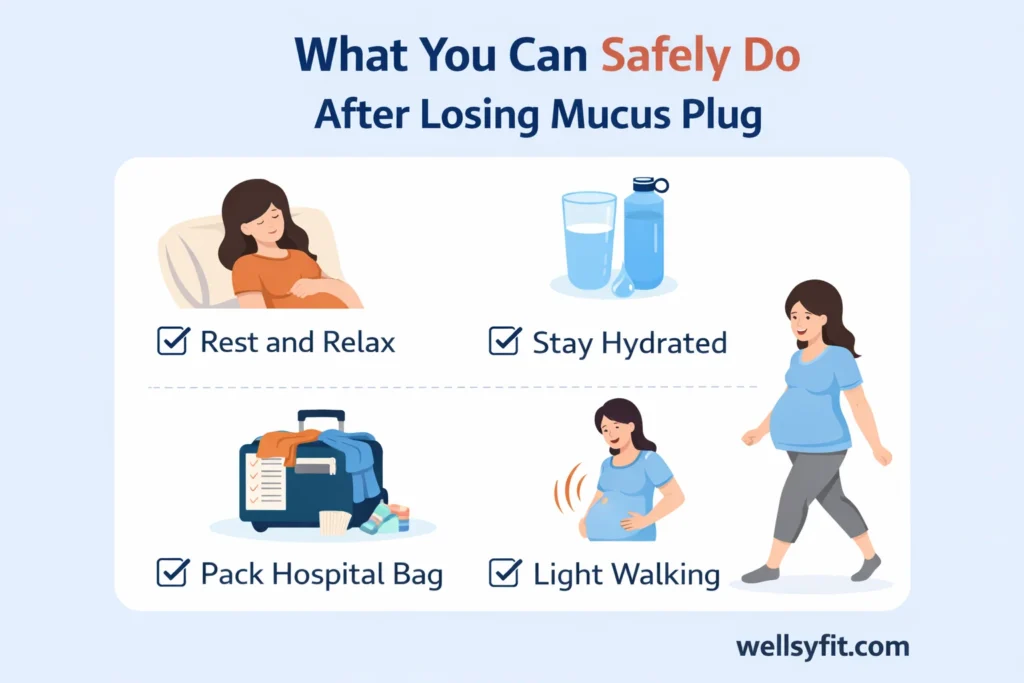
What You Can Safely Do After Losing Mucus Plug
Knowing what is safe can ease anxiety and help you feel more in control.
You can usually:
- Continue light daily activities
- Take warm showers
- Rest and stay hydrated
- Monitor your body for labor signs
- Prepare your hospital bag
Most providers recommend simply staying aware rather than drastically changing your routine.
How Soon Does Labor Start After Losing Mucus Plug
This is one of the most common questions.
Labor may begin:
- Within hours
- In a few days
- Or even weeks later
The mucus plug alone is not a precise predictor. More reliable signs include regular contractions, water breaking, and increasing pelvic pressure.
Signs Labor Is Approaching

After losing the mucus plug, watch for these changes:
- Regular, strong contractions
- Lower back pressure
- Baby dropping lower in pelvis
- Water breaking
- Increased cramping
If you notice these signs, contact your provider or prepare to head to the hospital.
Emotional Reassurance for Expecting Moms
It is completely normal to feel nervous or unsure after losing the mucus plug. For many, it is one of the first visible signs that birth is getting closer.
Remember:
Your body is designed for this process.
Losing the plug is a natural milestone, not a problem.
Staying informed and listening to your body can help you feel more confident as labor approaches.
Common Myths About Losing the Mucus Plug
Myth: Labor will start immediately
Reality: It may still be days or weeks away.
Myth: You must stop all activity
Reality: Light activity is usually fine.
Myth: It always comes out in one piece
Reality: It can come out gradually and go unnoticed.
Understanding these myths can reduce unnecessary worry.
When to Call Your Healthcare Provider
While losing the mucus plug is usually normal, there are times when you should seek advice.
Call your provider if:
- It happens before 37 weeks
- There is heavy bleeding
- You suspect your water broke
- You feel decreased baby movement
- You have severe pain or fever
It is always better to ask questions and feel reassured.
How to Prepare After Losing Mucus Plug
This is a great time to get ready for the next stage.
Helpful steps include:
- Finalizing your birth plan
- Packing hospital essentials
- Keeping emergency contacts ready
- Tracking contractions if they start
- Prioritizing rest
Preparation can reduce stress and make the transition to labor smoother.
FAQs About Things to Avoid After Losing Mucus Plug
Final Thoughts
Knowing the things to avoid after losing mucus plug can help you feel calm and prepared instead of anxious.
The key takeaway is simple: focus on preventing infection, avoiding strain, and paying attention to your body.
Most importantly, remember that losing the mucus plug is a sign that your body is moving closer to birth, not a sign that something is wrong.
Every pregnancy journey is unique, but with the right knowledge and support, you can navigate this stage with confidence and peace of mind.
References
These trusted medical sources support key points in this guide, including mucus plug basics, signs of labor, and when to contact your healthcare provider.
Disclaimer: Content on WellsyFit is for informational purposes only and does not replace professional medical advice. Always consult a healthcare provider.