
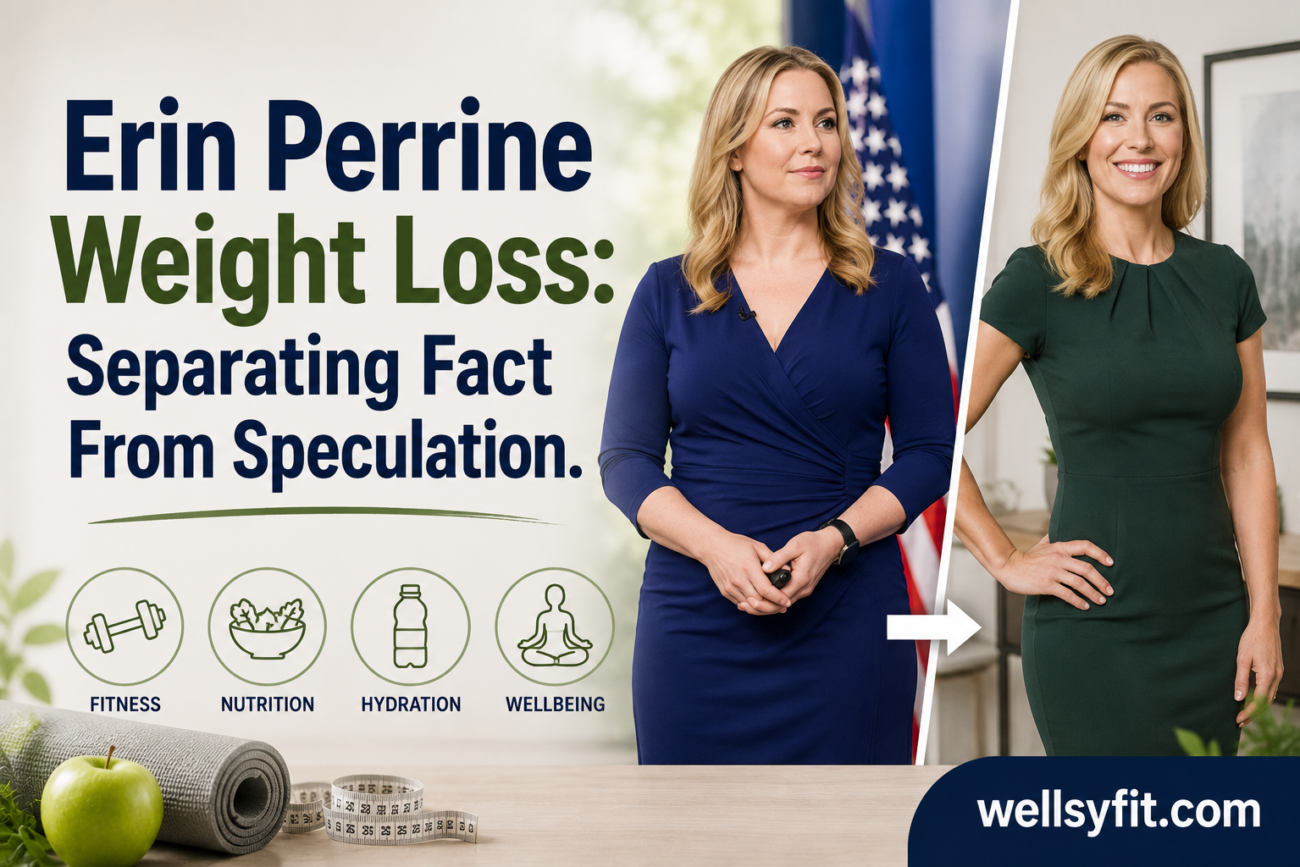
Search for Erin Perrine weight loss and you will find dozens of articles describing her diet, her exercise routine, and the exact pounds she supposedly shed. Nearly all of it is invented. Erin Perrine has never publicly discussed losing weight, never shared a diet plan, and never confirmed any transformation. What follows is the honest version of this story, which is mostly about why so many websites are confidently telling you things that were never verified.
What Is Actually Confirmed About Erin Perrine’s Weight
The short answer is nothing. There is no confirmed Erin Perrine weight loss story because she has never spoken about the subject publicly. No interview, no social media post, no statement. The claim exists entirely as online speculation.
Even some of the articles promoting the topic admit this when you read them closely. One states plainly that she has never announced losing weight and has not written a diet book. Another acknowledges there is no verified evidence of a dramatic transformation and that most claims come from speculation or misidentified photos.
That gap between what is claimed and what is confirmed is the entire story here. When a topic has no verified source, responsible reporting says so. Instead, most of what ranks for this term fills the silence with invented detail.
Who Erin Perrine Actually Is
Setting the weight speculation aside, Erin Perrine is a real and accomplished professional whose actual career is well documented. She is an American political communications strategist, born in 1988 in Rochester, New York.
She built her reputation in political messaging and served as a press lead during Donald Trump’s 2020 re-election campaign. She has appeared frequently on major news networks as a communications expert and spokesperson. Her professional record is public and verifiable, which stands in sharp contrast to the invented personal details attached to her name in weight loss content.
This distinction matters. Everything credible about Erin Perrine relates to her career. The material about her body is where the sourcing disappears entirely.
Why These Searches Trend Despite No Real Story
If there is nothing confirmed, why does the topic generate so much search traffic and so many articles? The answer says more about how online content works than about Erin Perrine herself.
The Content Farm Incentive
Celebrity and public-figure weight loss is a high-volume search category with predictable demand. Content sites know people search these terms, so they produce articles to capture the traffic regardless of whether a real story exists. When there is no verified information, they generate plausible-sounding detail instead.
You can see the pattern across the results. One site admits she never gave a strict meal plan, then immediately lists the proteins and whole grains she supposedly ate. Another estimates she shed a moderate amount of weight while conceding no figures are confirmed. The detail is manufactured to fill an article, not reported from any source.
How Appearance Alone Fuels Speculation
Much of the speculation likely traces back to nothing more than normal variation in how someone looks on camera. Lighting, camera angles, makeup, and clothing all change how a person appears on screen from one appearance to the next.
A professional who wears tailored blazers on television can look noticeably different simply by switching from a looser jacket to a more fitted one. Viewers interpret that as weight change when it may be nothing more than wardrobe. Without a statement from the person themselves, appearance is not evidence of anything.
The Real Problem With Body Speculation
Beyond the accuracy issue, there is a genuine ethical concern with this entire category of content. Publicly analyzing a private individual’s body, and inventing medical or lifestyle details about them, causes real harm.
Dr. Vivienne Lewis, a clinical psychologist and academic who has spent more than 20 years researching eating disorders, drew a clear line between scrutiny and genuine concern in an analysis published by PBS News:
“Scrutiny asks, ‘What does this person look like?’ Concern asks, ‘How is this person coping?’ When we publicly analyze someone’s body, we’re making assumptions about their health based on appearance alone. Yet you cannot tell if someone has an eating disorder simply by looking at someone.”
Dr. Vivienne Lewis, clinical psychologist and academic
[Source: PBS News Analysis]
Her point applies directly here. Guessing at Erin Perrine’s weight, diet, and body based on television appearances is scrutiny built on assumption. It tells readers nothing true and treats a real person’s body as public property.
Weight change, when it happens at all, can stem from many private causes including illness, medication, stress, or ordinary life changes. None of those are anyone’s business unless the person chooses to share, and Erin Perrine has not.
What to Take Away From This
If you came here looking for Erin Perrine’s diet plan or the number of pounds she lost, the honest answer is that no such verified information exists. Anyone presenting those details as fact is inventing them.
The more useful takeaway is a lesson in reading health and celebrity content critically. When an article confidently describes a private person’s exact diet and routine while admitting the person never discussed it, that is a signal the content is manufactured. Verified stories cite the person’s own words. Invented ones fill the gap with guesses dressed up as reporting.
Erin Perrine is a documented communications professional. That is what is real about her. The weight loss narrative is not, and no amount of confident writing across dozens of sites changes that.
This article is for informational purposes only and does not constitute medical advice. It reflects only publicly verifiable information. Claims about any individual’s health or body that have not been confirmed by that person should be treated as speculation.
Frequently Asked Questions
Disclaimer: Content on WellsyFit is for informational purposes only and does not replace professional medical advice. Always consult a healthcare provider.