
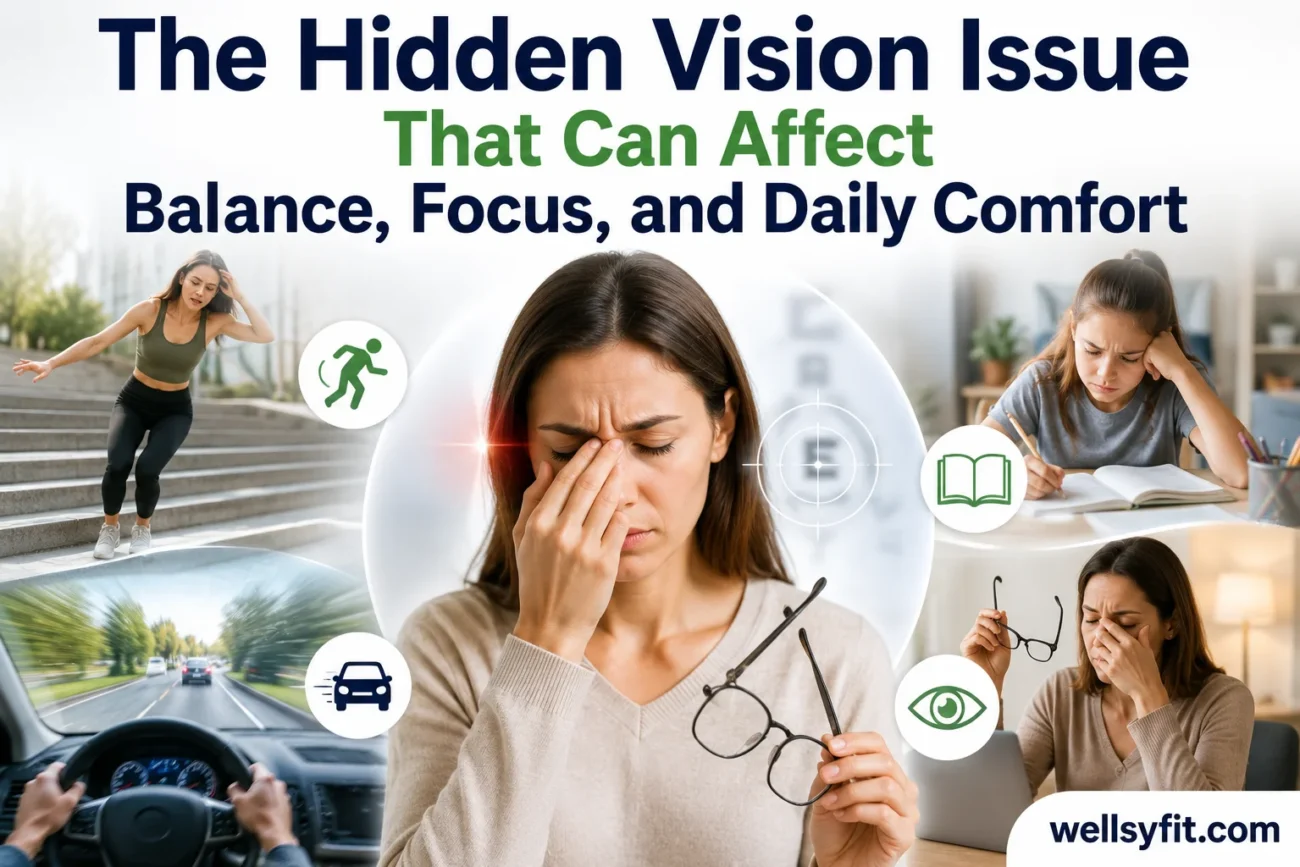
If you frequently battle recurring headaches, unexplained dizziness, or an undeniable sense of screen fatigue by the afternoon, you might assume it is just stress or a need for more rest. Perhaps you feel slightly “off” or struggle to maintain focus during long shifts. These are common daily hurdles, but there is one often-overlooked possibility: the way your eyes work together. Your eyes rely on complex coordination to navigate the world. When this teamwork falters, it can create a cascade of discomfort. Understanding this hidden dynamic is a practical, calming first step toward uncovering why your daily visual tasks feel so taxing.
What Is Binocular Vision Dysfunction?
Binocular Vision Dysfunction (BVD) happens when your two eyes lack perfect coordination. During a standard eye exam, each eye might individually display perfect 20/20 clarity. However, vision is more than just clarity; it is about teamwork. In BVD, a subtle physical misalignment forces the small muscles controlling your eyes to overwork constantly. The brain may need to work harder to merge two slightly different visual inputs into a single, cohesive picture. Because you can still see clearly, this extra effort remains hidden, leading to persistent neuromuscular strain and fatigue that routine eyesight checks may not catch.
Why Vision Plays a Role in Balance
Maintaining steady balance requires a complex sensory feedback loop relying on three specific pillars: your vision, your vestibular system (inner ear), and proprioception (sensors in your muscles and joints). While people often attribute dizziness solely to inner ear issues, your brain heavily relies on visual information for spatial awareness.
When eye teaming is poor, it creates a mismatch between what your eyes see and what your body feels. This conflict is especially noticeable in visually busy or repetitive environments. You might feel unbalanced walking past long rows of items in bright grocery stores, driving in heavy traffic, gazing down long hallways, or even scrolling rapidly on a smartphone.
Note that while BVD may contribute to these feelings of spatial disorientation, it is not the only cause of dizziness or unsteadiness. Many factors influence physical stability, but addressing visual-vestibular mismatch is a crucial piece of the puzzle.
Signs This Hidden Vision Issue May Be Affecting Daily Life
The signs of a hidden vision issue can be surprisingly diverse, often masking themselves as physical or psychological stress. Symptoms typically fall into two categories: physical discomfort and performance struggles. You may experience recurring headaches shortly after reading or using screens, paired with persistent eye strain or pressure. Other physical signs include unexplained dizziness, feeling off-balance, motion sensitivity, and chronic neck tension driven by a subconscious habit of tilting your head to adjust for visual alignment.
On the performance side, you might have trouble focusing on text, frequently lose your place while reading, or experience general fatigue. Environments play a major role too, with many individuals feeling heightened discomfort or anxiety in crowded, visually busy spaces.
The key to recognizing this issue is observing the pattern. If these symptoms consistently flare up during or immediately after specific near-work tasks or in overwhelmingly busy environments, an underlying eye-teaming problem might be the culprit.
When Symptoms Keep Coming Back, Start With a Symptom Check
Because symptoms like dizziness, headaches, and chronic eye strain heavily overlap with other conditions such as inner ear disorders or general fatigue, identifying the root cause can be confusing. Taking inventory of exactly how and when your discomfort occurs is a critical first step.
A tool like the BVDQ Assessment can be a useful starting point for organizing your symptoms before speaking with an eye care professional. By helping quantify functional visual discomfort, it can provide a clearer picture of your daily struggles. This questionnaire does not diagnose any medical condition, but it educates you on your symptom patterns before seeking professional guidance.
How BVD Can Affect Focus, Reading, and Screen Comfort
Visual strain has a direct impact on your concentration. When your eyes struggle to team, reading and screen work can feel more effortful because the brain is working harder to keep words stable on the page.
This added effort may make comprehension and sustained focus feel more difficult. In some cases, trouble maintaining focus on a report may be related to visual strain rather than motivation or attention alone. Screens uniquely worsen this fatigue because they force a static, near-focused posture. While taking a quick break might provide temporary relief, the discomfort will quickly return if an underlying eye-teaming imbalance is the root cause.
Why Routine Eye Exams May Not Always Catch the Problem
Standard vision screenings are crucial for evaluating distance clarity, determining eyeglass prescriptions, and checking the internal health of your eye structures. However, you should not assume your eyes are fine just because you can effortlessly read the 20/20 line on a chart.
Basic vision screenings and some routine checks may focus mainly on clarity, prescription, and eye health, while subtle eye-teaming problems may require additional binocular vision testing. Detecting suspected BVD may require additional functional testing, including measurements of eye alignment at distance and near, convergence ability, and how comfortably the eyes maintain teamwork during visual tasks. Because of this, subtle eye-teaming problems may go unnoticed unless symptoms are discussed and additional testing is performed.
When to Speak With a Specialist
If recurring visual discomfort, headaches, or balance issues begin to interfere with your daily life, and simple lifestyle adjustments provide no relief, it is time to speak with a specialized eye care professional. They can perform a dedicated binocular vision assessment.
However, it is crucial to recognize when symptoms signal an emergency rather than eye strain. Seek urgent medical care for sudden vision changes, severe headaches, fainting, weakness, chest pain, new neurological symptoms such as slurred speech or one-sided numbness, or severe dizziness.
Everyday Habits That May Reduce Visual Strain
While an underlying teaming dysfunction requires professional evaluation, adopting specific daily habits can significantly enhance your visual comfort and reduce the rate of eye fatigue.
- Implement screen breaks: Utilize the 20-20-20 rule by looking at an object 20 feet away for 20 seconds every 20 minutes to relax internal eye muscles.
- Improve your lighting: Avoid using monitors directly beneath bright overhead rows. Create a layered lighting approach using soft task lamps for paper documents.
- Reduce glare: Angle your workstation away from direct windows and avoid mirror-like reflections on your screen.
- Track your symptom timing: Notice when you feel worst. Are you struggling toward the end of your shift? Do busy grocery stores consistently prompt anxiety?
- Keep prescriptions updated: Ensure your baseline visual clarity is correct so your brain doesn’t fight unnecessary blur.
Remember to never push through persistent optical strain. These habits support your comfort but do not replace a full evaluation.
Final Thoughts
Overall well-being involves a complex mix of sleep, stress management, hydration, posture, inner ear health, and neurology. Binocular Vision Dysfunction is just one possible contributing factor to persistent daily discomfort. By paying close attention to your symptom patterns, you can gain a better understanding and seek professional guidance.
Disclaimer: Content on WellsyFit is for informational purposes only and does not replace professional medical advice. Always consult a healthcare provider.