
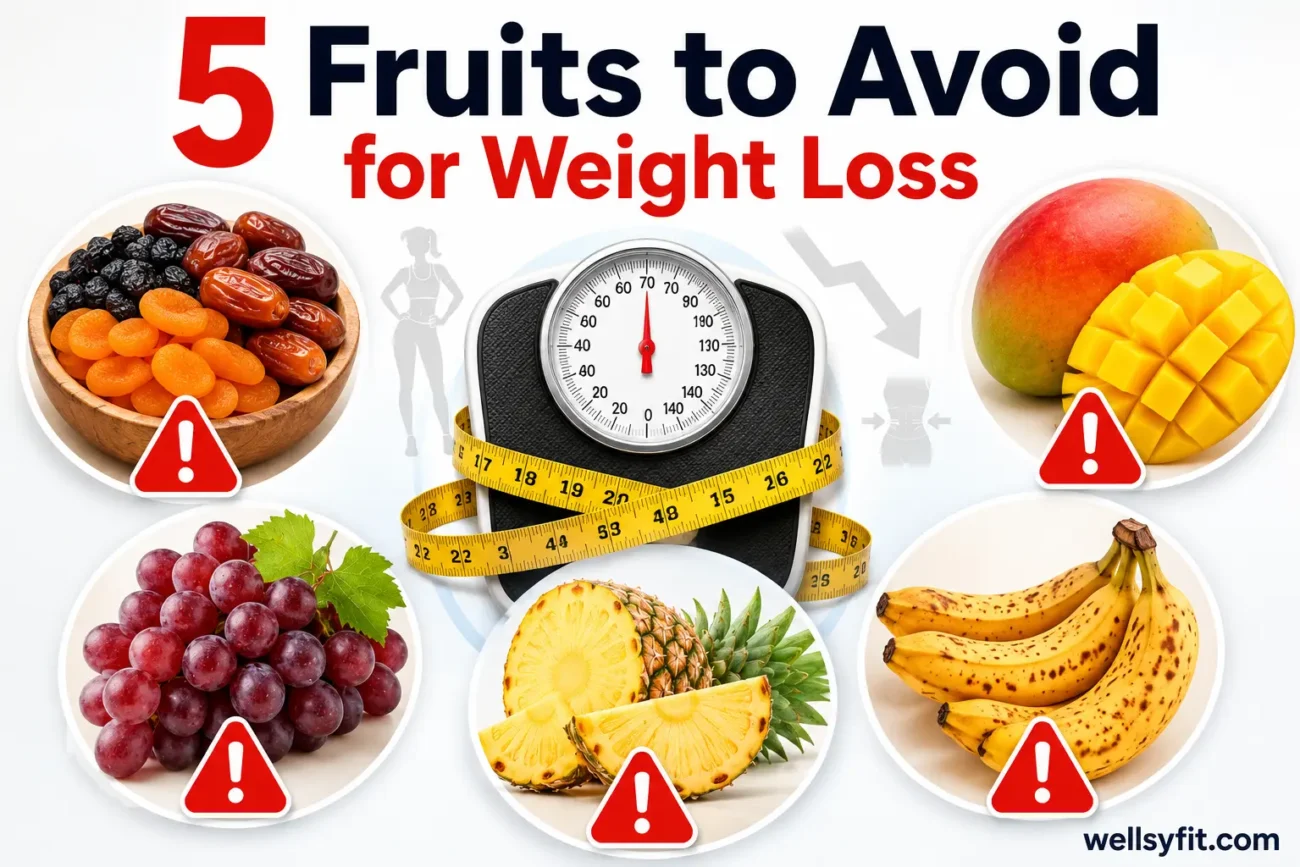
No fruit is truly off-limits when you are trying to lose weight, and any nutritionist will tell you that. What actually matters is energy density and how easy a fruit is to overeat. Still, a few are worth watching, and the list of fruits to avoid for weight loss usually comes down to high sugar and low satiety. Here are the five to handle with care, and the smarter way to eat each one.
Why Some Fruits Work Against Weight Loss
Fruit is overwhelmingly good for you. The issue is never nutrition. It is calories and satiety. Weight loss comes down to consistently eating fewer calories than you burn, and certain fruits make that harder because they deliver a lot of sugar and calories without filling you up enough to offset them.
The Mayo Clinic frames this through energy density, the number of calories in a given amount of food. High-water, high-fiber fruits fill you up on fewer calories. Concentrated, sugar-dense fruits do the opposite. That single distinction explains why the fruits below deserve a closer look when your goal is fat loss.
Fiber is the other half of the equation. According to Mayo Clinic research on dietary fiber, fiber slows digestion and helps you feel full longer. Fruits that lose their fiber, or never had much to begin with, leave you hungry sooner and more likely to eat again.
The 5 Fruits to Limit When Losing Weight
None of these are unhealthy. Each one simply carries a higher sugar or calorie load that adds up faster than people expect, particularly in the generous portions they are usually eaten in. The order moves from the most calorie-dense to the easiest to overeat.
1. Dried Fruit
Dried fruit is the single biggest trap on this list. The drying process removes water and shrinks the fruit, which concentrates both the sugar and the calories into a much smaller package that is dangerously easy to overeat.
The numbers make it obvious. A small box of raisins carries around 120 calories and 25 grams of sugar, while a whole cup of fresh grapes delivers far fewer calories for far more volume. The Mayo Clinic describes dried fruits and juices as concentrated sources of natural sugar with high energy density that do not fill you up as much as whole fruit.
If you love dried fruit, measure it. A portion is roughly two tablespoons, not a handful, and pairing it with nuts slows the sugar absorption. This same hidden-sugar problem shows up in other places people do not expect, including drinks, which is why understanding labels matters as much as understanding fruit. Our look at whether flavored water drinks are actually good for you covers that blind spot well.
2. Mango
Mango earns its nickname as the king of fruits, but it is also one of the highest in natural sugar. A single medium mango contains roughly 45 grams of sugar, which is more than you would find in a standard can of cola.
That does not make mango bad. It is rich in vitamins A and C and genuine nutrition. The problem is the portion. People rarely stop at a few slices, and a whole mango eaten as a snack quietly adds a significant chunk of calories and sugar to the day. A half-cup portion paired with a protein source like Greek yogurt keeps the nutrition while controlling the sugar spike.
3. Grapes
Grapes are the easiest fruit on this list to overeat without noticing. They are small, sweet, require no preparation, and disappear by the handful while you are doing something else. That convenience is exactly the problem.
A 100-gram serving of grapes contains around 15 grams of sugar, and most people eat far more than 100 grams in a sitting. They offer real antioxidants and vitamins, but the calories accumulate fast when an entire bunch vanishes during a movie. Portioning grapes into a small bowl rather than eating from the bag is the single most effective fix. Freezing them also helps, since frozen grapes take longer to eat and feel more like a treat.
4. Pineapple
Pineapple brings genuine benefits, including bromelain, an enzyme that aids digestion, along with vitamin C and manganese. It also carries a high glycemic index, which means it raises blood sugar quickly compared to lower-GI fruits.
For weight loss, the rapid blood sugar rise matters because sharp spikes can be followed by dips that trigger hunger and cravings. The fix is the same principle that applies across this entire list. Pairing pineapple with a protein or fat source slows the absorption and softens the spike.
This is where one expert principle ties everything together. Nancy Oliveira, a registered dietitian and manager of the nutrition and wellness service at Brigham and Women’s Hospital, explained the strategy to Harvard Health:
“Pairing fruits with foods that contain fiber, protein, and fat slows digestion. This might prevent a blood sugar spike.”
Nancy Oliveira, MS, RD, Brigham and Women’s Hospital
[Source: Harvard Health Publishing]
That one habit, pairing fruit with protein or fat, neutralizes most of the weight-loss downsides of every fruit on this list. It is the reason a protein source alongside fruit consistently appears in nutrition guidance, and why something like a quality protein shake can be a useful pairing partner for higher-sugar fruit.
5. Ripe Bananas
Bananas are a nutritious fruit, rich in potassium and vitamin B6, and they have been unfairly demonized at times. The nuance is ripeness. A very ripe banana has a higher glycemic index and more available sugar than a slightly underripe one.
A medium banana carries about 105 to 110 calories, which is more than many people assume for a single piece of fruit. The smart move is not to avoid bananas but to choose them slightly green when possible. Underripe bananas contain more resistant starch, which acts like fiber, feeds beneficial gut bacteria, and produces a gentler blood sugar response. Eating half a banana with nut butter is another way to keep the benefits while managing the calorie load.
What the Glycemic Index Actually Tells You
Several of these fruits get flagged because of their glycemic index, the measure of how quickly a food raises blood sugar. It is a useful concept, but it is not the whole story, and treating it as gospel leads people astray.
Watermelon is the classic example. It has a high glycemic index of around 72, which sounds alarming, but because it is mostly water, its glycemic load in a normal portion is very low. According to the American Diabetes Association, the practical impact of a fruit depends on the portion size and what you eat it with, not just its raw GI number.
This is why the better approach is to focus on portion size and pairing rather than banning fruits outright based on a single metric. A high-GI fruit in a sensible portion, eaten alongside protein, behaves very differently from the same fruit eaten alone in large quantities.
Better Fruit Choices for Weight Loss
The flip side of this list is the group of fruits that actively support weight loss. These are high in fiber, high in water, and lower in sugar, which means they fill you up for fewer calories and keep you satisfied longer. Research indexed by the National Library of Medicine links higher dietary fiber intake from whole foods to better fullness, steadier blood sugar, and lower long-term risk of weight gain.
Berries top the list. Strawberries, raspberries, and blueberries are low in sugar and high in fiber, with raspberries offering some of the best fiber-to-sugar ratios of any fruit. Apples and pears are excellent for the same reason, delivering soluble and insoluble fiber that supports fullness and steady blood sugar. Citrus fruits like oranges and grapefruit bring high water content and vitamin C for very few calories.
One caution worth noting from the Harvard Health team: if you take prescription medication, check with your care provider before adding grapefruit to your routine, as it can interfere with how the body processes certain drugs.
How to Eat Any Fruit Without Stalling Progress
The real takeaway is that strategy matters far more than restriction. You do not need to eliminate a single fruit on this list to lose weight. You need to handle them with a bit of awareness.
Eat fruit in its whole form rather than as juice, since juicing strips the fiber and concentrates the sugar into a fast-absorbing liquid. Measure dried fruit instead of eyeballing it. Pair higher-sugar fruits with protein or healthy fat to slow digestion. Time sweeter fruits around your more active periods, when your body handles the natural sugars more efficiently. These small adjustments let you keep every fruit you enjoy while still moving toward your goal.
Weight management is rarely about one food being good or bad. It is about the overall pattern, and fruit, handled well, belongs firmly inside a successful weight loss plan. If you are also weighing how other foods and supplements factor into body composition, our piece on whether certain popular supplements affect your weight looks at that question through a similar evidence-based lens.
This article is for informational purposes only and does not constitute medical advice. Always consult a qualified healthcare professional before making changes to your diet, exercise routine, or supplement regimen.
Frequently Asked Questions
Disclaimer: Content on WellsyFit is for informational purposes only and does not replace professional medical advice. Always consult a healthcare provider.