
You grabbed a Subway sandwich, ate half, and now it is sitting in your fridge. Sound familiar? Before you reach for it the next day, it is worth knowing exactly how long is Subway good in fridge and whether it is still safe to eat.
The short answer is that a Subway sandwich stays good in the fridge for about 3 to 5 days, but that number changes depending on what is inside it. Certain ingredients break down faster than others, and improper storage can shorten that window significantly.
This guide covers everything you need to know about storing your Subway sandwich properly, which ingredients to watch out for, how to tell when it has gone bad, and how to make your leftovers last as long as possible.
Why Proper Storage Matters More Than You Think
A Subway sandwich looks simple, but it is actually a combination of several different ingredients, each with its own shelf life. Bread, deli meats, vegetables, sauces, and cheese all behave differently in the fridge.
When you mix them together in a sandwich and refrigerate it, you are essentially racing against multiple spoilage clocks at once. Getting this right is not just about taste. It is about keeping yourself and your family safe from foodborne illness.
The good news is that with the right storage habits, you can enjoy your leftover sub without any worry.
How Long Is Subway Good in Fridge: The General Rule
As a general guideline, a Subway sandwich stored properly in the refrigerator is safe to eat for up to 3 to 5 days. However, most food safety experts and the USDA recommend consuming refrigerated deli sandwiches within 3 to 4 days for the best safety and quality.
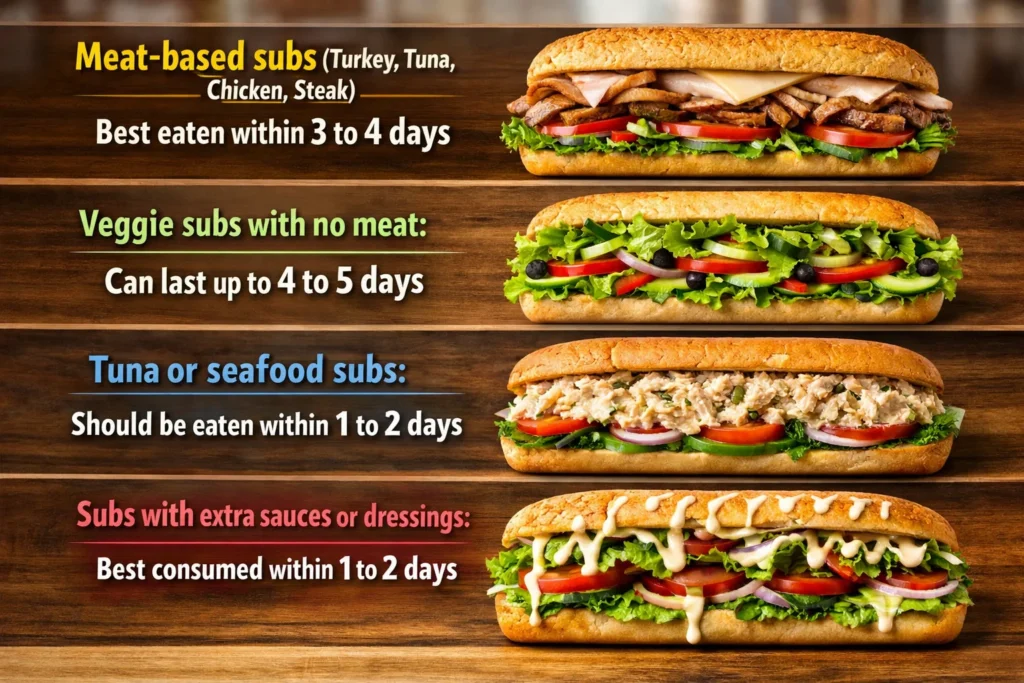
Here is a quick reference based on sandwich type:
- Meat-based subs (turkey, tuna, chicken, steak): Best eaten within 3 to 4 days
- Veggie subs with no meat: Can last up to 4 to 5 days
- Tuna or seafood subs: Should be eaten within 1 to 2 days
- Subs with extra sauces or dressings: Best consumed within 1 to 2 days
These are not just guidelines for quality. They are important for avoiding food poisoning, which can come from bacteria like Listeria, Salmonella, or E. coli that grow in improperly stored deli foods.
The Biggest Freshness Killers in a Subway Sandwich
Understanding what breaks down fastest inside your sub helps you make smarter decisions about storage and timing.
Deli Meats and Proteins
Cooked and processed meats like turkey, ham, chicken strips, and roast beef are the most time-sensitive ingredients in your sandwich. Once opened and prepared, deli meats can begin developing harmful bacteria within a few days, even in cold storage.
Tuna salad is especially perishable. Because it is mixed with mayonnaise, it creates the perfect environment for bacteria to multiply. If your sub has tuna in it, eat it within 24 to 48 hours of refrigerating.
Sauces and Condiments
Mayonnaise, ranch, chipotle sauce, and other creamy condiments speed up spoilage significantly. Once these are mixed into the sandwich and in contact with bread and vegetables, the whole sub becomes more prone to going bad quickly.
The bread soaks up the moisture from sauces, becoming soggy and creating a warm, damp environment that bacteria love.
Fresh Vegetables
Tomatoes, cucumbers, and lettuce release water as they sit. This moisture breaks down the bread and makes the entire sandwich unappetizing, often before the meat itself goes bad.
Spinach and other leafy greens tend to wilt and become slimy in the fridge within a day or two when already in a sandwich.
Cheese
Cheese holds up reasonably well in the fridge but can develop an off smell or texture when stored inside a sandwich for more than 3 to 4 days. Processed cheese slices tend to last a bit longer than natural cheese varieties.
How to Store a Subway Sandwich in the Fridge the Right Way
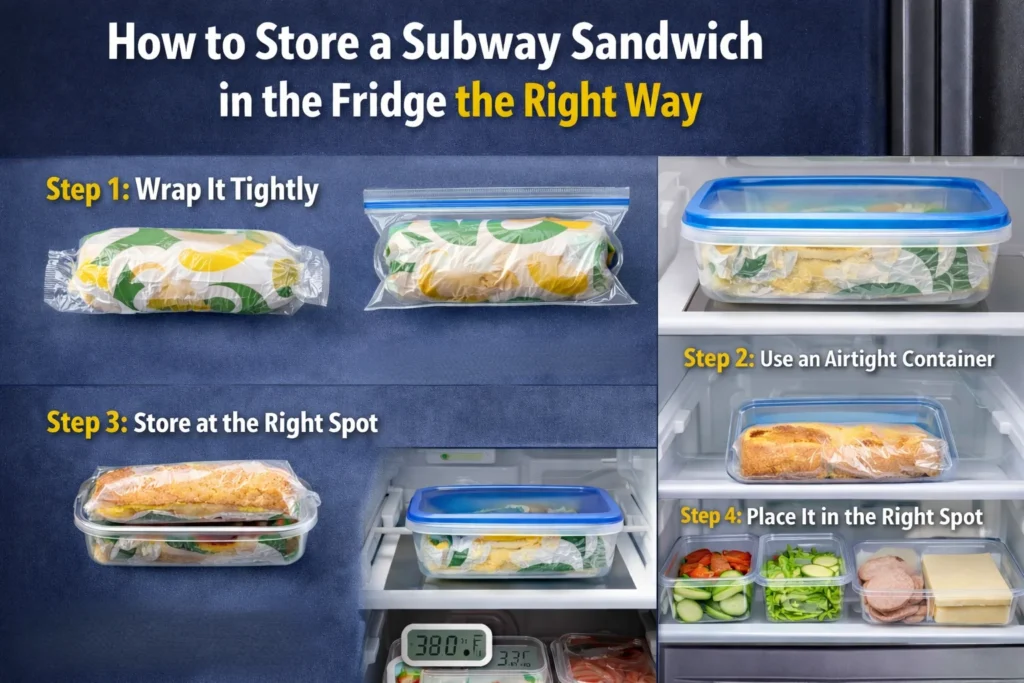
The way you store your sandwich makes a huge difference in how long it stays fresh and safe to eat.
Step 1: Wrap It Tightly
If you still have the original Subway wrapping paper, keep it on. Then wrap the sandwich again in plastic wrap or place it in a zip-lock bag. The goal is to minimize air exposure, which accelerates spoilage and dries out the bread.
Step 2: Use an Airtight Container
Placing the wrapped sandwich inside an airtight container gives it an extra layer of protection. It also prevents it from absorbing odors from other foods in your fridge.
Step 3: Store at the Right Temperature
Your fridge should be set at or below 40 degrees Fahrenheit (4 degrees Celsius). Bacteria multiply rapidly between 40 and 140 degrees Fahrenheit, which is known as the danger zone. Keeping your fridge cold enough is the single most important thing you can do.
Step 4: Place It in the Right Spot
Avoid storing your sandwich in the fridge door, where temperatures fluctuate every time the door opens. The middle shelf or back of the fridge tends to stay the coldest and most consistent.
Step 5: Consider Storing Ingredients Separately
If you know you are not going to eat your sub for another day or two, the best approach is to store the components separately. Wrap the bread on its own, keep the veggies in a separate container, and store the meat and cheese together. Assemble the sandwich fresh when you are ready to eat.
This simple step can add an extra day or two of freshness and gives you a much better-tasting sandwich.
Signs Your Subway Sandwich Has Gone Bad
Even within the 3 to 5 day window, a sandwich can go bad earlier if it was not stored properly or if the ingredients were already close to their use-by date. Here is what to look for:
Smell
This is the most obvious sign. If your sandwich smells sour, off, or just different from how it should, trust your nose. A bad smell is almost always a sign of bacterial growth.
Appearance
Look for any visible mold, which can appear as fuzzy spots in green, white, or black. Check the bread edges, cheese, and meat first, as these tend to show mold early.
Slimy or discolored meat is also a clear signal that the sandwich is no longer safe to eat.
Texture
Soggy bread alone is not necessarily a safety issue, but it does indicate that moisture has been building up for a while. If the bread is soggy and the sandwich also smells off, do not eat it.
Slimy vegetables, particularly lettuce and tomatoes, are a sign that decomposition has started.
Taste
If you take a small bite and anything tastes sour, bitter, or just wrong, stop eating. Your taste buds are a reliable warning system when all else seems fine.
When in doubt, throw it out. No sandwich is worth the risk of a foodborne illness, which can cause symptoms like nausea, vomiting, stomach cramps, and fever.
Can You Freeze a Subway Sandwich?
Yes, you can freeze a Subway sandwich, but with some important caveats.
Freezing works best for plain subs without sauces, fresh vegetables, or mayo. A simple meat and cheese sandwich on bread freezes reasonably well for up to 1 to 2 months.
However, freezing a fully loaded sub with lettuce, tomatoes, cucumbers, and sauces will give you a soggy and unpleasant result once thawed. Vegetables do not freeze well at all, as the water inside them turns to ice and breaks down the cell structure, making them limp and watery when defrosted.
If you want to freeze your sub, remove the vegetables and sauces first. Wrap the sandwich tightly in plastic wrap, then in aluminum foil, and place it in a freezer-safe bag. When you are ready to eat, thaw it in the fridge overnight and add fresh toppings.
Toasting the thawed sandwich can help revive the texture of the bread.
What Happens If You Eat a Bad Subway Sandwich?
Eating a spoiled sandwich can lead to food poisoning. The severity depends on which bacteria are present and how much was consumed.
Common symptoms include:
- Nausea and vomiting
- Diarrhea
- Stomach cramps and bloating
- Fever and chills
- Fatigue and body aches
Symptoms can appear anywhere from 30 minutes to 48 hours after eating contaminated food. Most healthy adults recover within a day or two with rest and plenty of fluids.
However, food poisoning can be more serious for young children, older adults, pregnant women, and people with weakened immune systems. If symptoms are severe, persistent, or accompanied by high fever, seek medical attention.
Deli meats are a known source of Listeria monocytogenes, which is a bacteria that can cause serious illness in vulnerable groups even when the food looks and smells fine. This is why staying within safe storage time frames matters beyond just taste.
Tips to Get the Most Out of Your Leftover Subway
A few simple habits can help you enjoy your Subway sandwich for as long as safely possible.
- Ask for sauces on the side when you order if you know you will have leftovers. Add them when you are ready to eat.
- Ask for vegetables on the side too, or remove them before refrigerating if possible.
- Label your sandwich container with the date so you always know when it was stored.
- Eat your leftover sub sooner rather than later. Day 1 or 2 is always going to taste better and be safer than day 4.
- Reheat meat-based subs in the oven or toaster oven rather than the microwave for better texture. Avoid reheating subs with fresh vegetables already on them.
- Never leave a Subway sandwich at room temperature for more than 2 hours. If it has been sitting out at a party, event, or on your kitchen counter for longer than that, discard it.
How Long Is Subway Tuna Good in the Fridge?
Tuna deserves its own section because it is one of the most perishable options on the Subway menu.
Subway tuna is made with canned tuna mixed with mayonnaise. That combination, once prepared and placed in a sandwich, has a much shorter fridge life than other sub types.
A Subway tuna sandwich should be eaten within 24 to 48 hours of refrigerating. After that point, the mayonnaise can begin to separate, the tuna can develop an off smell, and the risk of bacterial growth increases.
If you have tuna salad on its own without the bread, it can last up to 3 to 5 days in an airtight container in the fridge. But once it is inside a sandwich with vegetables and bread, eat it quickly.
Conclusion
So, how long is Subway good in fridge? The safe and practical answer is 3 to 4 days for most meat-based subs, 1 to 2 days for tuna or sauce-heavy sandwiches, and up to 4 to 5 days for plain veggie subs when stored correctly.
Proper storage makes a real difference. Wrapping your sub tightly, using an airtight container, keeping your fridge below 40 degrees Fahrenheit, and ideally storing toppings separately will help you get the most out of your leftovers without compromising your health.
Always trust your senses. If something smells, looks, or tastes off, discard the sandwich without hesitation.
When handled right, a leftover Subway sandwich can be just as enjoyable the next day as it was fresh. The key is knowing what you are working with and giving it the care it deserves.
FAQs About Why Do I Wake Up Starving in the Middle of the Night
Disclaimer: Content on WellsyFit is for informational purposes only and does not replace professional medical advice. Always consult a healthcare provider.