

Many people who quit vaping wonder how quickly their lungs can recover. Vaping exposes the respiratory system to chemicals, fine particles, and nicotine that may irritate lung tissue over time. Because of this exposure, former vapers often ask a common question: how long does it take for your lungs to heal from vaping?
The encouraging news is that the lungs begin repairing themselves soon after vaping stops. However, the recovery process is gradual and depends on factors such as how long you vaped, how frequently you used e-cigarettes, and your overall health.
Understanding the timeline of lung recovery can help you know what to expect and motivate you to stay vape-free.
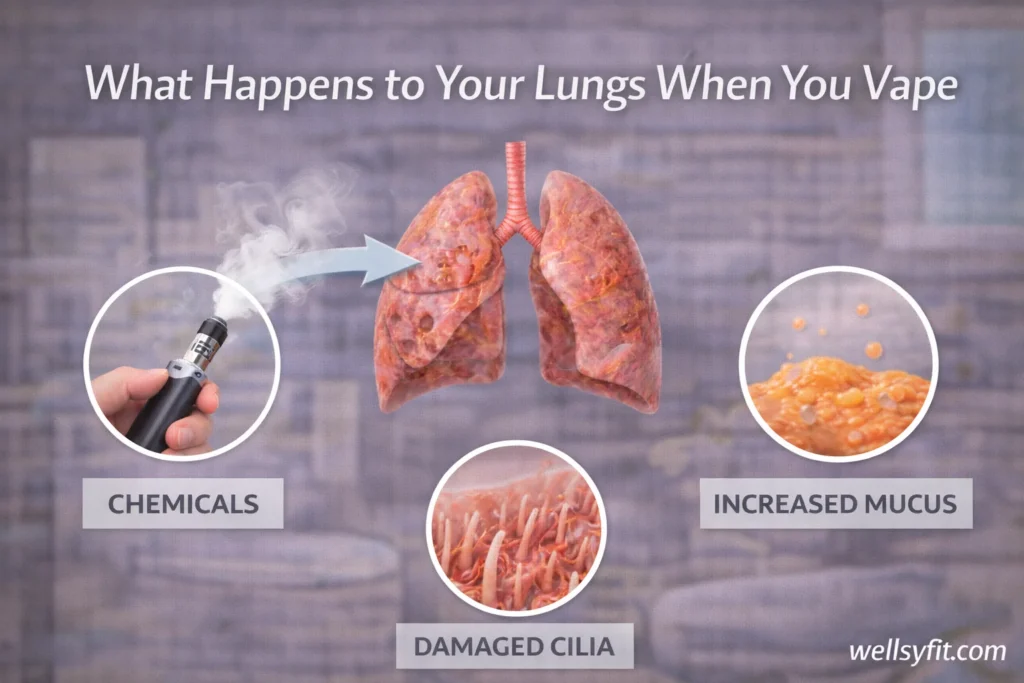
What Happens to Your Lungs When You Vape
Vaping involves inhaling aerosol produced by heating a liquid containing substances such as nicotine, flavorings, propylene glycol, and vegetable glycerin. When these substances enter the lungs, they can affect the delicate structures responsible for breathing.
Some of the changes that may occur include:
- Irritation and inflammation of the airways
- Damage to cilia, the tiny hair-like structures that remove mucus and debris
- Increased mucus production
- Reduced efficiency of oxygen exchange in the lungs
Certain flavoring chemicals used in e-liquids may also contribute to airway irritation. Over time, these effects can lead to symptoms such as coughing, chest discomfort, or reduced lung endurance.
Although vaping does not produce tar like cigarettes, inhaling chemical aerosols can still interfere with the lungs’ natural cleaning and protective mechanisms.
Can Your Lungs Heal After You Quit Vaping
The lungs have a remarkable ability to repair themselves. Once you stop vaping, the body begins reversing some of the inflammation and irritation caused by inhaled chemicals.
The healing process begins with several key biological changes:
- Reduced airway inflammation
- Regeneration of damaged lung cells
- Recovery of cilia that clear mucus and particles
- Gradual removal of toxins and irritants from lung tissue
While complete healing varies from person to person, many people notice improvements in breathing and lung function over time.
The sooner someone stops vaping, the greater the chance that lung tissues can recover.
Timeline: How Long Does It Take for Your Lungs to Heal From Vaping
The recovery process occurs in stages. While individual experiences differ, the following timeline describes typical improvements after quitting vaping.
First 24 to 48 Hours
During the first two days after quitting vaping, the body begins detoxifying nicotine and other chemicals.
Early changes may include:
- Nicotine levels in the body start dropping rapidly
- Oxygen circulation improves
- Carbon monoxide levels return to normal
- Lung repair processes begin
Some people notice mild coughing or throat irritation during this stage. This occurs because the lungs begin clearing mucus and debris that accumulated during vaping.
Although these symptoms can feel uncomfortable, they are often a sign that the respiratory system is starting to recover.
First Week After Quitting
Within the first week, early respiratory improvements may appear as inflammation starts to decrease.
Common experiences include:
- Slightly easier breathing
- Reduced chest tightness
- Improved oxygen flow
- Gradual reduction in airway irritation
During this period, cilia begin regaining their function. These tiny hair-like structures are essential for removing dust, toxins, and microorganisms from the lungs.
When cilia recover, the lungs become better at cleaning themselves.
Two to Four Weeks
After two to four weeks without vaping, many people notice clearer improvements in lung function.
Possible changes during this stage include:
- Reduced coughing and mucus production
- Improved stamina during physical activity
- Less shortness of breath
- Greater lung capacity
These improvements occur as inflammation continues decreasing and damaged airway cells regenerate.
Many former vapers report that everyday activities like walking or climbing stairs feel easier during this phase.
One to Three Months
The first three months often bring the most noticeable improvements in lung health.
During this period:
- Lung capacity continues to increase
- Breathing becomes easier during exercise
- Cilia function improves significantly
- The lungs become better at clearing mucus and irritants
As these changes occur, the risk of respiratory infections may decrease because the lungs regain their ability to defend against bacteria and pollutants.
People who maintain healthy habits during this period may see faster improvements.
Six to Twelve Months
By six to twelve months after quitting vaping, many people experience significant respiratory recovery.
Common improvements include:
- Reduced chronic coughing
- Improved airflow in the lungs
- Better endurance during physical activity
- Fewer breathing difficulties
During this stage, the lungs’ natural defense systems become stronger again. Cilia work more efficiently to clear mucus, and airway inflammation continues to decline.
These improvements can make daily activities more comfortable and increase overall lung performance.
One Year and Beyond
Long-term recovery can continue for several years after quitting vaping.
Over time, many former vapers experience:
- Continued improvement in lung function
- Increased lung elasticity and capacity
- Reduced respiratory symptoms
- Improved overall cardiovascular endurance
However, the degree of recovery depends on how long and how heavily someone vaped. In some cases, severe or long-term lung damage may take longer to improve.
Even so, quitting vaping significantly reduces further harm and allows the lungs to begin repairing themselves.
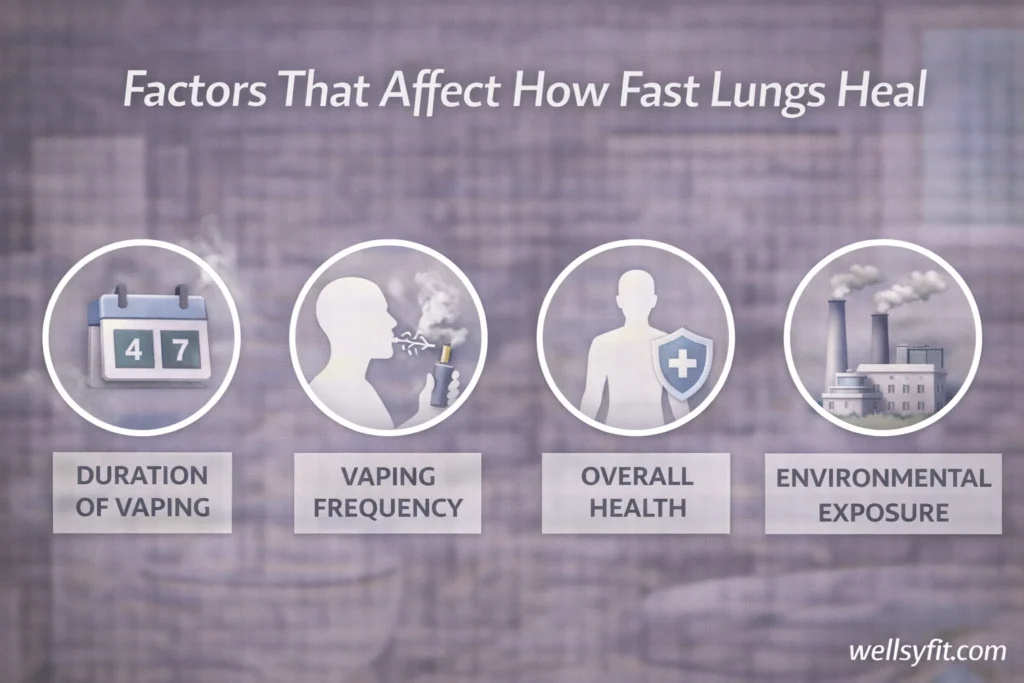
Factors That Affect How Fast Lungs Heal
The healing timeline is not identical for everyone. Several factors influence how quickly lungs recover after vaping.
Duration of Vaping
People who vaped for a short period may recover faster than those who used e-cigarettes for several years.
Longer exposure means the lungs may need more time to repair irritation and inflammation.
Frequency and Intensity of Use
Frequent or heavy vaping exposes the lungs to larger amounts of chemicals.
Higher exposure can lead to greater irritation, which may extend the recovery timeline.
Age and Overall Health
Younger individuals and people in good health often recover more quickly because their tissues regenerate more efficiently.
However, lung healing can still occur at any age.
Lifestyle Habits
Healthy lifestyle choices can significantly influence lung recovery.
Factors that may help support healing include:
- Regular physical activity
- Balanced nutrition
- Adequate hydration
- Good sleep quality
Unhealthy habits such as smoking or exposure to polluted air may slow recovery.
Signs Your Lungs Are Healing After Quitting Vaping
Many people notice gradual improvements as their lungs recover.
Common signs of lung healing include:
- Easier breathing during daily activities
- Reduced coughing or throat irritation
- Increased exercise tolerance
- Less chest tightness
- Improved energy levels
These improvements usually occur gradually rather than all at once.
Some people notice early changes within weeks, while others experience improvements over several months.
How to Support Lung Healing After Vaping
Although the lungs naturally repair themselves, certain habits can help support the recovery process.
Stay Hydrated
Drinking enough water helps thin mucus in the lungs. This makes it easier for the respiratory system to clear irritants and debris.
Hydration also supports the body’s detoxification systems.
Eat Foods That Support Lung Health
Nutrient-rich foods provide antioxidants that help reduce inflammation and support tissue repair.
Examples include:
- Citrus fruits
- Leafy greens
- Berries
- Nuts and seeds
- Fatty fish
These foods contain vitamins and minerals that support immune function and lung recovery.
Exercise Regularly
Physical activity encourages deeper breathing and improves oxygen circulation.
Aerobic exercises such as walking, cycling, and swimming can strengthen the lungs and improve lung capacity.
Starting with light exercise and gradually increasing intensity can help the lungs adjust during recovery.
Practice Breathing Exercises
Deep breathing techniques can improve lung expansion and oxygen exchange.
Exercises such as diaphragmatic breathing or controlled breathing help strengthen respiratory muscles and improve airflow.
Avoid Lung Irritants
During recovery, it is helpful to avoid substances that may irritate the lungs.
These include:
- Cigarette smoke
- Secondhand vapor
- Air pollution
- Dust and chemical fumes
Reducing exposure allows the lungs to heal without additional irritation.

When to Seek Medical Advice
While many people recover from vaping-related irritation after quitting, persistent symptoms should be evaluated by a healthcare professional.
You should consider medical advice if you experience:
- Severe or persistent shortness of breath
- Ongoing chest pain
- Frequent respiratory infections
- Wheezing that does not improve
- Coughing that lasts several months
A doctor can evaluate lung function and determine whether additional treatment or testing is necessary.
The Bottom Line
So, how long does it take for your lungs to heal from vaping?
The lungs begin repairing themselves within hours after quitting, but noticeable improvements usually appear within two to four weeks. Significant recovery often occurs over three to twelve months, while long-term healing can continue for several years.
The most important step in the recovery process is stopping vaping entirely. Once exposure to harmful aerosols ends, the lungs can begin restoring their natural defense systems and repairing damaged tissue.
Although healing takes time, many former vapers experience gradual improvements in breathing, lung capacity, and overall respiratory health. Quitting vaping gives your lungs the opportunity to recover and function more effectively for the long term.
FAQs
Disclaimer: Content on WellsyFit is for informational purposes only and does not replace professional medical advice. Always consult a healthcare provider.