
Waking up at 2am or 3am with intense, almost painful hunger is not random. It is your body sending a very specific signal, and that signal almost always comes down to one of a handful of clear causes. The most common reason is that your blood sugar dropped during sleep, triggering a hormonal alarm that pulls you out of deep rest. But it is not the only reason, and knowing which one applies to you is the difference between fixing it quickly and lying awake confused about why it keeps happening night after night.
What Is Actually Happening Inside Your Body at 3am
Most people assume nighttime hunger means they simply did not eat enough. Sometimes that is true. But the full picture is more interesting than that, and understanding it makes every fix on this page make far more sense.
Your body runs on a 24-hour internal clock called the circadian rhythm. This system is responsible for regulating sleep, metabolism, and appetite hormones on a predictable daily schedule. Two hormones sit at the centre of how hunger works during sleep.
Leptin and Ghrelin: The Two Hormones Running the Show
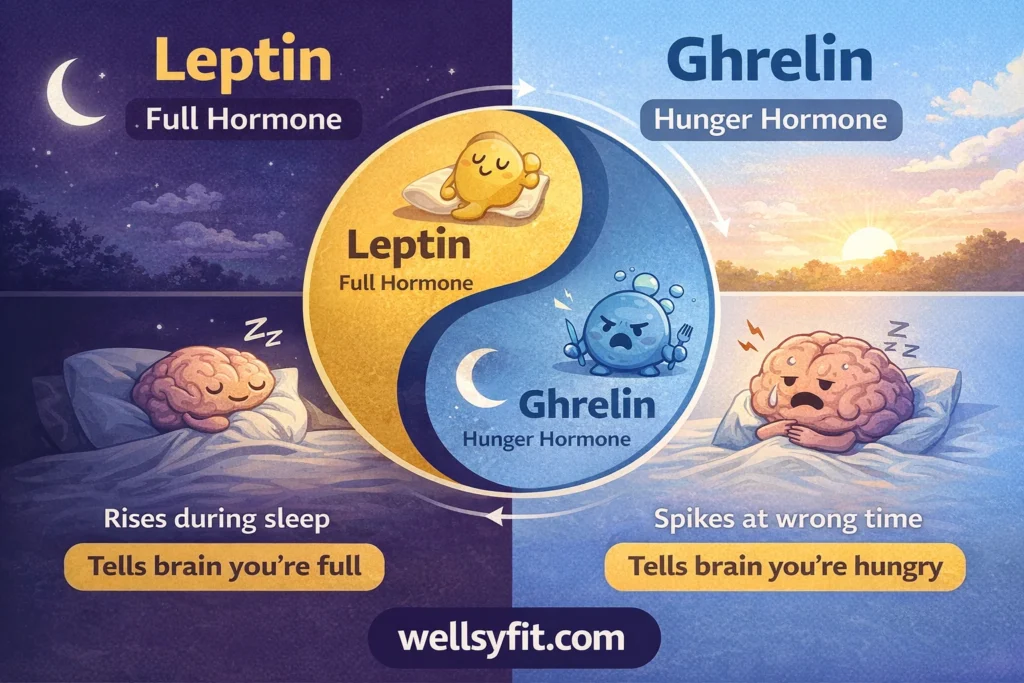
Leptin is your satiety hormone. It rises during sleep and tells your brain you have enough stored energy and do not need to eat. Ghrelin is your hunger hormone. It ramps up in the morning when it is time to eat and stays suppressed while you sleep.
When something disrupts this system, ghrelin spikes at the wrong time. Your brain gets a full hunger signal in the middle of deep sleep and responds the only way it knows how: it wakes you up.
This is why middle-of-the-night hunger feels so sudden and intense. It is not a mild craving. It is a hormonal alarm firing at a time your body was supposed to be in full suppression mode.
Why 2am or 3am Specifically?
It is not a coincidence that most people report waking up hungry at roughly the same hour. Blood sugar levels naturally drift lower during the later stages of sleep as the body has been fasting for several hours. Add a high-carb dinner, inadequate protein, poor sleep quality, or chronic stress into the equation and that drift becomes a crash, right around the 4 to 6 hour mark after your last meal, which lands squarely in the early hours of the morning for most people.
The Real Reasons You Are Waking Up Starving
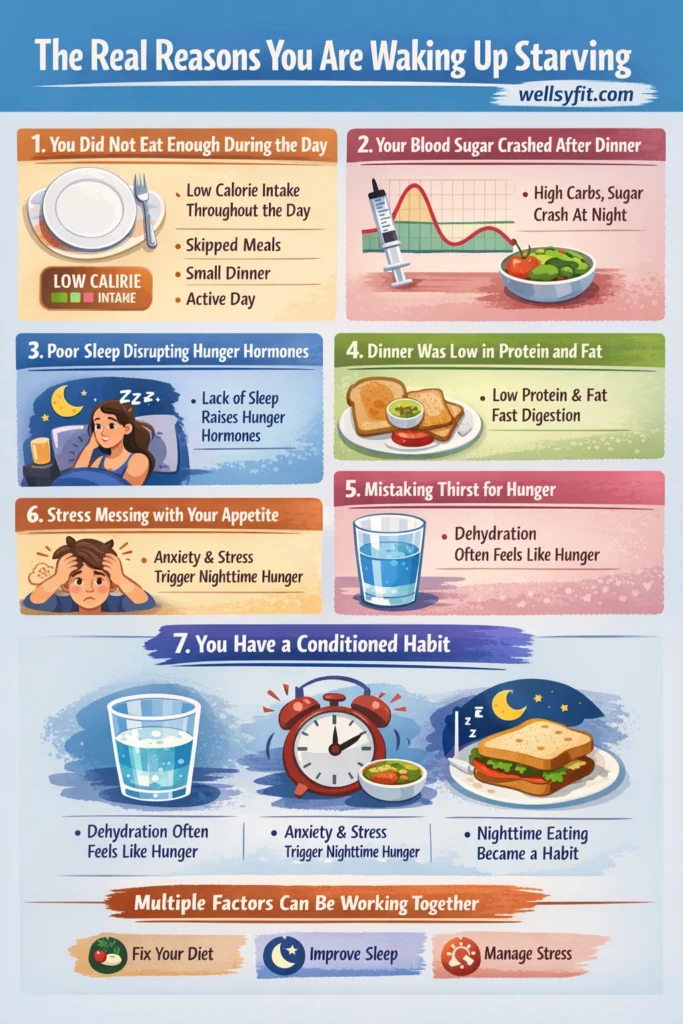
There is rarely just one answer to this question. Most people dealing with regular nighttime hunger have two or three of these factors working against them at the same time.
1. You Did Not Eat Enough During the Day
This is the most common cause and the one most people miss because they feel like they ate normally. If your total calorie intake across the day was lower than what your body needed, your glucose stores run out during sleep and your brain triggers a hunger response to compensate.
According to the Dietary Guidelines for Americans, moderately active adult women need roughly 1,800 to 2,400 calories per day, and men typically need between 2,200 and 3,000. Consistently eating below this range creates a nightly energy deficit your body will try to correct at the worst possible time.
Common signs this is your issue:
- You regularly skip breakfast or eat a very light lunch
- You are actively trying to lose weight through calorie restriction
- You had an unusually active day but did not eat more to match it
- Dinner was smaller than usual or eaten very early
2. Your Blood Sugar Crashed After Dinner
This one catches a lot of people off guard because they ate a full dinner and still woke up starving. Here is why it happens.
When you eat a meal high in refined carbohydrates or sugar, white rice, pasta, bread, alcohol, sweet snacks, your blood sugar rises sharply. Your pancreas releases a surge of insulin to bring it back down. In many people, that correction overshoots and drops glucose below a stable range within a few hours.
When blood glucose falls too low during sleep, the brain treats it as an emergency. It triggers a release of adrenaline and cortisol to restore blood sugar levels. The side effect of that hormonal surge is that it wakes you up, and it wakes you up intensely hungry.
The fix is not to avoid carbohydrates at dinner. It is to pair them with adequate protein and fat, which slow digestion and prevent the sharp spike-and-crash pattern. A chicken breast with sweet potato and vegetables produces a far more stable overnight blood sugar curve than a large plate of pasta with minimal protein.
3. Poor Sleep Is Throwing Your Hunger Hormones Out of Balance
Sleep deprivation does not just make you tired. It directly disrupts the hormonal system that keeps appetite in check overnight.
Research supported by the National Institutes of Health shows that even partial sleep restriction significantly raises ghrelin while lowering leptin. In plain terms, sleeping less than seven hours primes your body to feel hungrier both during the night and throughout the following day.
The real problem is the cycle this creates:
- Poor sleep raises hunger hormones
- Hunger hormones wake you up to eat
- Eating in the night fragments your sleep further
- Fragmented sleep raises hunger hormones again the next night
Breaking this cycle often requires improving sleep quality directly, not just adjusting dinner, before the nighttime hunger resolves completely.
4. Dinner Was Low in Protein and Fat
What you ate matters as much as how much you ate. A meal that is light on protein and fat digests quickly, clears your stomach faster, and provides a short satiety window that may not last through the night.
Protein is the most satiating macronutrient. It digests slowly, supports stable blood sugar, and extends the feeling of fullness for several hours after eating. Dietary fat slows gastric emptying, meaning food stays in your stomach longer and keeps signalling fullness to your brain.
If your typical dinner looks like any of these, your satiety window is probably closing before your sleep window ends:
- A small bowl of cereal or toast
- A light salad with little or no added protein
- A meal replacement shake
- Soup without a protein source
Aim for at least 25 to 35 grams of protein at dinner alongside a source of healthy fat to meaningfully extend overnight satiety.
5. You Are Mistaking Thirst for Hunger
The brain areas that register thirst and hunger sit close together, and mild dehydration can produce sensations that feel like hunger, especially when you are groggy and half-asleep.
If you wake up with what feels like hunger but the sensation is not accompanied by a genuinely empty stomach feeling, try drinking a full glass of water and waiting ten minutes before reaching for food. If the feeling passes, you were dehydrated, not hungry.
6. Stress Is Disrupting Your Sleep and Appetite Cycle
Under chronic stress, cortisol levels rise at the wrong times and can shift overnight. Elevated cortisol during sleep raises blood sugar, prompts an insulin response, and can then trigger a blood sugar drop that wakes you up hungry.
The American Psychological Association identifies disrupted appetite regulation as one of the clearest physical consequences of chronic stress. If your nighttime hunger comes alongside difficulty falling asleep, racing thoughts, or frequent waking, stress is likely part of the equation.
7. You Have Developed a Conditioned Habit
This one surprises people. If you have been waking up and eating at the same time for several weeks, your body can learn to expect food at that hour. Your hunger hormones begin cycling toward a peak at 2am or 3am regardless of whether you are physiologically running low on energy.
This conditioned response can keep nighttime hunger going even after the original cause has been fixed. Breaking the habit requires a few uncomfortable nights of resisting the urge to eat, but the hunger signal gradually shifts back to a normal morning schedule once the pattern is broken.
Could It Be Something More Serious?
Most people who wake up hungry in the night have a fixable dietary or sleep-related cause. But in some cases, the pattern points to something worth discussing with a doctor.
Night Eating Syndrome
If you regularly wake up multiple times per week to eat, feel compelled to eat before you can fall back asleep, have little to no appetite in the mornings, and this has been going on for more than a month, you may be dealing with night eating syndrome.
According to the Cleveland Clinic, night eating syndrome is a recognised eating and sleep disorder affecting roughly 1 to 2 percent of the general population. It is associated with insomnia, depression, and disrupted circadian hormone production, and it responds well to cognitive behavioural therapy and in some cases medication. It is not something to push through alone.
Hormonal Fluctuations in Women
For women, middle-of-the-night hunger can intensify in the days before a period. The drop in progesterone that drives premenstrual symptoms can temporarily affect blood sugar regulation and raise overall appetite. If your nighttime hunger follows a monthly pattern and resolves after your period starts, hormonal fluctuation is the likely cause rather than diet or sleep habits.
Undiagnosed Blood Sugar Issues
In people with diabetes or prediabetes, overnight blood glucose drops can be more severe and more frequent. If your nighttime hunger comes with sweating, shakiness, or heart palpitations, these may be signs of hypoglycemia that warrant a proper medical evaluation rather than a dietary adjustment.
How to Stop Waking Up Starving: What to Change Starting Tonight
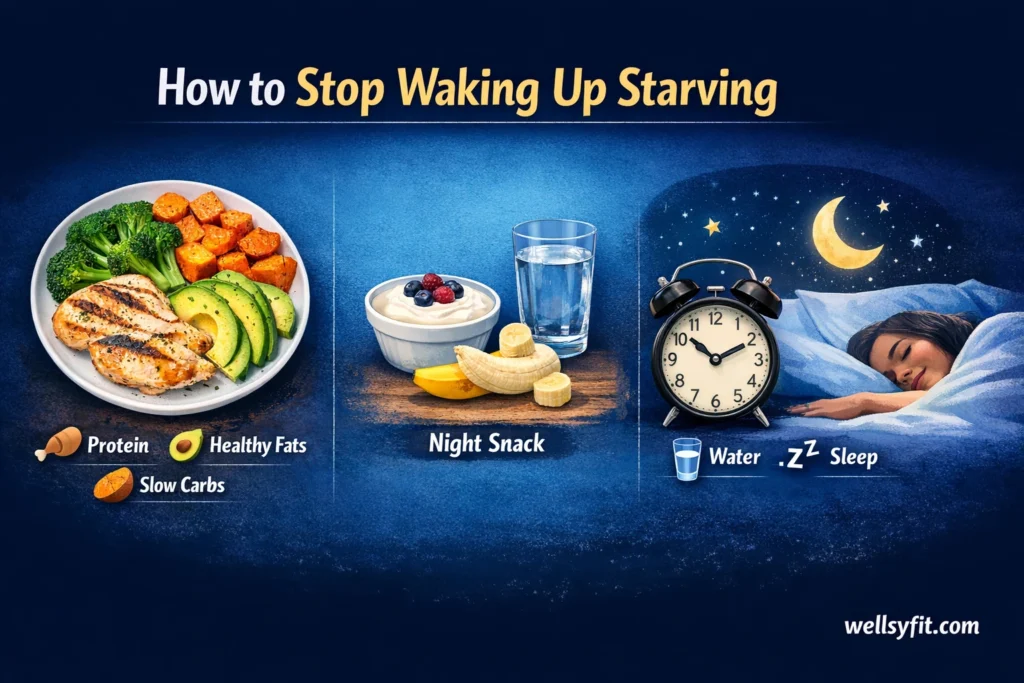
You do not need to overhaul everything at once. Start with the most likely cause based on what you recognise in yourself, and add the others if needed.
Build a Dinner With Staying Power
Your evening meal should include all three of the following:
- A substantial protein source, at least 25 to 35 grams (chicken, fish, eggs, legumes, Greek yogurt)
- A healthy fat source (olive oil, avocado, nuts, fatty fish)
- A slow-digesting carbohydrate (sweet potato, legumes, whole grains, vegetables)
This combination keeps blood sugar stable for longer and extends satiety well into the night.
Add a Small Pre-Sleep Snack If Dinner Is Early or Light
If you eat dinner before 6pm or your evening meal is consistently light, a small protein-based snack before bed can bridge the gap. Good options include:
- A small bowl of plain Greek yogurt
- A boiled egg with a couple of whole-grain crackers
- A tablespoon of nut butter with a banana
- A small glass of warm milk
Avoid anything primarily made of refined carbohydrates or sugar before bed. These cause the very blood sugar spike-and-crash cycle that wakes you up in the first place.
Drink Water Before Reaching for Food
When you wake up hungry, drink a full glass of water and wait ten minutes. If the sensation eases, it was thirst. If it does not, eat something small from the options above.
Fix Your Sleep Schedule
Going to bed and waking up at the same time every day regulates the hormonal cycle that controls appetite. The NHS guidance on sleep health states that most adults need 7 to 9 hours of sleep per night for the body’s regulatory systems, including hunger hormones, to function properly. Inconsistent sleep timing keeps ghrelin elevated and makes nighttime hunger significantly more likely regardless of what you eat.
Review Your Daytime Eating Pattern
Ask yourself honestly:
- Am I regularly skipping breakfast or eating a very light lunch?
- Is my total daily calorie intake appropriate for my activity level?
- Am I restricting calories aggressively to lose weight?
A daytime calorie deficit is one of the most reliable predictors of nighttime hunger. Fixing it at the source is always more effective than any bedtime strategy.

When to See a Doctor
Occasional nighttime hunger is normal and usually fixable. But speak with a healthcare provider if any of the following apply:
- You are waking up hungry multiple nights per week for more than two weeks despite dietary changes
- The hunger comes with sweating, shakiness, or a racing heart
- You have diabetes or are on medications that affect blood sugar
- You feel unable to fall back asleep without eating and this feels compulsive rather than a choice
- Your sleep is significantly and persistently disrupted
The Mayo Clinic notes that persistent sleep disruption from any cause, including hunger-driven waking, is worth a proper medical evaluation rather than simply enduring it long term.
The Bottom Line
Waking up starving in the middle of the night almost always comes down to blood sugar instability, inadequate daytime eating, a dinner too low in protein and fat, disrupted sleep, or a conditioned habit that has built up over time. In most cases, adjusting what you eat for dinner and adding a small pre-sleep snack if needed resolves the problem within one to two weeks.
If it keeps happening despite making those changes, that is the signal to talk to a doctor. Your body is trying to tell you something specific, and it deserves a proper answer.
FAQs About Why Do I Wake Up Starving in the Middle of the Night
Disclaimer: Content on WellsyFit is for informational purposes only and does not replace professional medical advice. Always consult a healthcare provider.