
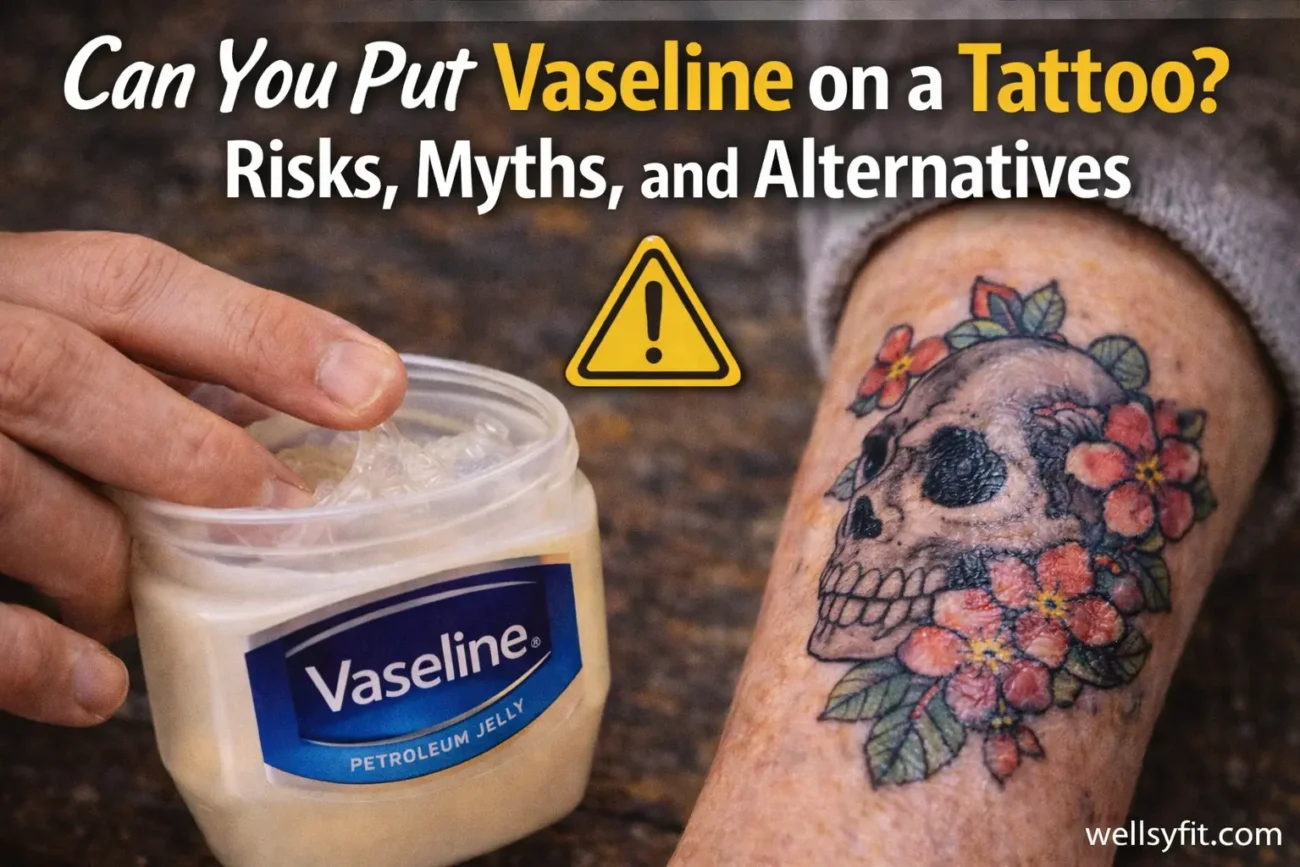
Can you put Vaseline on a tattoo is one of the most searched questions during tattoo aftercare. The short answer is it depends on the stage of healing, but using Vaseline incorrectly can cause more harm than good. While Vaseline is a common household product, tattoos heal differently than dry skin, and treating them the wrong way can slow recovery or increase risk.
This guide explains when Vaseline is not recommended, when it may be acceptable, and what works better for proper tattoo healing.
Can You Put Vaseline on a New Tattoo
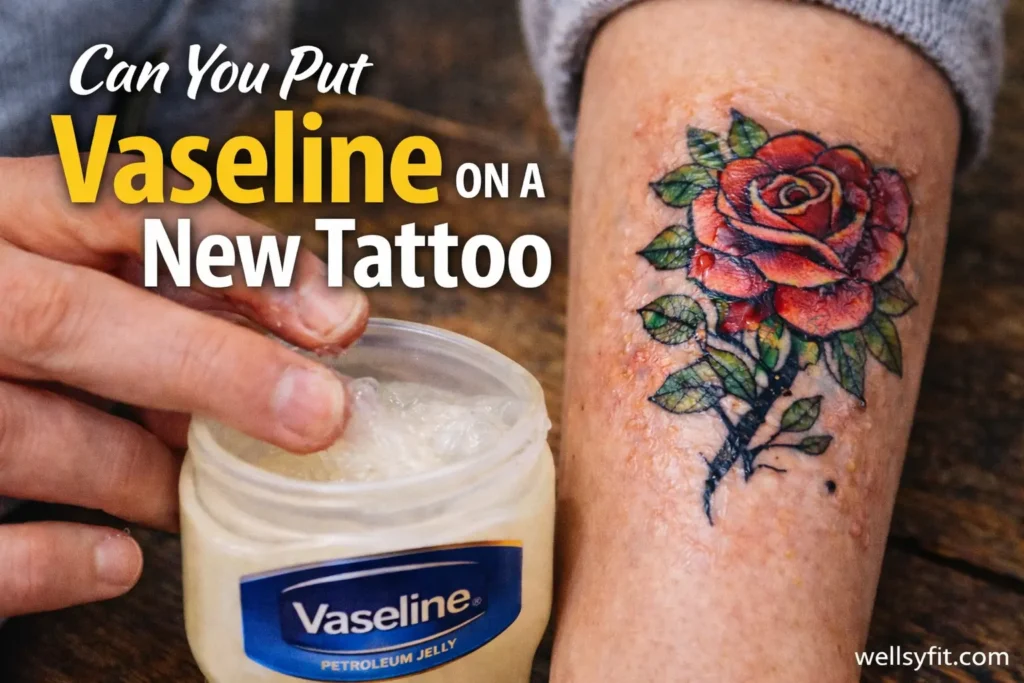
Why New Tattoos Are Treated as Open Wounds
A new tattoo is essentially thousands of tiny punctures in the skin. During the first 24 to 48 hours, the body releases plasma, lymph fluid, and excess ink as part of the healing response.
At this stage, airflow and cleanliness matter more than heavy moisture, which is also why many people ask how long to keep Saniderm on a tattoo when using protective films during the earliest healing phase.
What Happens When You Put Vaseline on a Fresh Tattoo
When Vaseline is applied to a new tattoo:
- Airflow is blocked
- Moisture becomes trapped
- Bacteria can multiply under the surface
This creates an environment where healing slows down instead of improving.
IMPORTANT: Trapped moisture is one of the most common causes of irritation and delayed healing.
Why People Ask About Using Vaseline on Tattoos
Vaseline is widely known for treating dry skin, burns, and minor wounds. Many people assume that because a tattoo is a wound, Vaseline must help it heal.
The confusion comes from mixing up two ideas:
- Moisturizing skin
- Healing an open wound
A fresh tattoo needs breathable moisture, not a sealed surface.
What Vaseline Is and How It Works on Skin
Vaseline is a form of petroleum jelly. It does not hydrate the skin. Instead, it locks in existing moisture by forming a waterproof barrier.
This works well for:
- Extremely dry skin
- Healed cuts
- Chapped areas
However, this same barrier becomes a problem during tattoo healing.
Is Vaseline Ever Safe for Tattoos
Using Vaseline on Fully Healed Tattoos
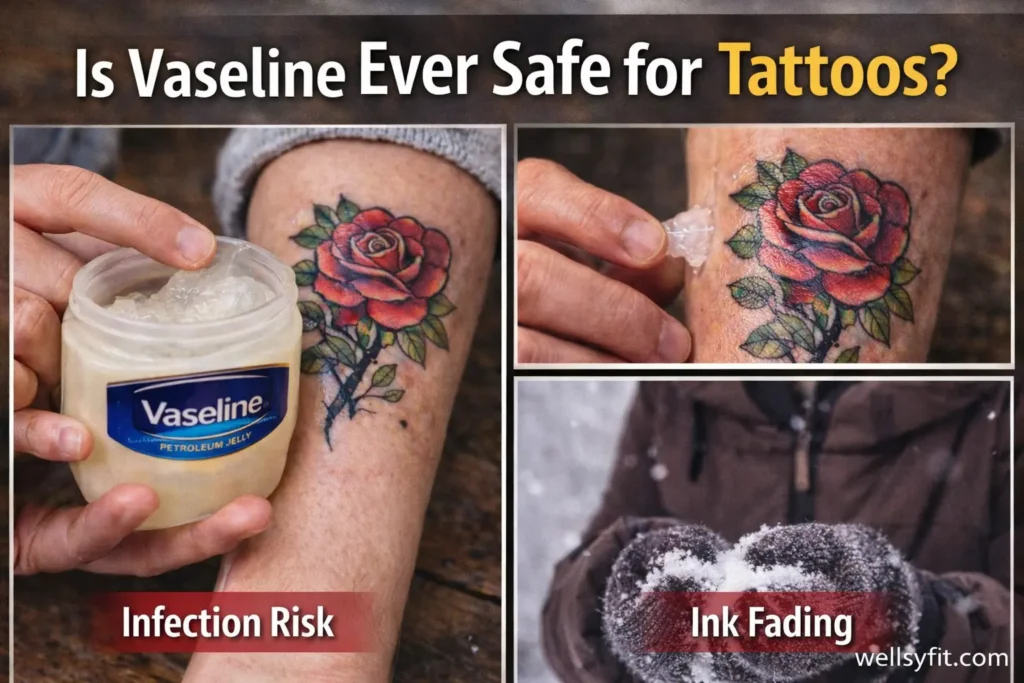
Once a tattoo is fully healed, usually after 3 to 4 weeks, the skin barrier has closed. At this stage, Vaseline no longer traps wound moisture because the wound no longer exists.
In this case, Vaseline can be used:
- To protect skin in cold weather
- To reduce extreme dryness temporarily
It should not replace daily moisturizing.
Short-Term vs Long-Term Use
Occasional Vaseline use on healed tattoos is generally fine. Long-term daily use is not ideal because it does not nourish the skin or support long-term tattoo vibrancy.
Vaseline vs Tattoo-Specific Aftercare Products
Tattoo aftercare products are designed to do what Vaseline cannot.
| Feature | Vaseline | Tattoo Aftercare Products |
|---|---|---|
| Breathable | No | Yes |
| Traps bacteria | Yes | No |
| Designed for wounds | No | Yes |
| Daily use suitable | No | Yes |
This difference explains why tattoo professionals avoid petroleum jelly during healing.
Risks of Using Vaseline on Tattoos
Infection Risk
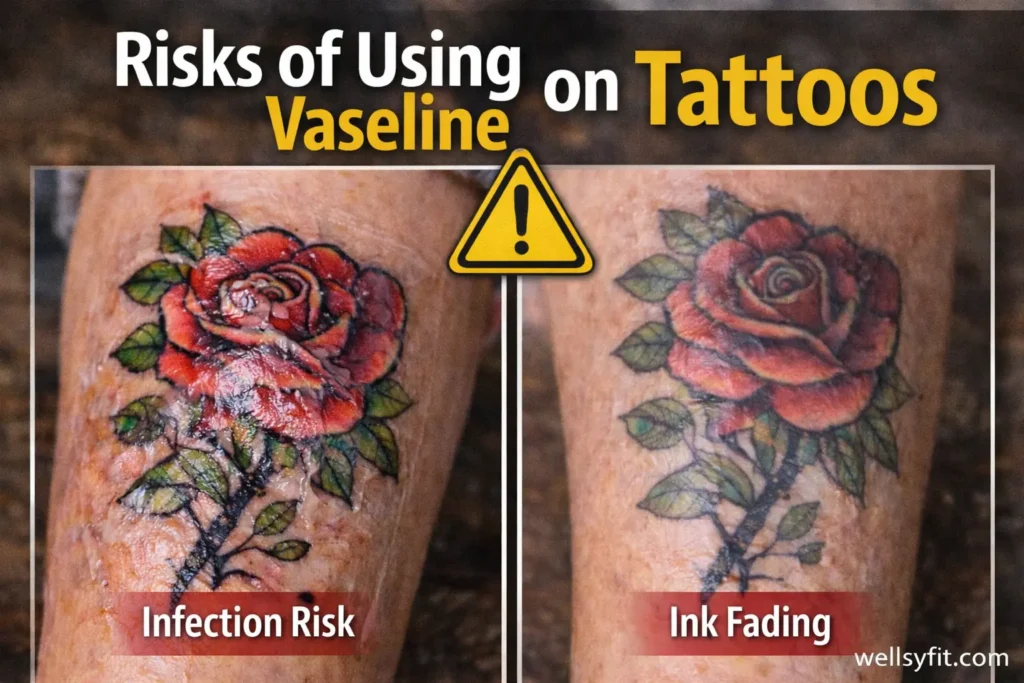
Because Vaseline seals the skin completely, bacteria introduced during normal movement or touching can become trapped. This raises the chance of infection, especially in the first 48 hours.
Delayed Healing and Scabbing Issues
Excess moisture prevents proper drying, which can lead to:
- Soft scabs
- Uneven peeling
- Prolonged redness
Healing becomes inconsistent instead of gradual.
Ink Fading or Patchy Healing
Improper healing can cause areas of ink to heal unevenly. This may result in dull patches or uneven color once healing is complete.
What Tattoo Artists Usually Recommend Instead of Vaseline
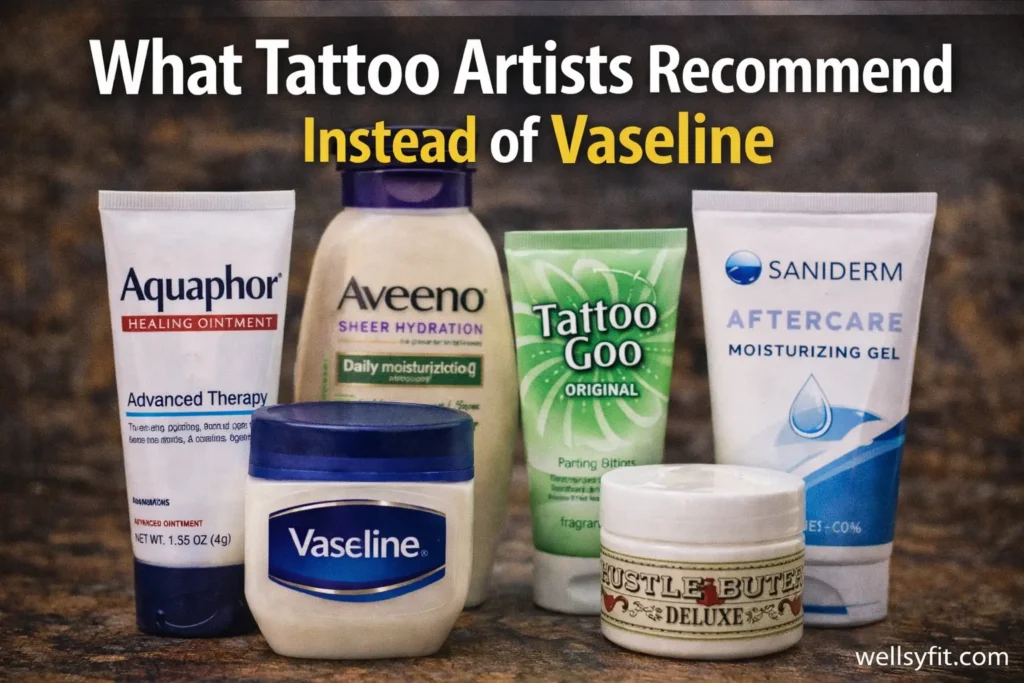
Most professionals recommend:
- Fragrance-free lotions
- Tattoo-specific aftercare ointments
- Light moisturizers that absorb quickly
These products hydrate without suffocating the skin.
Better Alternatives to Vaseline for Tattoo Aftercare
Fragrance-Free Lotions
Fragrance-free lotions provide hydration without irritation. They absorb into the skin and allow airflow, which is essential during healing.
Tattoo-Specific Aftercare Ointments
These products are formulated specifically for healing tattoos. They balance moisture and breathability, reducing scabbing and irritation.
How to Moisturize a Tattoo Properly Without Overdoing It
Many problems come from using too much product, not the wrong one.
A proper approach:
- Wash hands
- Apply a thin layer
- Massage gently
- Let the skin breathe
If the tattoo looks shiny or greasy, too much product has been applied.
Common Myths About Vaseline and Tattoo Healing
Vaseline helps wounds heal faster
This is misleading. Vaseline protects healed skin but does not speed wound healing.
More moisture is always better
Too much moisture slows healing and causes irritation.
If it works on skin, it works on tattoos
Tattoos are not regular skin until fully healed.
What Happens If You Already Used Vaseline on a Tattoo
If Vaseline has already been applied:
- Gently wash the tattoo with mild soap
- Pat dry with a clean towel
- Switch to a breathable moisturizer
Monitor for redness, swelling, or discomfort. Most cases resolve once Vaseline use stops.
Signs Your Tattoo Is Not Healing Properly
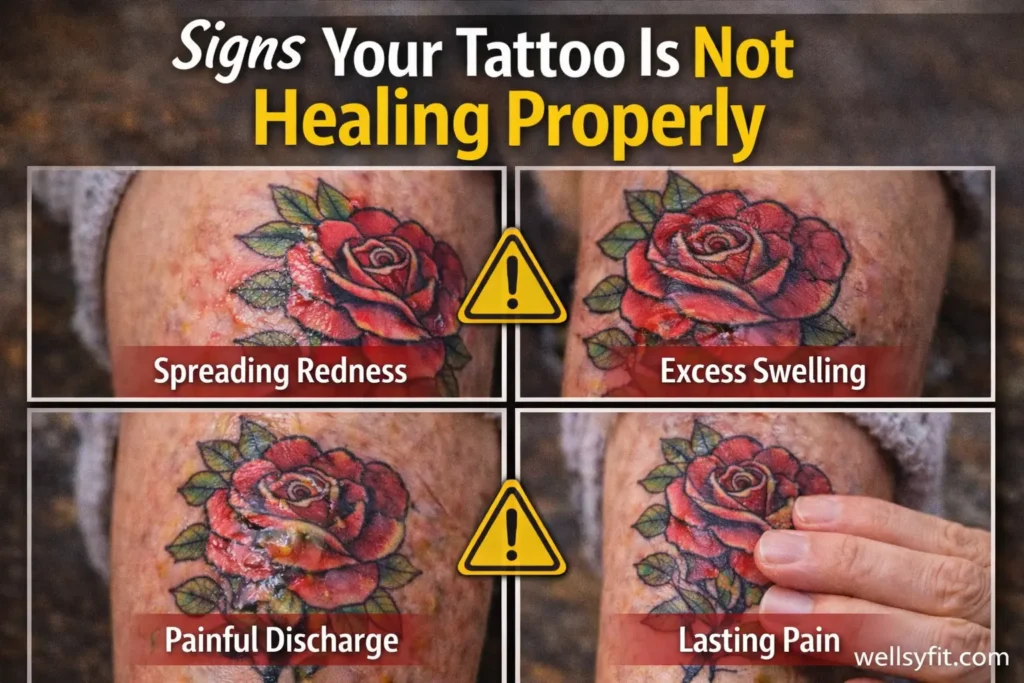
Watch for:
- Redness spreading beyond the tattoo
- Increasing pain after the first few days
- Thick discharge or foul odor
- Fever or swelling
These signs require professional attention.
When You Should Avoid Vaseline Completely
Avoid Vaseline if:
- The tattoo is less than 2 to 3 weeks old
- The skin is still peeling or scabbing
- There is redness or irritation
- You have sensitive or reactive skin
Final Verdict – Should You Put Vaseline on a Tattoo
Vaseline is not suitable for new tattoos and should be avoided during the healing phase. While it can protect fully healed tattoos from dryness in specific situations, it should never replace proper aftercare products.
IMPORTANT: Healing tattoos need breathable moisture, not sealed skin.
FAQs About Using Vaseline on a Tattoo
Disclaimer: Content on WellsyFit is for informational purposes only and does not replace professional medical advice. Always consult a healthcare provider.