
Pregnancy tests are widely known for their high accuracy. Most at-home pregnancy tests claim around 99 percent accuracy when used correctly. However, some women are surprised when they experience pregnancy symptoms but still receive a negative test result.
This leads to an unusual but frequently searched question: can twins cause false negative pregnancy test results?
The short answer is yes, but it is extremely rare. In certain situations, a twin or multiple pregnancy can lead to unusually high hormone levels that confuse the test. This phenomenon is known as the hook effect.
To understand why this happens, it helps to first understand how pregnancy tests work and how hormone levels behave in twin pregnancies.
How Pregnancy Tests Work
Home pregnancy tests detect a hormone called human chorionic gonadotropin (hCG). This hormone is produced by cells that form the placenta shortly after a fertilized egg implants in the uterus.
Once implantation occurs, hCG begins rising rapidly in the body.
Most pregnancy tests are designed to detect hCG levels of around 20 mIU/mL or higher in urine. When the test detects this hormone, it typically shows a positive result through lines, symbols, or digital indicators.
During early pregnancy, hCG levels usually double every 48 to 72 hours, which is why testing a few days after a missed period often gives the most accurate result.
However, several factors can interfere with this detection process.
Why hCG Levels Are Higher in Twin Pregnancies
In pregnancies involving twins or multiples, the body may produce higher levels of hCG compared to a singleton pregnancy.
This happens because:
- More placental tissue is producing the hormone
- Each developing embryo contributes to hormone production
- Hormone levels may rise faster during early pregnancy
Studies suggest that hCG levels in twin pregnancies can be 30 to 50 percent higher than in single pregnancies, although this varies widely.
Normally, higher hCG levels should make pregnancy easier to detect. But in rare cases, extremely high levels can actually cause the opposite effect.

The Hook Effect: How Twins Can Cause a False Negative
The hook effect is the main reason twins can occasionally cause a false negative pregnancy test.
This occurs when hCG levels become so high that they overwhelm the antibodies used in the pregnancy test. Instead of detecting the hormone properly, the test becomes confused and produces a negative result.
Essentially, the test cannot interpret the unusually high hormone concentration.
Although this sounds surprising, the hook effect is very rare and usually happens only when hormone levels are extremely elevated.
Situations where the hook effect may occur include:
- Twin or multiple pregnancies
- Molar pregnancies
- Later stages of pregnancy when hCG peaks
- Rare medical conditions affecting hormone levels
Even when these conditions are present, the hook effect does not occur in most pregnancies.
How Common Is a False Negative With Twins
Despite the possibility, false negatives caused by twins are not common.
Most women carrying twins will still receive a positive pregnancy test, often earlier than expected because of higher hormone levels.
Medical experts emphasize that the most common cause of a false negative pregnancy test is simply testing too early, not carrying multiples.
The body may not yet have produced enough hCG for the test to detect.

Other Reasons for a False Negative Pregnancy Test
Several factors can lead to a negative result even if someone is pregnant.
Understanding these causes is important because they are far more common than twin-related testing errors.
Testing Too Early
This is the leading cause of false negatives.
If the test is taken before enough hCG has built up in the body, the hormone may not reach the detection threshold.
Testing again a few days later often produces a positive result.
Diluted Urine
If urine is diluted from drinking large amounts of fluids, the hCG concentration may be too low for the test to detect.
For best accuracy, pregnancy tests should be taken with first-morning urine, when hormone levels are more concentrated.
Low Test Sensitivity
Not all pregnancy tests have the same sensitivity level.
Some tests detect hCG earlier than others. Using a low-sensitivity test may delay a positive result.
Expired or Faulty Tests
Pregnancy tests have expiration dates. Using an expired or damaged test can affect accuracy.
Improper storage or incorrect usage may also lead to inaccurate results.
Certain Medical Conditions
Rare medical conditions can affect hormone levels and interfere with pregnancy testing.
Examples include:
- Molar pregnancy
- Hormone-producing tumors
- Certain fertility treatments
These conditions can sometimes produce unusually high hCG levels that confuse the test.
Signs You Might Still Be Pregnant After a Negative Test
A negative pregnancy test does not always mean pregnancy is impossible.
Some women continue experiencing symptoms that suggest pregnancy despite a negative result.
Common early pregnancy symptoms include:
- Missed period
- Nausea or morning sickness
- Breast tenderness
- Fatigue
- Frequent urination
- Increased sensitivity to smells
In twin pregnancies, these symptoms may sometimes feel more intense due to higher hormone levels.
However, symptoms alone cannot confirm pregnancy.

What to Do if You Suspect Pregnancy After a Negative Test
If you believe you may be pregnant but your test result is negative, there are several steps you can take.
Wait and Retest
Waiting two to three days allows hCG levels to rise.
Since the hormone doubles every couple of days, retesting often produces a more accurate result.
Use a More Sensitive Test
Some early detection tests are designed to identify lower levels of hCG.
Switching to a more sensitive test may reveal a positive result sooner.
Take the Test in the Morning
Morning urine typically contains the highest concentration of hCG.
Testing at this time can improve accuracy.
Consider a Blood Test
If home tests remain negative but pregnancy symptoms persist, a doctor may recommend a blood test.
Blood tests measure the exact amount of hCG in the body and are more sensitive than urine tests.
They can also help identify unusually high hormone levels associated with multiple pregnancies.
Schedule a Medical Evaluation
Healthcare providers may also perform an ultrasound to confirm pregnancy and determine whether multiples are present.
Ultrasound imaging is the most reliable way to detect twins.
When Twins Are Usually Detected
Twin pregnancies are rarely confirmed through pregnancy tests alone.
Instead, they are usually discovered during early prenatal ultrasounds.
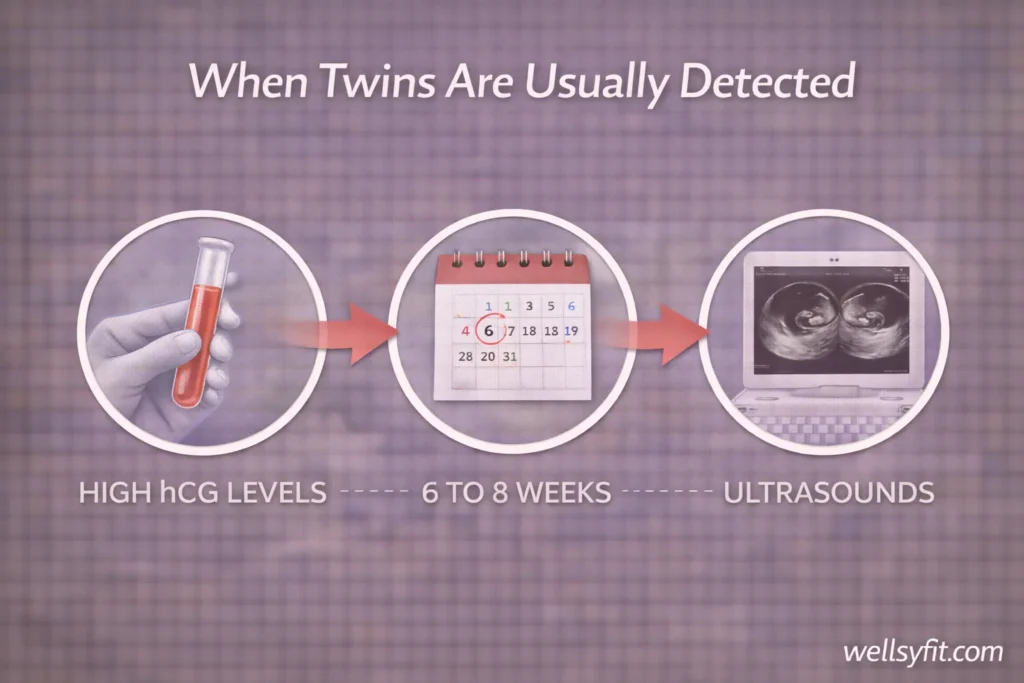
Most ultrasounds performed between 6 and 8 weeks of pregnancy can identify multiple gestational sacs or embryos.
Some women may also have higher-than-expected hCG levels in blood tests, which can raise suspicion of twins before ultrasound confirmation.
Why Early Prenatal Care Matters
If someone assumes they are not pregnant because of a negative test, they may delay important prenatal care.
This is why healthcare professionals recommend seeking medical advice if pregnancy symptoms persist despite negative test results.
Early prenatal care helps monitor:
- Fetal development
- Hormone levels
- Potential complications
- Nutritional needs during pregnancy
This is particularly important for twin pregnancies, which require closer monitoring than single pregnancies.
The Bottom Line
So, can twins cause false negative pregnancy test results?
Yes, but it is extremely rare. In unusual cases, very high levels of the pregnancy hormone hCG can overwhelm the test and trigger the hook effect, leading to a negative result even when pregnancy is present.
However, most false negatives occur for much simpler reasons such as testing too early, diluted urine, or low test sensitivity.
If you believe you may be pregnant but receive a negative result, the best approach is to wait a few days and test again or consult a healthcare provider for a blood test or ultrasound.
Pregnancy tests are highly reliable tools, but like any medical test, they are not perfect. Understanding how they work can help you interpret results more accurately and know when to seek further evaluation.
FAQs
Disclaimer: Content on WellsyFit is for informational purposes only and does not replace professional medical advice. Always consult a healthcare provider.