

Post orgasm torture is a term people often encounter online and want explained clearly, without exaggeration or shock value. At its core, it refers to a consensual sexual concept where stimulation continues after orgasm, during a period when the body is especially sensitive. While the phrase may sound extreme, the reality is more psychological and contextual than the name suggests.
Understanding post orgasm torture requires separating myths from facts, looking at how the body and mind respond after climax, and emphasizing consent, communication, and emotional safety above everything else.
Quick Definition – What Is Post Orgasm Torture
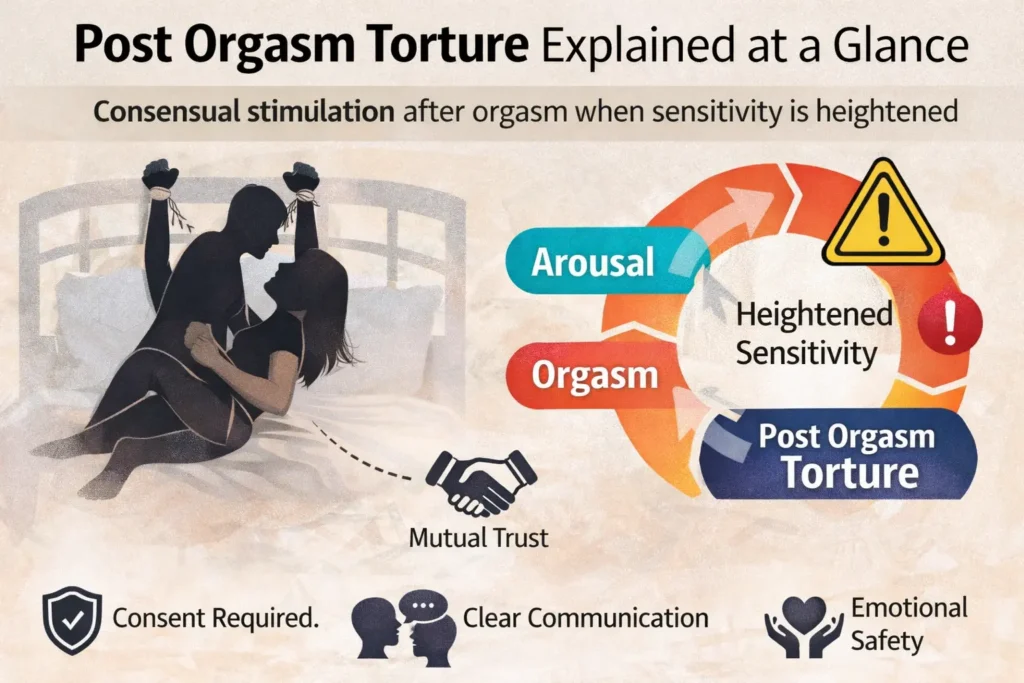
Post orgasm torture is a consensual sexual kink in which stimulation continues after orgasm, during the body’s heightened sensitivity phase. For some people, this creates an intense mix of sensation, vulnerability, and emotional response. It is not about punishment or harm, and it only exists within mutual agreement and trust.
IMPORTANT: Without consent, communication, and boundaries, this concept does not apply.
Why People Search for Post Orgasm Torture
People usually search for this term out of curiosity rather than intent to practice it. The phrase appears in discussions about kink, power dynamics, and sexual psychology, often without clear explanation.
Common reasons people look it up include:
- Hearing the term in online conversations
- Confusing it with other kink concepts
- Wanting to know if it is normal or safe
- Trying to understand the psychological appeal
Most users are seeking education, not instruction.
What Post Orgasm Torture Means in Simple Terms
In simple words, post orgasm torture describes what happens when stimulation continues after orgasm, at a time when the body is no longer seeking climax but is still highly reactive.
After orgasm:
- Nerves are more sensitive
- The body shifts from arousal to recovery
- Sensations can feel stronger or overwhelming
For some people, this contrast between physical sensitivity and emotional vulnerability creates a powerful experience. For others, it is uncomfortable or unwanted. Both reactions are normal.
How the Body Responds After Orgasm
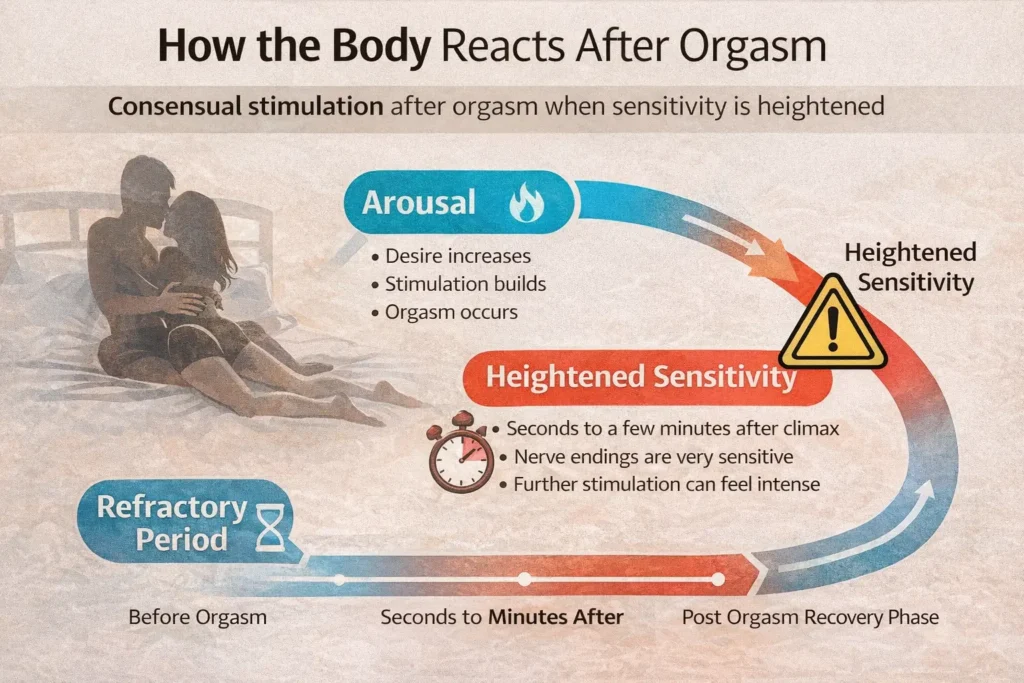
Understanding the physical response helps explain why this concept exists.
Sensitivity After Orgasm
After orgasm, the nervous system shifts rapidly. Nerve endings can feel overstimulated, and sensations that felt pleasurable moments earlier may feel intense or distracting.
This heightened sensitivity usually lasts seconds to a few minutes, depending on the individual.
The Refractory Period Explained
The refractory period is the time after orgasm when the body temporarily resists further arousal. This phase varies widely between people and can last from a few minutes to longer periods.
During this time:
- Desire often decreases
- Sensitivity increases
- Emotional responses may feel stronger
This biological response is central to understanding post orgasm torture.
The Psychological Side of Post Orgasm Torture
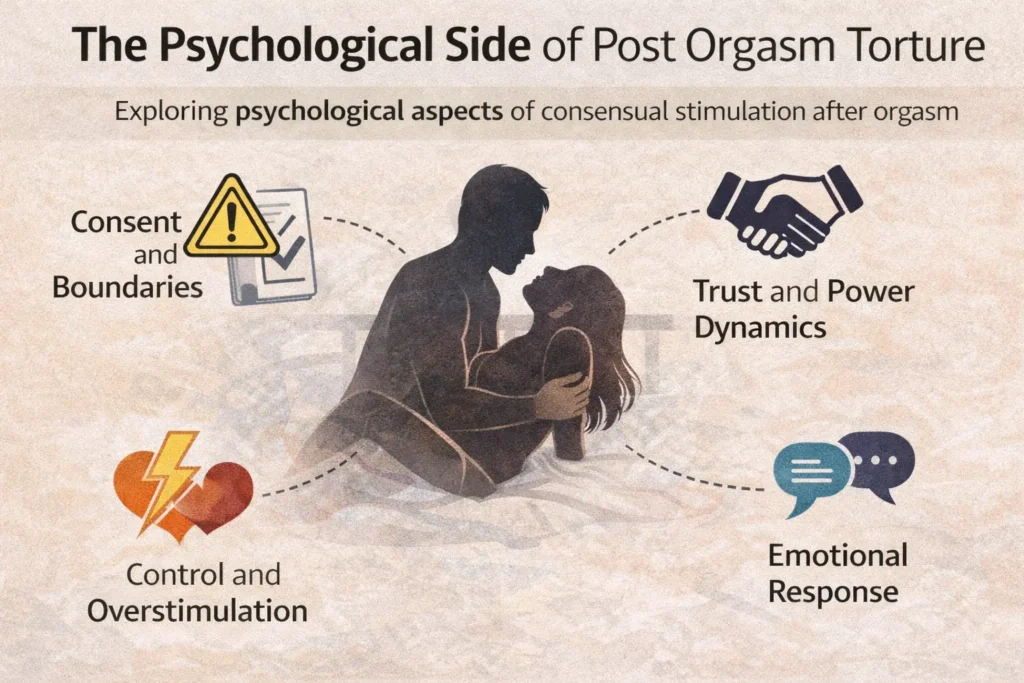
The mental aspect is just as important as the physical one.
Control, Power, and Trust
Post orgasm torture is often discussed within power dynamics, where one partner temporarily controls stimulation. This dynamic relies heavily on trust, communication, and mutual understanding.
For some, the appeal lies in:
- Letting go of control
- Feeling emotionally exposed
- Experiencing intense connection
IMPORTANT: Without trust, this experience loses its meaning.
Why Discomfort Can Still Feel Pleasurable
Human psychology allows discomfort and pleasure to overlap under specific conditions. When consent is present, the mind may reinterpret intensity as meaningful rather than distressing.
This does not mean pain is required. The experience is more about contrast, timing, and emotional context.
Post Orgasm Torture vs Similar Kink Concepts
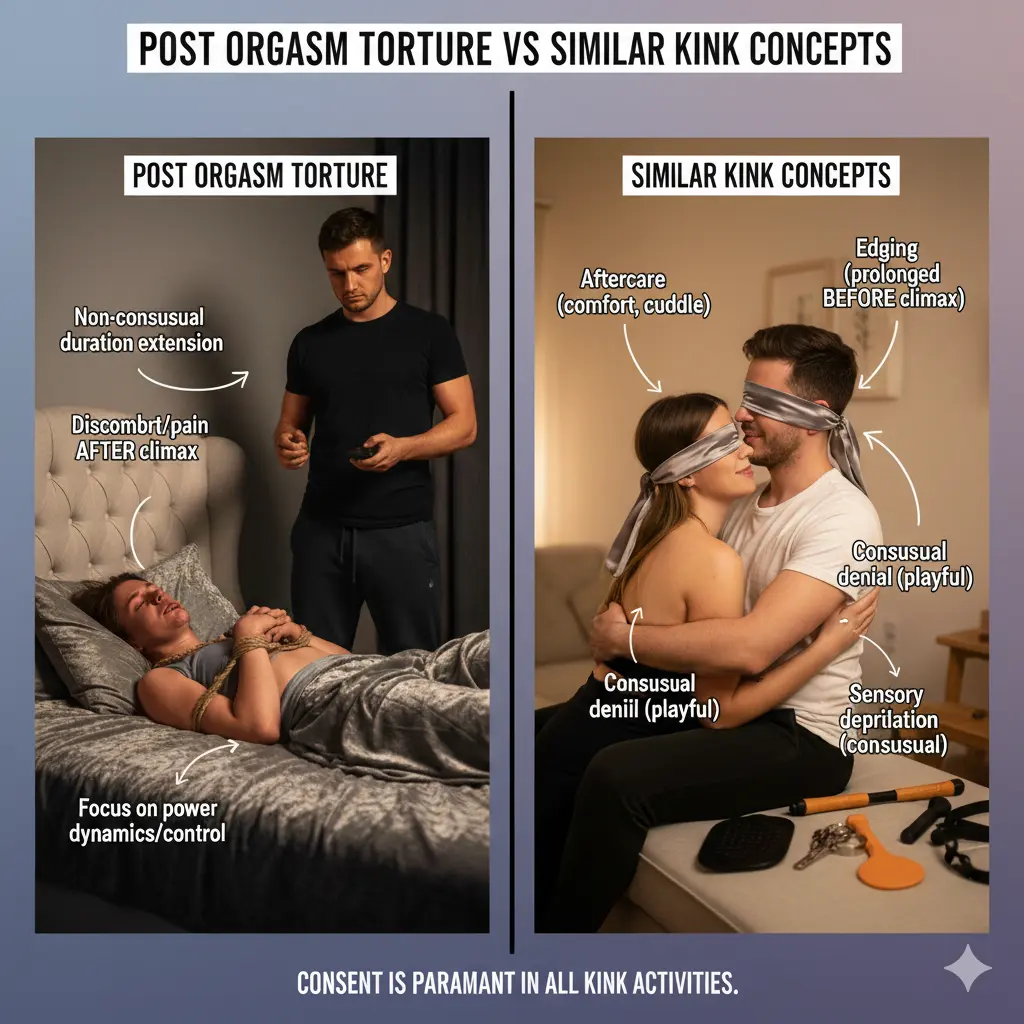
Confusion often arises because several kink terms sound similar.
Post Orgasm Torture vs Edging
Edging focuses on delaying orgasm to increase anticipation. Post orgasm torture happens after orgasm and centers on sensitivity rather than anticipation.
Post Orgasm Torture vs Orgasm Denial
Orgasm denial involves preventing climax entirely. Post orgasm torture only occurs after orgasm has already happened, making the emotional and physical responses very different.
Is Post Orgasm Torture a BDSM Practice

Post orgasm torture is often associated with BDSM, but it is not exclusive to it. Some people explore it outside formal BDSM structures, while others include it within dominant and submissive roles.
What matters is not the label, but the presence of:
- Clear consent
- Defined boundaries
- Emotional awareness
Consent and Communication (Most Important Section)
Consent is the foundation of any discussion around post orgasm torture.
Why Consent Is Non-Negotiable
Consent must be:
- Informed
- Enthusiastic
- Ongoing
A person must be free to stop at any moment without pressure.
Setting Boundaries and Safe Signals
Before any exploration, partners should discuss:
- Comfort levels
- Physical and emotional limits
- Clear stop signals
These conversations reduce risk and increase trust.
Safety Considerations and Emotional Well-Being
Competitors often mention safety briefly, but it deserves more attention.
Physical Safety Awareness
Heightened sensitivity means that overstimulation can become unpleasant quickly. Awareness of physical responses is essential to prevent distress.
Emotional Safety and Aftercare
After intense experiences, some people experience emotional drops. Aftercare includes reassurance, closeness, and emotional grounding.
IMPORTANT: Emotional care matters just as much as physical comfort.
Is Post Orgasm Torture Normal or Common
There is no universal standard for what is normal in sexuality. Interest in post orgasm torture varies widely and depends on personality, comfort with power dynamics, and emotional openness.
Many people are curious. Fewer actively explore it. Both are normal.
Common Misconceptions About Post Orgasm Torture
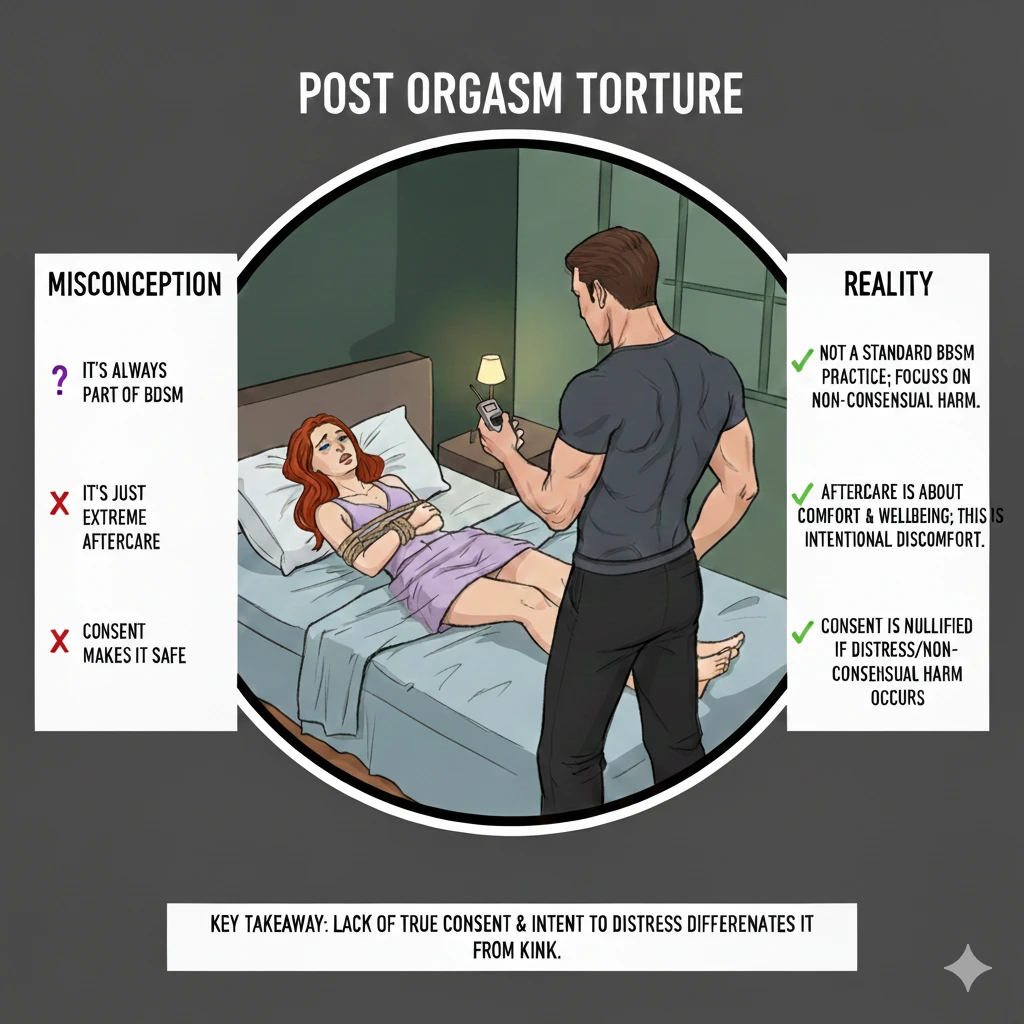
Misunderstanding often comes from the name itself.
Common myths include:
- It is always painful
- It is abusive
- It is extreme or dangerous
In reality, it is defined by consent, communication, and mutual comfort.
Who Might Be Curious About Post Orgasm Torture
Curiosity around post orgasm torture often comes from learning rather than intent. Long-term partners exploring trust and communication may encounter the term while trying to better understand emotional dynamics.
People interested in sexual psychology often come across post orgasm torture when reading about sensitivity, control, and post-orgasm responses. For them, the interest is usually theoretical and educational.
Others may first see unfamiliar kink terminology through online discussions or self-exploration resources such as a kink test tool, which are commonly used to understand labels and concepts. In these cases, curiosity reflects a desire for clarity, not participation.
When Post Orgasm Torture Is Not Appropriate
It should never be considered if:
- Consent is unclear
- One partner feels pressured
- Emotional discomfort is present
- Physical sensitivity issues exist
Respecting boundaries is essential.
Cultural and Social Perspectives on Post Orgasm Torture
Online discussions can exaggerate or misrepresent sexual concepts. Social media often removes nuance, turning complex topics into sensational phrases.
Education helps counter misinformation and stigma.
How to Talk About Post Orgasm Torture With a Partner
Discussing this topic requires care.
A helpful approach includes:
- Using neutral, non-graphic language
- Asking open-ended questions
- Respecting hesitation or refusal
The goal is understanding, not persuasion.
Final Takeaway – Understanding Post Orgasm Torture Responsibly
Post orgasm torture is best understood as a consensual, psychological concept tied to sensitivity after orgasm and emotional dynamics. It is not about harm, and it is not for everyone.
IMPORTANT: Consent, communication, and emotional safety define whether this topic remains educational or becomes harmful.
FAQs About Post Orgasm Torture
Disclaimer: Content on WellsyFit is for informational purposes only and does not replace professional medical advice. Always consult a healthcare provider.